
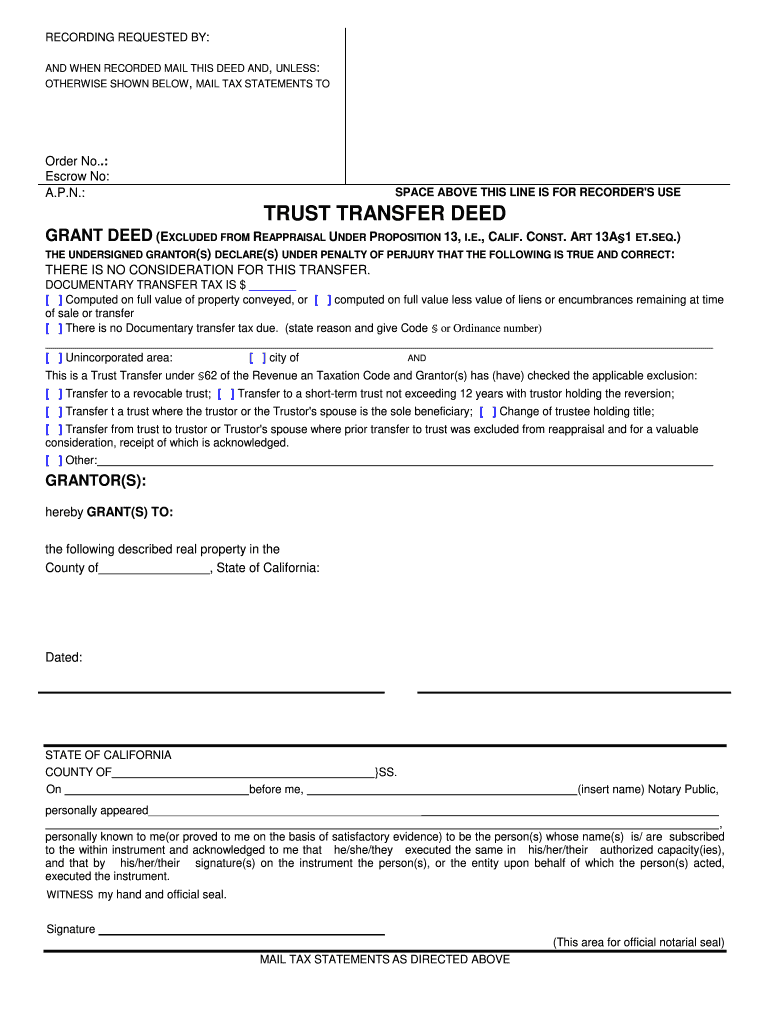







Understanding the Trust Transfer Deed in California
A trust transfer deed in California is an essential legal document that facilitates the transfer of real property into a trust. This transfer is executed without the exchange of money, meaning the property is conveyed without consideration. By placing property into a trust, the trustor establishes how the property should be managed and distributed, ensuring a smoother transition to beneficiaries upon the trustor's passing.
Legal Framework and Importance
The trust transfer deed is governed by California property law and is often utilized as part of estate planning strategies to avoid probate, which can be time-consuming and costly. This type of deed explicitly states that the property is held in trust, preventing reappraisal under California’s Proposition 13, which protects property owners from significant tax increases based on market value changes.
- Legal Purpose: Establishing property rights and responsibilities clearly.
- Avoiding Probate: By placing property in a trust, individuals can bypass probate, thereby allowing for a quicker and less expensive distribution of assets.
Key Elements of a Trust Transfer Deed
A well-crafted trust transfer deed must adhere to specific legal requirements to be valid and enforceable in California. The key components typically include:
- Property Description: A thorough description of the property being transferred, including its legal description and any identifying details.
- Grantor and Grantee Information: The names and addresses of the grantor (the person transferring the property) and the grantee (the trust or the trustee).
- Language of Transfer: Clear wording that indicates the intent to transfer the property into a trust, which may include phrases such as “conveys and warrants” to affirm the transfer.
- Signatures: The document must be signed by the grantor, and typically the trustee should also sign.
Completing the Trust Transfer Deed
Completing a trust transfer deed is a straightforward process, but it requires careful attention to detail. Below are common steps to consider:
- Preparation: Gather all necessary information about the property and the trust.
- Drafting the Deed: Use a template or consult an attorney to ensure compliance with legal standards.
- Execution: Sign the deed in the presence of a notary public to ensure it is valid.
- Recording the Deed: File the completed deed with the county recorder’s office to make the transaction public. This step protects the new ownership and provides formal notice to the public.
Common Scenarios for Using a Trust Transfer Deed
Many individuals utilize a trust transfer deed in various scenarios, including:
- Transferring Family Property: Parents may transfer their family home into a trust to ensure it is passed down to children without the burden of probate.
- Establishing a Living Trust: Individuals can transfer assets into a revocable living trust while they are still alive, allowing for seamless management and transfer upon death.
- Asset Protection: Putting property into a trust can provide a level of protection from creditors in some circumstances.
Examples of Trust Transfer Deed Forms
While specific formats can vary, examples of the terms and conditions included in a trust transfer deed might feature:
- Sample Provisions: Include language that specifies how the property will be handled within the trust.
- Annotation of Exemptions: For example, if the transfer is to a spouse or for a primary residence, specific language may be used to denote these exemptions under California law.
Regulatory Considerations and Notarization
In California, it is essential for the trust transfer deed to be notarized to validate the grantor's identity and consent. This not only protects the parties involved but also upholds the integrity of the public records. Failure to properly notarize or record the deed can lead to complications down the line, including challenges to the trust or property ownership.
- Identification Requirements: When signing, grantors must provide valid forms of identification to the notary.
- Filing Fees: Counties may impose fees for recording the trust transfer deed, which should be factored into the transfer process.
Summary of Trust Transfer Deed Functions
The trust transfer deed in California functions as a vital tool in estate planning. It clarifies ownership, facilitates smoother transitions of property, and can offer tax benefits under specific legislative frameworks. Understanding its components, legal requirements, and practical application can empower individuals to manage their assets effectively and ensure their intent is respected after their passing.
This document type is crucial for anyone looking to establish a cohesive estate plan while mitigating possible future disputes regarding property ownership, thereby upholding the trustor's wishes with clarity and legal standing.




