






Definition & Meaning
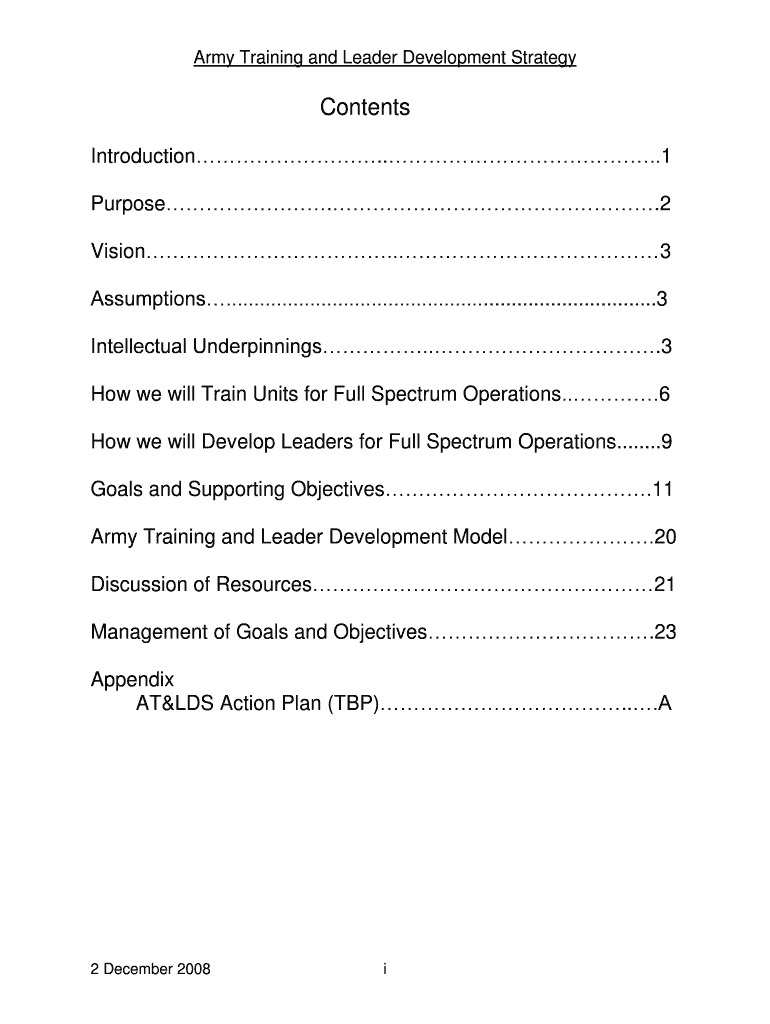
The Army Training and Leader Development Strategy (AT&LDS) is a comprehensive framework designed to enhance the skills and competencies of both individual soldiers and military units. It emphasizes innovation and agility in training methods and aims to equip leaders and personnel with the ability to effectively manage diverse and challenging operational environments. By focusing on Full Spectrum Operations, the strategy assures that Army personnel can seamlessly integrate offensive, defensive, and stability tasks. This strategic approach ensures that resources are aligned with training goals, providing a structured pathway to develop leadership competencies and cultural understanding for operational success.
How to Use the Army Training and Leader Development Strategy
Effective use of the AT&LDS requires understanding its components and objectives. It involves assessing the current training needs of the unit or individual, identifying areas where the strategy can be applied, and implementing training programs that align with the strategic goals. It includes steps to:
- Analyze unit-specific needs and existing capabilities.
- Align those needs with AT&LDS goals such as innovation and adaptability.
- Develop training schedules and leadership programs that incorporate the strategy's methodologies.
- Continuously assess and adapt training approaches to ensure alignment with evolving operational requirements.
By applying these steps, units can optimize their training processes, enhancing overall readiness and performance.
Key Elements of the Army Training and Leader Development Strategy
The AT&LDS comprises several key elements aimed at comprehensive development. These include:
- Structured Training Model: Establishes a consistent approach to skill development across all levels of the Army.
- Leadership Competencies: Focuses on cultivating essential leadership skills that can be applied in various operational scenarios.
- Cultural and Language Skills: Enhances soldiers' abilities to engage effectively in multinational operations through cultural sensitivity and language proficiency.
- Resource Alignment: Ensures that the allocation of educational and training resources supports the goals of the strategy, maximizing impact on unit readiness and adaptability.
These components work together to create a robust framework for improving Army training and leader development.
Steps to Complete the Army Training and Leader Development Strategy
Completing the implementation of the AT&LDS requires a series of coordinated actions:
- Needs Assessment: Conduct a thorough assessment of current training needs and capabilities within your unit.
- Strategic Planning: Develop a detailed plan that incorporates the strategy's goals and objectives into existing training protocols.
- Execution: Implement the training programs, ensuring that all personnel are aware of their roles and responsibilities.
- Evaluation: Regularly evaluate the effectiveness of the training and make necessary adjustments to align with strategic objectives.
- Feedback and Improvement: Solicit feedback from participants and make iterative improvements to the training processes.
Following these steps ensures that the strategy is effectively integrated and enhanced over time.
Why Should You Implement the Army Training and Leader Development Strategy
Adopting the AT&LDS provides numerous benefits for both individuals and units. It:
- Enhances Operational Effectiveness: Prepares soldiers and leaders to effectively manage complex and diverse operational scenarios.
- Encourages Innovation: Promotes adaptive and creative approaches to overcoming challenges in military operations.
- Strengthens Leadership: Develops strong leaders capable of guiding teams under pressure, making critical decisions, and achieving mission objectives.
- Ensures Consistency: Offers a standardized approach to training across various units, ensuring consistent readiness levels.
Investing in this strategy leads to improved performance, greater resilience, and a stronger, more capable force.
Who Typically Uses the Army Training and Leader Development Strategy
The AT&LDS is employed by a wide range of personnel within the United States Army, including:
- Training Officers: Responsible for developing and executing training programs in accordance with the strategy.
- Unit Commanders: Use the strategy to improve the operational readiness of their units.
- Individual Soldiers: Engage with the strategy to enhance personal skills and leadership abilities.
- Military Educators: Implement educational content and training that aligns with strategic goals.
This broad use allows for consistent application and integration of the strategy's principles throughout the Army.


Important Terms Related to Army Training and Leader Development Strategy
Understanding key terms associated with the AT&LDS is crucial for effective implementation:
- Full Spectrum Operations: Involves integrating offensive, defensive, and stability tasks in a cohesive manner.
- Leadership Competencies: The skills and abilities necessary for effective leadership within the Army.
- Cultural and Language Proficiency: Skills that enable soldiers to communicate and collaborate effectively with international forces.
- Resource Alignment: The strategic allocation and use of training resources to support the strategy's objectives.
Familiarity with these terms ensures clear communication and understanding of the strategy's components.
Examples of Using the Army Training and Leader Development Strategy
The AT&LDS has been applied in various real-world scenarios to enhance readiness and performance:
- Simulated Combat Exercises: Units use the strategy to develop realistic training exercises that simulate combat scenarios, improving readiness for real-world operations.
- Leadership Development Programs: Focus on building core leadership skills through targeted training and mentorship opportunities.
- Cultural Training Sessions: Soldiers participate in cultural immersion experiences to increase their ability to operate in diverse environments.
These examples demonstrate the strategy's applicability and the benefits of its comprehensive approach to training and development.