Definition & Meaning
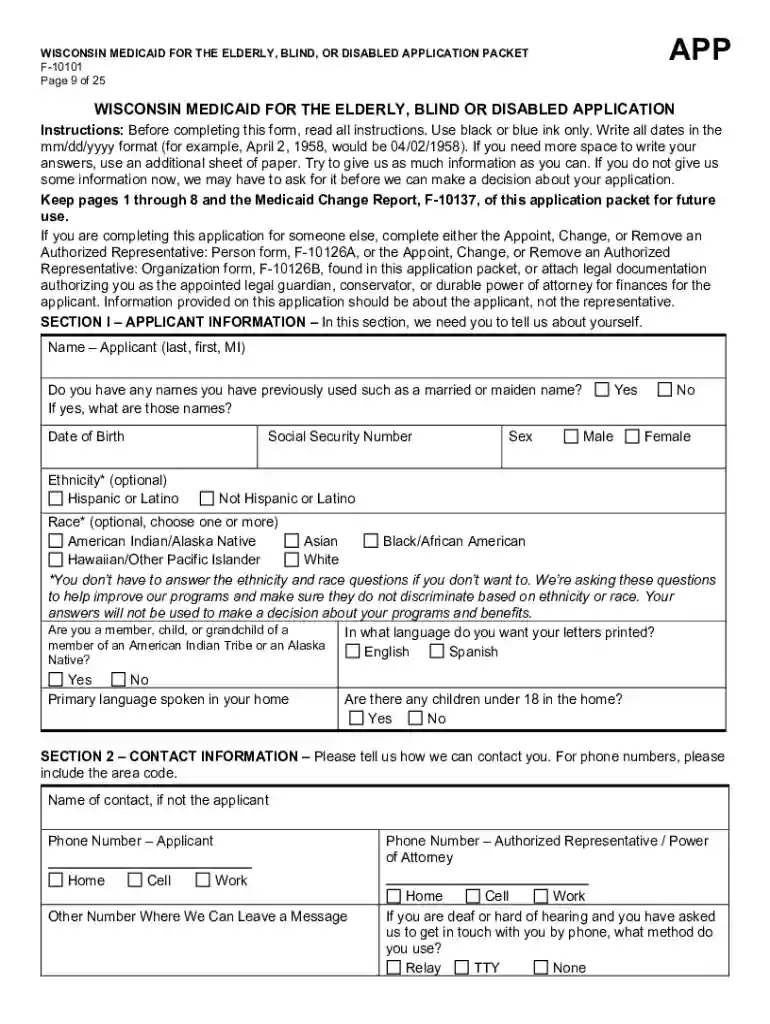
The Wisconsin Medicaid for the Elderly, Blind, or Disabled Application Packet is a crucial document for residents of Wisconsin who fit these specific criteria and need access to Medicaid benefits. It is designed to facilitate the process of applying for state-provided health care services, including medical, dental, and vision coverage. The application packet sets forth a structured format to capture essential information about the applicant's identity, income, and any other relevant circumstances. This application serves as a gateway to accessing vital healthcare services provided by Wisconsin’s Medicaid program.
Key Components of the Packet
- Applicant Information: Collects personal data such as name, date of birth, and social security number.
- Income Verification: Requirement to provide proof of income through pay stubs, tax returns, or benefits statements.
- Asset Disclosure: Details about personal assets, including bank accounts, properties, and investments.
- Medical Information: Documentation of any disabilities or medical conditions affecting eligibility.
Steps to Complete the Wisconsin Medicaid for the Elderly, Blind, or Disabled Application Packet
Completing this application packet requires careful attention to detail. Here is a step-by-step guide:
- Gather Necessary Documents: Before beginning the application, collect all required documentation, including identification, proof of residence, income statements, and medical records.
- Complete Personal Information Section: Fill out your personal information, ensuring accuracy with names and social security numbers.
- Provide Income Details: Enter all income sources, including wages, social security benefits, and pensions. Attach verification documents.
- Disclose Assets: List all assets, providing additional documents such as bank statements and property deeds if required.
- Include Medical Information: Document any disabilities or current medical conditions. Attach necessary medical records.
- Review and Sign: Carefully review the entire packet for completeness and accuracy before signing. Incomplete applications may result in processing delays.
- Submit the Application: Refer to the submission instructions for online, mail, or in-person options. Retain a copy for your records.
Practical Scenarios
- Scenario 1: A 70-year-old applicant with a pension seeks coverage. They must report income from their pension and social security.
- Scenario 2: A visually impaired younger adult relies on disability benefits. They need to provide detailed medical records proving the disability.
Important Terms Related to the Packet
Understanding the terminology used in the application is essential:
- Asset: Property owned by an applicant, such as cash, real estate, or investments.
- Disabled: A medical condition severely impairing physical or mental function, requiring validation via medical documentation.
- Medically Needy: Individuals whose income exceeds Medicaid levels but who have significant medical expenses.
Required Documents
Submitting the application necessitates a range of documents:
- Identification: Government-issued ID like a driver’s license or passport.
- Income Verification: Recent pay stubs, a social security benefits letter, or federal tax returns.
- Proof of Address: Utility bills or rental agreements.
- Medical Documentation: Proof of disability or chronic conditions from healthcare providers.
Form Submission Methods
There are multiple methods available for submitting the completed Wisconsin Medicaid for the Elderly, Blind, or Disabled Application Packet:
- Online Submission: Available via the official state health services website, allowing for a fast and efficient process.
- Mail: Applications can be sent to the designated Medicaid office. It is advisable to use certified mail to ensure receipt.
- In-Person: Local health department offices may accept physical applications, permitting on-the-spot inquiries.
Application Process & Approval Time
The entire process from submission to approval may vary. Typically:
- Initial Review: Takes about two weeks from receipt of the application.
- Verification Stage: Additional documents may be requested; applicants require timely submission.
- Final Decision: Generally reaches applicants within 30 to 60 days from the initial submission, contingent on the completeness and accuracy of the application.
Expedited Processing
Under certain circumstances, such as urgent medical needs, expedited processing may be available. This requires verification from medical professionals about the necessity for immediate coverage.
Legal Use of the Wisconsin Medicaid for the Elderly, Blind, or Disabled Application Packet
Understanding legal contexts is vital:
- Confidentiality: Personal data is protected under state privacy laws to ensure applicants' information remains secure.
- Accurate Representation: Presenting false information can result in denial of benefits and legal repercussions.
- Authorized Representatives: Applicants can designate representatives to act on their behalf, necessitating a formal declaration on the application.
Incorporating these carefully detailed elements will ensure a comprehensive understanding and efficient navigation of the Wisconsin Medicaid for the Elderly, Blind, or Disabled Application Packet.