






Definition & Meaning
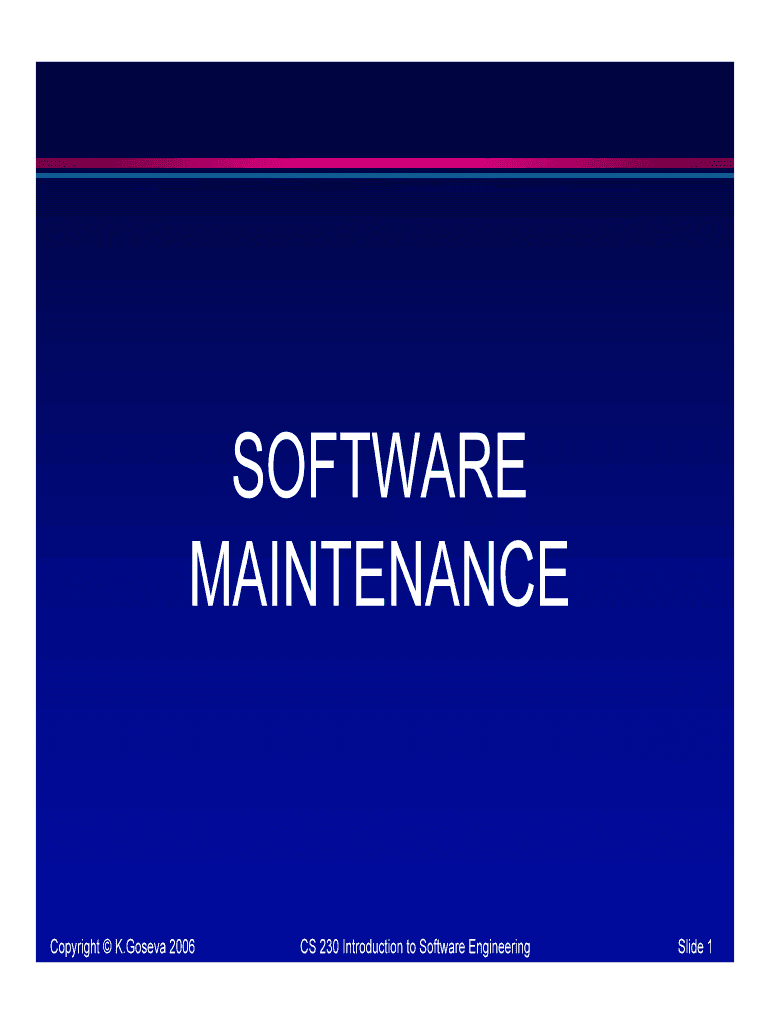
The "SOFTWARE MAINTENANCE - csee wvu" refers to the ongoing process of updating and refining software systems after they have successfully passed through the acceptance testing phase. This involves a wide array of activities that ensure the software continues to operate efficiently over time. The maintenance phase is crucial because it addresses not just bug fixes, but also incorporates user feedback to enhance functionality, ensuring longevity and reliability of the product. Maintenance accounts for a substantial portion of the total software development cost, making it a significant focus for software teams.
Key Elements of SOFTWARE MAINTENANCE - csee wvu
Key components include corrective maintenance, which involves fixing errors and bugs discovered after deployment; perfective maintenance, aimed at improving existing features based on user feedback; and adaptive maintenance, which deals with software adjustments required by changes in the environment such as operating system upgrades. Each component necessitates a well-organized approach to effectively manage changes and improve the overall software performance.
Steps to Complete the SOFTWARE MAINTENANCE - csee wvu
- Identify Maintenance Needs: Review user feedback and error reports to determine maintenance priorities.
- Plan Maintenance Activities: Develop a clear plan that outlines the tasks to be addressed during the maintenance phase, including timelines and resources required.
- Implement Changes: Execute the planned changes, ensuring that updates are carried out systematically to avoid disrupting the software’s existing functionalities.
- Testing and Verification: Conduct rigorous testing on the modified software to confirm that corrections and improvements have been successfully integrated and do not introduce new issues.
- Documentation and Deployment: Document all changes meticulously to keep historical records. Deploy the updated software and ensure users are informed of changes that may affect their interaction with the system.
- Ongoing Monitoring: Continuously monitor software performance and user feedback to identify any further maintenance needs in a timely manner.
Who Typically Uses the SOFTWARE MAINTENANCE - csee wvu
Software maintenance is typically utilized by a diverse group of professionals, including:
- Software Engineers: Responsible for implementing and testing updates.
- IT Support Staff: Provide technical assistance to end-users during and after software updates.
- Project Managers: Oversee the maintenance process to ensure it aligns with organizational goals and timelines.
- End-Users: Offer feedback on software performance, which is crucial for identifying areas needing improvement.


Examples of Using the SOFTWARE MAINTENANCE - csee wvu
In a university setting, like at WVU, maintenance could include updates to a student management system to align with new academic policies or software used for online courses requiring upgrades to enhance functionality based on student feedback. Additionally, an enterprise might use software maintenance to integrate their system with new tools to expand their business capabilities.
Important Terms Related to SOFTWARE MAINTENANCE - csee wvu
- Version Control: A system that records changes to the software, allowing for tracking and management of different versions.
- Reengineering: A process of modifying software to improve its functionality and performance while ensuring it remains scalable for future needs.
- Configuration Management: Focuses on maintaining the consistency of a product's performance by tracking all functional and physical attributes throughout its lifecycle.
Legal Use of the SOFTWARE MAINTENANCE - csee wvu
For software used within regulated industries or government sectors, adhering to compliance requirements is crucial. Maintenance processes must ensure that all changes respect legal stipulations surrounding data privacy and system security. Documentation during the maintenance phase is vital for audits and demonstrating compliance with legal and regulatory standards.
Digital vs. Paper Version
While software maintenance predominantly concerns digital processes, certain documentation and approval procedures may still involve conventional paper methods. However, the trend strongly leans towards digital documentation due to its ease of storage, accessibility, and alignment with modern cloud-based system maintenance practices. Digital platforms, such as DocHub, facilitate seamless document editing and collaboration, encouraging a shift from paper-based to digital management in software maintenance.
Software Compatibility
Maintaining compatibility with leading software applications like QuickBooks and TurboTax is crucial, especially for businesses relying on these systems for their daily operations. Ensuring that the software under maintenance is compatible with such platforms means it can be easily integrated into existing workflows, thereby minimizing operational disruptions and maximizing efficiency during updates.
IRS Guidelines
While the software maintenance process itself does not directly involve IRS guidelines, businesses must ensure that their financial software systems are continually updated to comply with evolving tax laws and regulations. This includes maintaining accurate tax calculations, report generation, and accommodating any changes to IRS requirements within the software’s capabilities.