






Definition & Meaning
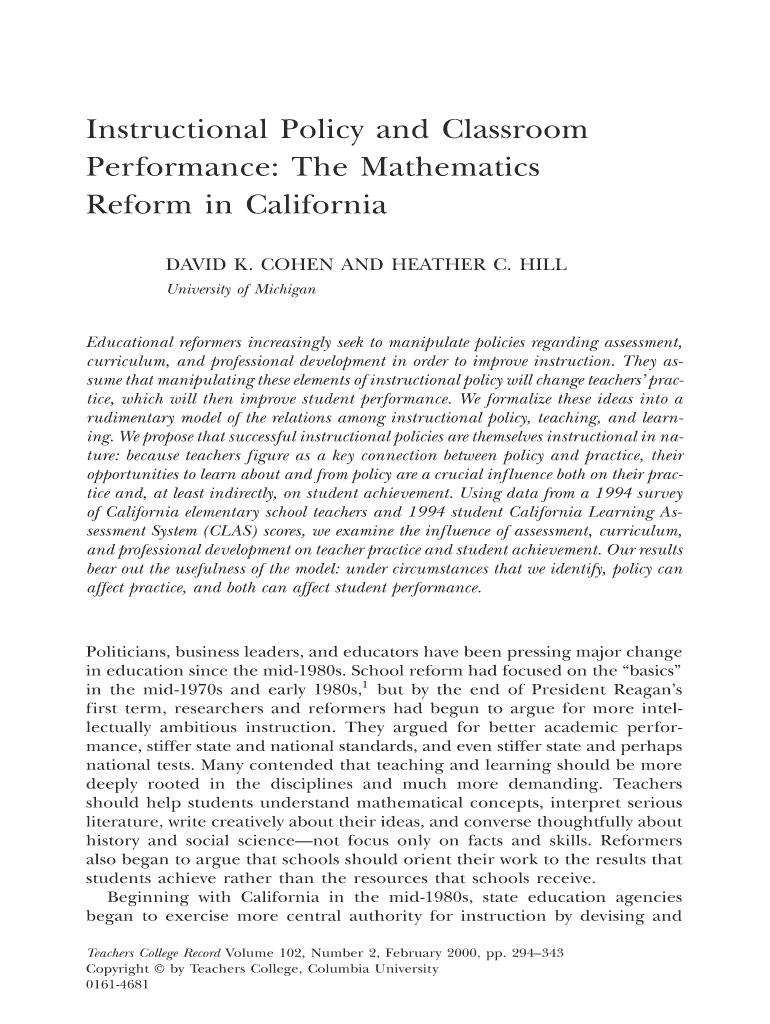
The term "Instructional Policy and Classroom Performance - University of" refers to a broad framework that encompasses the design, implementation, and evaluation of policies aimed at enhancing classroom performance within university settings. This encompasses strategies that align curricula, teaching practices, and assessment methods to improve educational outcomes for students.
How to Use the Instructional Policy and Classroom Performance - University of
To use this framework effectively, university administrators and educators should focus on integrating instructional policies with innovative teaching practices. This involves aligning curriculum design with clear learning objectives and incorporating diverse assessment techniques to measure student performance accurately. Tools and resources, such as professional development workshops, can empower educators to adopt new teaching strategies within this policy framework.
Implementing Policies
- Collaborate with educational policymakers to understand current guidelines.
- Review and possibly revise existing courses to ensure alignment with instructional policies.
- Encourage faculty to participate in training sessions focusing on new instructional approaches.
Steps to Complete the Instructional Policy and Classroom Performance - University of
Completing the implementation of instructional policies involves several critical steps that require thorough planning and execution.
- Assessment of Current Practices: Evaluate existing instructional methods and policies.
- Curriculum Alignment: Align course content with policy objectives.
- Faculty Training: Conduct training sessions for educators on new teaching approaches.
- Implementation: Roll out revised instructional methods across departments.
- Monitoring and Evaluation: Continuously assess the impact on student performance and make necessary adjustments.
Key Elements of the Instructional Policy and Classroom Performance - University of
Several key components underpin this instructional framework:
- Curriculum Development: Designing courses that meet learning objectives.
- Faculty Training: Providing educators with tools and strategies to implement instructional policies.
- Assessments: Implementing formative and summative assessments to track student progress.
- Policy Evaluation: Regularly reviewing policies to ensure they are effectively enhancing classroom performance.
Examples of Using the Instructional Policy and Classroom Performance - University of
Real-world applications of this policy framework include:
- Case Study in California: Educational reforms implemented in California showed a direct correlation between well-designed instructional policies and improved student performance in mathematics.
- Professional Development Programs: Universities that instituted frequent professional development workshops observed a marked improvement in teaching effectiveness and student engagement.
Legal Use of the Instructional Policy and Classroom Performance - University of
The application of instructional policies must comply with institutional and educational regulations. Universities should:
- Ensure policies meet national and state educational standards.
- Maintain transparency in policy changes related to curriculum and assessment methods.
- Obtain approvals from educational governing bodies before implementing significant policy changes.
Who Typically Uses the Instructional Policy and Classroom Performance - University of
The primary users of instructional policies in universities include:
- Academic Administrators: Oversee the development and implementation of educational policies.
- Faculty Members: Implement instructional changes in their teaching practices.
- Curriculum Designers: Develop educational materials that align with policy objectives.
- Education Policy Makers: Shape and guide the development of instructional policies.

Important Terms Related to Instructional Policy and Classroom Performance - University of
Understanding key terms is crucial for effectively navigating instructional policies:
- Curriculum Alignment: Ensuring course content meets educational objectives.
- Formative Assessments: Ongoing assessments used to monitor student learning.
- Professional Development: Training programs aimed at enhancing educators' instructional skills.
- Policy Evaluation: The process of reviewing and refining instructional policies to improve effectiveness.
Versions or Alternatives to the Instructional Policy and Classroom Performance - University of
This framework can vary based on institutional priorities and educational models. Alternatives may include:
- Competency-Based Education: Focuses on students demonstrating mastery of skills and knowledge.
- Project-Based Learning: Uses projects as the central component of teaching and assessment.
- Blended Learning: Integrates online educational materials and opportunities for interaction with traditional face-to-face classroom methods.