




01. Edit your form online
Type text, add images, blackout confidential details, add comments, highlights and more.

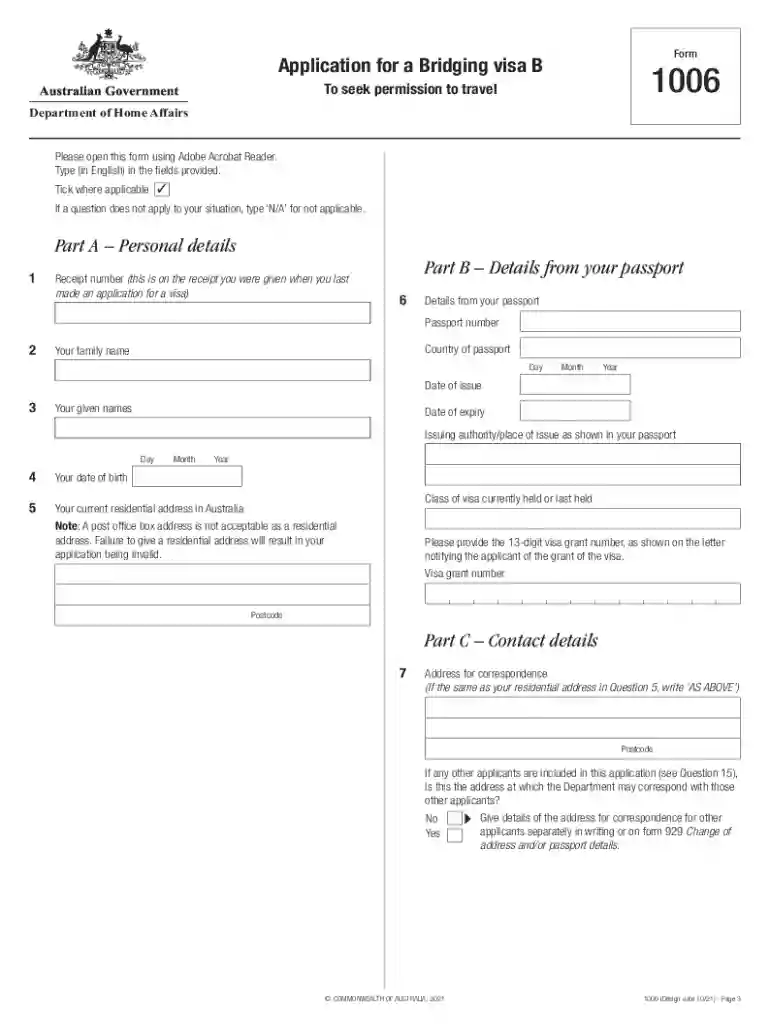
Type text, add images, blackout confidential details, add comments, highlights and more.

Draw your signature, type it, upload its image, or use your mobile device as a signature pad.

Send it via email, link, or fax. You can also download it, export it or print it out.
The Bridging Visa B (BVB) is a temporary visa granted by the Australian Department of Home Affairs. It allows individuals who are awaiting a decision on their substantive visa application to exit and re-enter Australia legally. The purpose of the BVB is to ensure that applicants can maintain their legal status while traveling overseas, making it an essential component of the Australian immigration process.
BVB differs from the Bridging Visa A, which only allows for a stay in Australia without travel rights. Having the ability to travel is critical for people who might need to leave Australia temporarily due to family, work, or other urgent commitments, reinforcing the importance of the BVB in maintaining both legal status and personal obligations.
When filling out the Application for a Bridging Visa B, certain key elements must be included to ensure a successful application process:
Applicant details: Full name, date of birth, contact information, and any other identifying information that proves identity and links to the existing visa application.
Travel details: Clearly outline the reasons for travel, destination, duration, and dates of intended travel. This helps the Department of Home Affairs assess the necessity and urgency of the trip.
Supporting documentation: This may include a passport copy, evidence of ties to Australia (like employment or family commitments), and substantiation of the need to travel.
Application fee payment: Provide evidence of the financial transaction for the application fee, as this is mandatory for processing the visa application.
These elements form the core of the application and serve to establish eligibility and demonstrate the applicant's ongoing connection with Australia.
Completing the Application for a Bridging Visa B involves a series of deliberate steps designed to ensure accuracy and eligibility:
Prepare all necessary documentation: Gather personal identification, travel itinerary, supporting documents, and proof of application fee payment.
Access the application form: The form can be found on the Department of Home Affairs' website or through authorized platforms such as DocHub for PDF editing.
Fill out the application: Enter all required details, ensuring accuracy in names, addresses, and travel information. Any discrepancies can delay processing.
Attach documents: Attach all supporting documents, ensuring they are clear and legible. This includes travel evidence, identification, and proof of financial capacity.
Submit the application: The completed application can be submitted online or through mail, following the guidelines provided by the Department of Home Affairs. Ensure you retain a copy of the submitted form for your records.
Understanding these steps is crucial in navigating the procedural landscape of the BVB application, helping avoid common mistakes that can delay processing times.
The Bridging Visa B can only be granted if certain eligibility criteria are met, reflecting the applicant's standing and the nature of their substantive visa application:
Current Bridging Visa Holder: Applicants must already hold a Bridging Visa A, which is converted to a Bridging Visa B to allow for international travel.
Pending substantive visa application: The applicant must have a substantive visa application being processed by the Department of Home Affairs for the BVB to be issued.
Demonstrated need for travel: Collect sound evidence supporting the necessity of travel. The Department evaluates the reasons and urgency of travel to ascertain eligibility.
These criteria help maintain the integrity of the immigration process and ensure that only those who genuinely require travel permissions are granted such privileges.


The application process for the Bridging Visa B is straightforward, but it demands attention to detail:
Processing time: While processing times can vary based on individual circumstances and workload, standard processing can take up to two weeks. Applications should be submitted well in advance of any planned travel.
Submission formats: Applications and supporting documents can be submitted online via the Department's portal or through authorized services like DocHub, which caters to PDF forms.
Outcome communication: Applicants will be notified of the decision through the contact details provided. Maintaining up-to-date contact information is critical to receiving timely updates.
Understanding these components of the application process ensures that applicants can adequately plan their travels without jeopardizing their visa status.
Proper documentation is crucial when applying for a Bridging Visa B. Each document substantiates the applicant's claims and supports the application’s success:
Passport copy: Provides confirmation of identity and nationality and is essential for travel purposes.
Evidence of need to travel: It may include conference invitations, medical appointments, family emergencies, or return tickets, validating the urgency or purpose of travel.
Proof of application fee payment: Confirms that the necessary fee has been paid and the application can be processed.
Having these documents in order and ensuring their accuracy and validity is vital to streamlining the application process.
The Application for a Bridging Visa B offers flexible submission methods to accommodate different needs and circumstances:
Online submission: The preferred method is via the Department of Home Affairs website, offering a more efficient and trackable submission process. Services like DocHub enhance this by allowing seamless editing, signing, and submission of PDF forms.
Mail submission: For those who are unable to submit online, applications can be mailed directly to the Department, although this may add time to the overall process due to postal handling and delivery.
Each method has its advantages, with online submissions generally providing greater convenience and speed. Understanding these options allows applicants to choose the method that best suits their situation.
The importance of adhering to the requirements of the Bridging Visa B process cannot be understated, as failure to comply can lead to severe repercussions:
Visa cancellation: Non-compliance might lead to the cancellation of the Bridging Visa B, resulting in the loss of travel permissions and possibly affecting the pending substantive visa application.
Legal consequences: Failure to adhere to visa conditions could result in legal actions, including detention or deportation.
Reputation with immigration authorities: Non-compliance can affect future dealings with immigration authorities, making subsequent visa applications more challenging.
Maintaining compliance with the requirements and deadlines tied to the Bridging Visa B is paramount to protecting one's legal status and enhancing future immigration opportunities.
We've got more versions of the Application for a Bridging Visa B form. Select the right Application for a Bridging Visa B version from the list and start editing it straight away!
At DocHub, your data security is our priority. We follow HIPAA, SOC2, GDPR, and other standards, so you can work on your documents with confidence.
On 5 June 1997, a Bridging Visa was granted. On 13 June 1997, the applications for protection visas were rejected. On 1 July 1997, the son lodged an applicationRead more
by I Correa-Velez 2005 Cited by 101 According to these regulations, a bridging visa with work rights may be granted to people who have been in Australia for fewer than 45 days in the 12 monthsRead more


