






Definition & Meaning
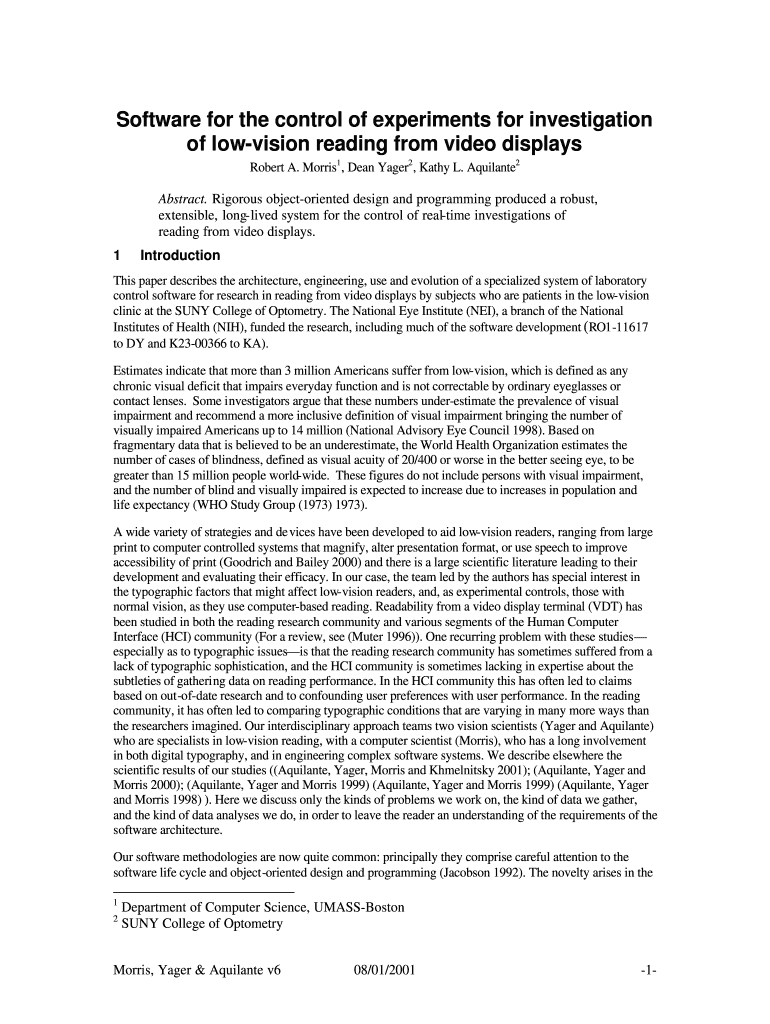
Software for the control of experiments for investigation refers to a specialized category of applications designed to facilitate and manage experimental procedures systematically. These software tools are integral in conducting research across various disciplines, such as psychology, biology, and engineering. Their primary function is to automate and optimize experimental setups, data collection, and analysis, thus enhancing accuracy and efficiency. By leveraging advanced computational techniques, these programs allow researchers to control variables, monitor real-time data, and perform complex statistical analyses.
How to Use the Software for the Control of Experiments for Investigation
Setting Up the Experiment
-
Define the Parameters: Start by entering the essential variables and conditions required for the experiment. This includes selecting the subject or material being tested, the environmental factors, and the duration of the experiment.
-
Configure Sensors and Devices: If your experiment involves hardware, connect all necessary equipment. Use the software interface to ensure all devices are properly calibrated and synchronized.
Running the Experiment
-
Real-Time Monitoring: Utilize the software’s real-time data visualization tools to monitor the experiment as it progresses. Adjust parameters if the software supports dynamic control.
-
Data Collection: Automated data logging features ensure that all experimental data is accurately recorded. This reduces human error and enhances repeatability.
Analyzing the Results
- Statistical Tools: Post-experiment, apply the in-built statistical tools to analyze the collected data. These features help in drawing meaningful conclusions and identifying patterns in the data.
Key Elements of the Software for the Control of Experiments for Investigation
-
User Interface: The software often includes a graphical user interface (GUI) that simplifies interaction, enabling users to set parameters, monitor progress, and retrieve results effortlessly.
-
Customization Features: Researchers can tailor the software to fit specific experimental protocols or methodologies, offering flexibility in a variety of research contexts.
-
Data Integration: Many programs support integration with other analytics tools and platforms, allowing for robust data manipulation and visualization capabilities.
Examples of Using the Software for the Control of Experiments for Investigation
-
Psychological Studies: Researchers conduct cognitive tests through software to measure reaction times or decision-making processes under different conditions.
-
Biological Experiments: In laboratories, biologists control and monitor cell culture conditions such as temperature, humidity, and light cycles.
-
Engineering Tests: Engineers use these programs to simulate stress tests or material fatigue under varying forces and conditions.
Legal Use of the Software for the Control of Experiments for Investigation
Compliance and Ethical Considerations
-
Data Protection: Researchers must ensure that any software used complies with data privacy regulations, such as GDPR or HIPAA, to protect sensitive information.
-
Ethical Standards: All experiments conducted using the software must align with institutional and governmental ethical guidelines, particularly when involving human or animal subjects.
Important Terms Related to Software for the Control of Experiments for Investigation
-
Control Variables: Variables that are kept constant to ensure that the effect on the dependent variable is due solely to the manipulation of the independent variable.
-
Statistical Software: Programs within the software designed to perform complex calculations, analyses, and data modeling.
-
Calibration: The process of configuring sensors and devices to ensure accurate measurements and consistency.
Who Typically Uses the Software for the Control of Experiments for Investigation
-
Academia: Professors and students in universities often use these tools for research and teaching purposes across various scientific fields.
-
Industry: Professionals in pharmaceuticals, biotechnology, and materials science utilize these applications for product development and quality assurance tests.


Examples of Using the Software for the Control of Experiments for Investigation
-
Case Study in Psychology: A study investigating the impact of sleep deprivation on cognitive performance utilized specialized software to monitor and record test outcomes, enabling a thorough analysis of mental fatigue over time.
-
Biological Field Research: Software helped automate data collection and monitoring of wildlife populations, providing insights into behavioral patterns without intrusive human interaction.
Comprehensive use of such software ensures rigorous scientific methods are upheld, leading to credible and reproducible research outcomes.