







Definition & Meaning
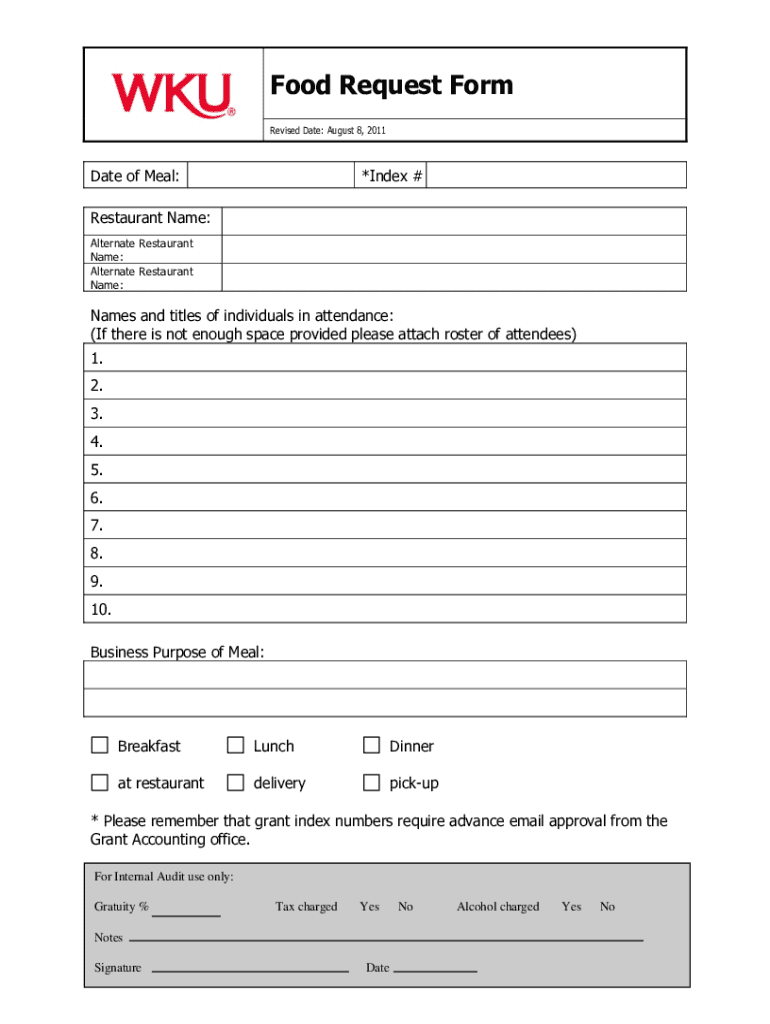
An Alternate Restaurant Form is commonly utilized to document meal requests for various events, highlighting specific details such as event date, restaurant options, attendees, business purpose, and financial considerations like gratuity and tax. This form is essential for organizing meal services and coordinating event logistics, ensuring all necessary arrangements are efficiently managed.
Practical Examples and Use Cases
In corporate settings, event organizers frequently use the Alternate Restaurant Form to streamline meal planning for conferences and meetings. For instance, a tech company might employ this form to arrange meals for a multi-day conference, capturing employee meal preferences and dietary restrictions. By documenting these preferences, the organization ensures a smooth and inclusive dining experience.
Additional Context
Organizations can also enhance budget management through the Alternate Restaurant Form by setting predefined expense limits and tracking costs related to meals. This practice fosters financial accountability and aides in maintaining compliance with organizational policies.
How to Use the Alternate Restaurant Form
Utilizing the Alternate Restaurant Form involves several key steps to ensure accurate documentation and seamless processing. Initially, users must gather essential information, including event details and attendee preferences. Next, users fill in specific sections of the form to capture accurate data.
Step-by-Step Process
-
Gather Event Details:
- Document the event date, time, and location.
- Identify the purpose, whether for business meetings or team-building sessions.
-
Collect Attendee Information:
- Determine the number of attendees and their dietary restrictions.
- Obtain approval from a designated authority, if required.
-
Select Restaurant Options:
- Choose from pre-approved restaurants that align with the event’s budget and preferences.
- Ensure the selection accommodates dietary needs and preferences.
-
Financial Considerations:
- Note associated costs, including tax and gratuity.
- Allocate budgetary approval as per organizational requirements.
Variations and Edge Cases
Special events may require adaptations of the standard form to cater to unique needs, such as additional fields for custom menu options or a section for special requests, ensuring comprehensive coverage.
Key Elements of the Alternate Restaurant
The Alternate Restaurant Form encompasses various essential components crucial for effective meal coordination at events.
Core Sections and Information
- Event Information: Details about the occasion, such as the title and objectives.
- Dining Preferences: Attendee dietary requirements and meal choices.
- Financial Details: Breakdown of meal costs, tax, and gratuity considerations.
- Approval Protocols: Sections to capture necessary approvals and signatures.
Important Terms and Definitions
- Gratuity: Additional service charge often added to the meal cost.
- Index Number: Identifier used within organizations for expense tracking.
Variations and Personalized Sections
Organizations might require additional sections based on their specific processes, such as fields for grant number approval or a section to note any logistical constraints specific to the event venue.
Steps to Complete the Alternate Restaurant Form
Completing the Alternate Restaurant Form is straightforward, involving clear stages that ensure all necessary information is captured accurately and efficiently.
Detailed Completion Process
-
Fill Basic Event Information:
- Title and primary purpose of the event.
-
Specify Dining Requirements:
- List potential restaurants and meal selections.
-
Financial Detailing:
- Provide estimated costs, including service fees.
-
Submit for Approval:
- Route the form to the designated authority for review and approval.
-
Finalize Arrangements:
- Confirm booking with the restaurant once approval is obtained.
Additional Considerations
Attention to detail is pivotal, ensuring every input is double-checked for accuracy, thus reducing the likelihood of errors during the event execution phase.
Who Typically Uses the Alternate Restaurant Form
Various teams and departments within organizations routinely employ the Alternate Restaurant Form for effective coordination of meal arrangements.


Common Users and Scenarios
- Event Planners: Coordinate meals for large-scale company events.
- Administrative Staff: Handle routine meal orders for weekly meetings or training sessions.
- Finance Departments: Ensure thorough documentation for reconciliation of event expenses.
Real-World Application Examples
A marketing team organizing a product launch might leverage this form to cater to a diverse group of attendees, ensuring everyone’s dietary needs are met while managing costs efficiently.

State-specific Rules for the Alternate Restaurant
The use and regulations surrounding the Alternate Restaurant Form may vary across different states, impacting how organizations handle meal arrangements and expense reporting.
Understanding Jurisdictional Differences
Some states may have specific tax implications or reporting requirements concerning meal expenses associated with business events. Organizations must maintain compliance with local laws by understanding these variances.
Compliance Considerations
Ensuring adherence to state regulations regarding meal expenses helps organizations avoid penalties and supports transparent financial reporting practices, fostering a culture of accountability and responsibility.
Business Types That Benefit Most From the Alternate Restaurant
The Alternate Restaurant Form proves invaluable across diverse business types, offering substantial advantages in operational efficiency and expense management.
Beneficiary Business Sectors
- Corporate Offices: Regular meetings and corporate events necessitate structured meal planning.
- Educational Institutions: Events for faculty, students, and external visitors require meticulous meal coordination.
- Non-Profits: Organizing community events and fundraisers where inclusive dining arrangements are essential.
Benefits and Efficiencies Gained
Using the Alternate Restaurant Form enhances overall event planning efficiency, reduces administrative workload through centralized documentation, and ensures adherence to budgetary constraints.
Practical Implementation Examples
A non-profit organizing a fundraising gala can use this form to document a seamless catering arrangement that aligns with donor preferences, optimizing guest satisfaction and fostering goodwill.




