






Definition and Purpose of the Analysis
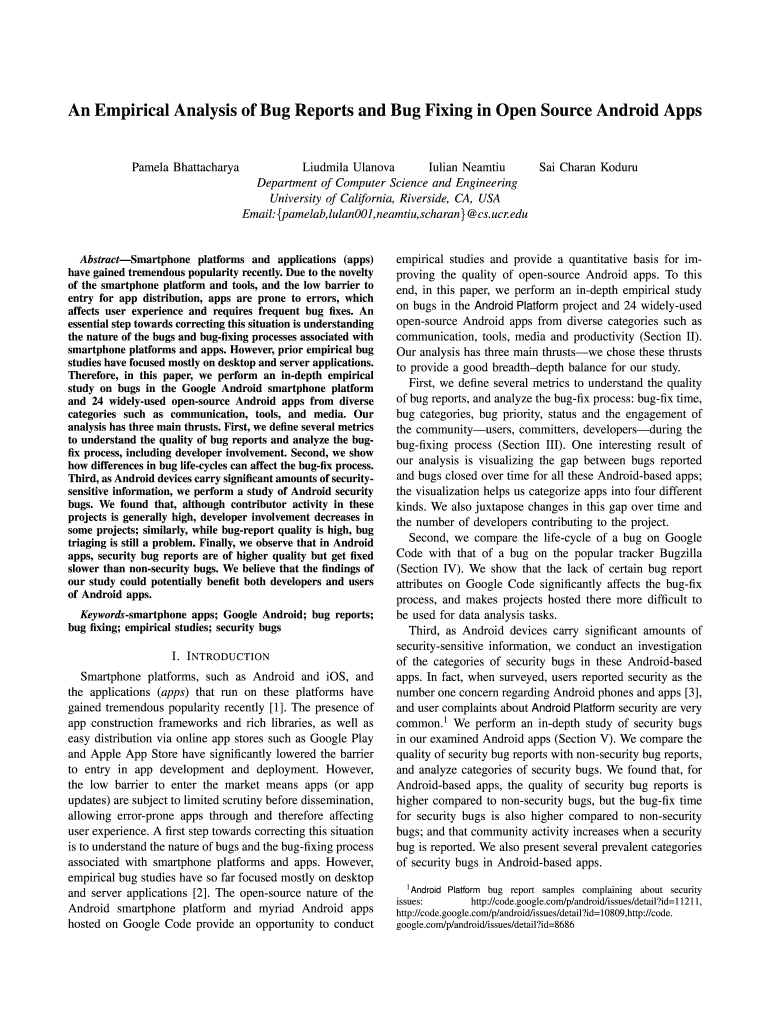
The empirical analysis of bug reports and bug fixing in open-source Android apps seeks to enhance understanding of the complexities associated with software bugs and their resolution. This study delves into aspects such as the nature and quality of bug reports, the involvement of developers in the bug-fixing process, and the implications of these issues on software development and maintenance. By examining key metrics like report quality, lifecycle differences, and security vulnerabilities, the analysis aims to inform and improve developer practices and user experiences within the Android ecosystem.
How to Conduct an Empirical Analysis
Conducting an empirical analysis requires a systematic approach. First, gather a sample of open-source Android apps, focusing on a representative set that provides comprehensive insights into bug reporting and resolution processes. Begin by collecting data from available project repositories, forums, and bug tracking systems. Analyze the collected bug reports for quality by evaluating completeness, clarity, and relevance. Explore various dimensions such as the time taken to fix a bug, the complexity of issues reported, and the correlation between report quality and resolution efficiency.
Key Elements of the Analysis
Several critical elements must be incorporated into the empirical analysis. These include:
- Bug Report Quality: Assessment of report completeness and clarity.
- Lifecycle Differences: Time taken from bug identification to resolution.
- Security Vulnerabilities: Evaluation of how security issues are reported and addressed.
- Developer Involvement: The role and responsiveness of developers in the bug-fixing process.
Each element contributes to understanding the challenges and areas for improvement within the bug management lifecycle.
Steps Involved in the Analysis Process
To systematically analyze bug reports and bug fixing:
- Define Scope: Select the apps and platforms for analysis.
- Data Collection: Gather bug reports and related data from repositories.
- Quality Assessment: Evaluate the quality of collected bug reports.
- Quantitative Analysis: Measure metrics such as resolution time and developer involvement.
- Qualitative Insights: Investigate developer interactions and community feedback.
- Reporting Findings: Compile findings and propose actionable insights.
Importance of Empirical Analysis for Developers
Understanding and leveraging empirical analysis benefits developers by:
- Enhancing bug report quality, thereby streamlining the resolution process.
- Identifying patterns and trends that can inform preemptive measures.
- Improving collaboration practices within open-source communities.
By addressing inefficiencies, developers can increase software reliability and user satisfaction.
Who Typically Engages in This Analysis
The primary audience for this analysis includes:
- Developers and Engineers: Seeking to enhance software quality.
- Project Managers: Aiming to improve project milestone adherence.
- Research Institutions: Conducting studies on software maintenance and evolution.
Participation from these groups drives insights into effective bug management practices.
Challenges and Edge Cases in Bug Management
Analyzing bug reports presents several challenges, including ineffective triaging, lack of comprehensive reports, and delayed resolutions, particularly for security vulnerabilities. Edge cases like rare software configurations or less frequent interactions can skew data. Addressing these challenges requires robust methods to ensure accuracy and relevance in findings.
Examples of Effective Bug Fixing
Case studies from prominent Android projects illustrate successful bug-fixing approaches:
- Example App A: Implemented standard templates for reporting, resulting in higher quality reports.
- Example App B: Established a rapid response protocol for security vulnerabilities.
- Example App C: Fostered active community engagement, improving lifecycle efficiency for bug fixes.
These examples highlight the diverse strategies that communities employ to overcome challenges in fixing bugs in open-source Android apps.