



01. Edit your form mcsa 5875 online
Type text, add images, blackout confidential details, add comments, highlights and more.

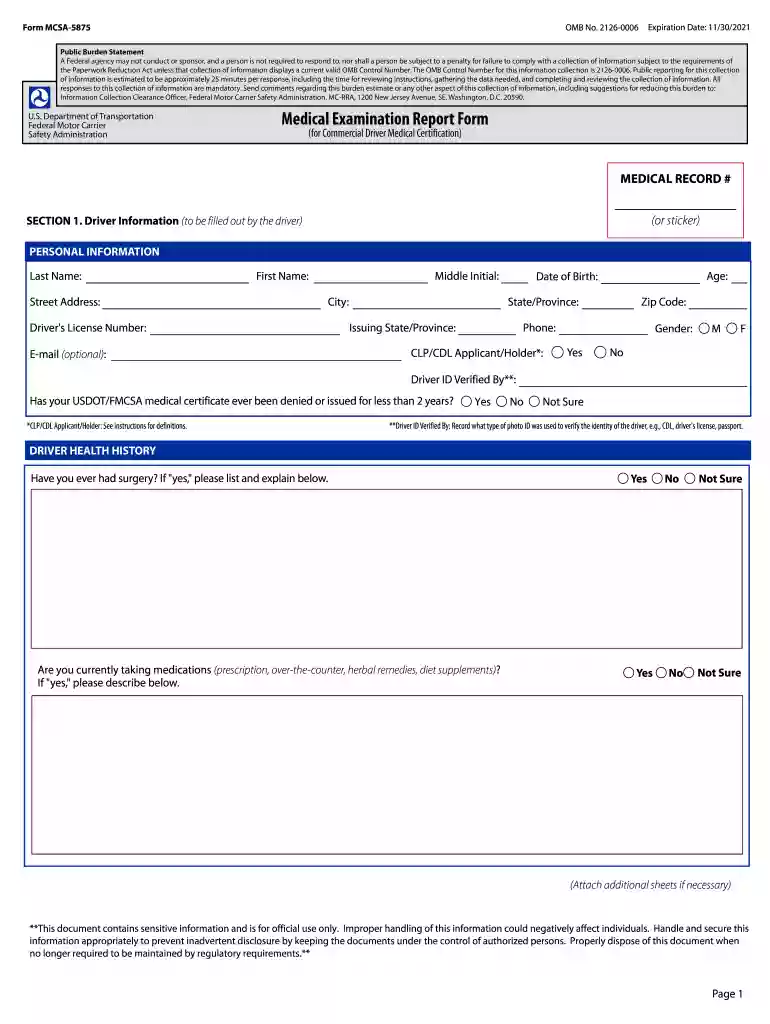
Type text, add images, blackout confidential details, add comments, highlights and more.

Draw your signature, type it, upload its image, or use your mobile device as a signature pad.

Send fmcsa form mcsa 5875 via email, link, or fax. You can also download it, export it or print it out.

Start filling out your MCSA-5875 form online for free today!
We've got more versions of the form mcsa 5875 form. Select the right form mcsa 5875 version from the list and start editing it straight away!
At DocHub, your data security is our priority. We follow HIPAA, SOC2, GDPR, and other standards, so you can work on your documents with confidence.



Form, MCSA-5875. The driver is required to obtain a new physical examination and a new Medical Examination Report Form, MCSA-5875, should be completed.Read more
It provides pushbutton selection of two microphones and one auxiliary pro- gram source, a (B) program channel (with level control), and a monitor capability.Read more


