






Definition & Meaning
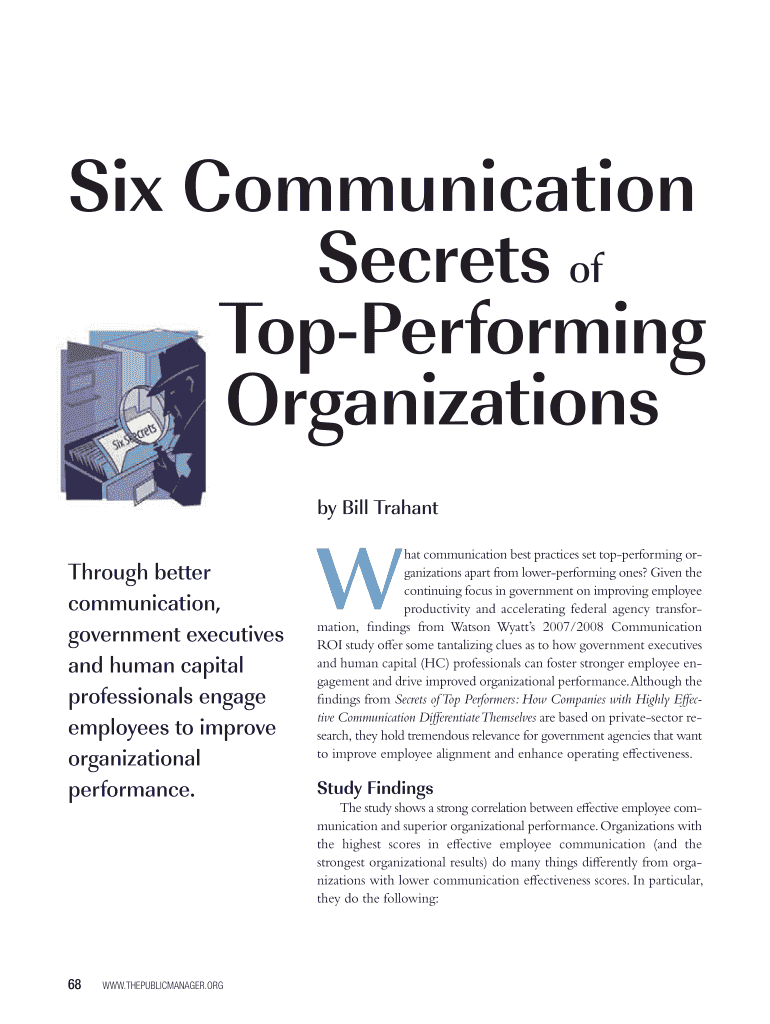
The concept of "Six Communication" encompasses six foundational practices designed to enhance communication within organizations, primarily focusing on effective employee interactions to boost organizational performance. These practices form a comprehensive framework that guides institutions, especially in government contexts, toward better alignment with their goals and improving employee engagement. By systematically addressing communication needs, organizations can create a coherent strategy that supports all facets of their operations, contributing to a more dynamic and productive working environment.
Key Elements of the Six Communication
The Six Communication framework consists of several core components that organizations implement to maximize communication effectiveness:
- Focusing on Customer Needs: Prioritizing customer needs ensures that communication is aligned with service delivery objectives, enhancing customer satisfaction.
- Employee Involvement in Decision-Making: Encouraging employees to participate in decision-making processes empowers them and fosters a culture of inclusivity and shared responsibility.
- Training Managers to Communicate Effectively: Providing managers with communication training enables them to relay information more clearly and effectively, which is crucial for maintaining team coherence.
- Efficient Change Management: By managing changes in an organized manner, organizations can minimize disruption and maintain productivity during transition phases.
- Measuring Communication Impact: Regular assessment of communication strategies ensures continual improvement and adaptability to new challenges.
- Branding the Employee Experience: Positioning the organization as an employer of choice attracts top talent and enhances overall morale and motivation.
Steps to Complete the Six Communication
Implementing the Six Communication involves several structured steps that institutions must follow to realize the full benefits:
- Assessment of Current Communication Practices: Conduct an audit of existing practices to identify strengths and areas for improvement.
- Development of a Communication Strategy: Outline a strategic plan that incorporates all elements of the Six Communication.
- Implementation of Employee Training Programs: Provide workshops and resources aimed at improving communication skills at all levels.
- Integration of Feedback Mechanisms: Establish channels through which employees can provide feedback on communication effectiveness.
- Monitoring and Evaluation: Regularly review progress against objectives to gauge the success of implemented strategies.
Why Should You Use the Six Communication
Adopting the Six Communication framework offers significant advantages for organizations:
- Enhanced Engagement: Improved communication results in higher levels of employee engagement, leading to increased productivity and morale.
- Streamlined Operations: By reducing misunderstandings and redundancies, communication efficiency translates to smoother organizational processes.
- Better Alignment with Objectives: Ensures that all team members understand and are committed to organizational goals, facilitating unified efforts.
- Strategic Advantage: Organizations with strong internal communication often enjoy a competitive advantage in their industry by being more agile and responsive.
Who Typically Uses the Six Communication
The application of the Six Communication is versatile, benefiting a variety of stakeholders within an organization:
- Government Agencies: These entities use this framework to maintain transparency and collaborate effectively towards achieving public service objectives.
- Large Corporations: With complex structures, these organizations benefit from enhanced coordination and coherence across departments.
- Nonprofits: By aligning communication with mission-driven activities, these organizations can maximize their societal impact.
- Educational Institutions: Facilitate better stakeholder communication between administration, faculty, and students for a cohesive educational environment.

State-Specific Rules for the Six Communication
While the Six Communication framework is broadly applicable, certain state-specific rules and regulations can impact implementation, especially in the governmental context:
- Compliance with State Communication Regulations: Adhering to rules regarding transparency and information dissemination is crucial given varying state laws.
- Adaptation to Local Needs: Recognizing cultural and demographic characteristics unique to a state can inform tailored communication strategies.
- Budgetary Considerations: State agencies must often operate within specified budget constraints, impacting the scope and methods of communication initiatives.
Examples of Using the Six Communication
Real-world applications of the Six Communication demonstrate its efficacy across various sectors:
- A federal agency enhanced its service delivery by focusing on customer feedback, resulting in improved public satisfaction scores.
- A corporate entity achieved a higher retention rate by involving employees in strategic decision-making processes, which fostered a sense of ownership.
- A nonprofit successfully branded its employee experience, attracting a more diverse and skilled workforce committed to the organization’s mission.
Important Terms Related to Six Communication
Understanding key terminology associated with the Six Communication is essential for successful implementation:
- Stakeholder Engagement: The process of involving all relevant parties in communication strategies to secure buy-in and alignment.
- Feedback Loops: Mechanisms that allow for continuous information flow and improvement based on employee and customer input.
- Communication Audit: A comprehensive review of current communication methods and effectiveness within an organization.
Legal Use of the Six Communication
The legal framework surrounding the Six Communication involves compliance with regulations and standards:
- Adherence to Privacy Laws: Ensuring that all communication respects confidentiality and data protection laws, such as GDPR or local equivalents.
- Compliance with Fair Labor Standards: Effective communication with employees must also respect labor rights and ensure transparency in policy dissemination.
- Documentation and Record-Keeping: Maintaining thorough records of communication initiatives can safeguard against legal disputes and demonstrate compliance.