






Definition & Meaning
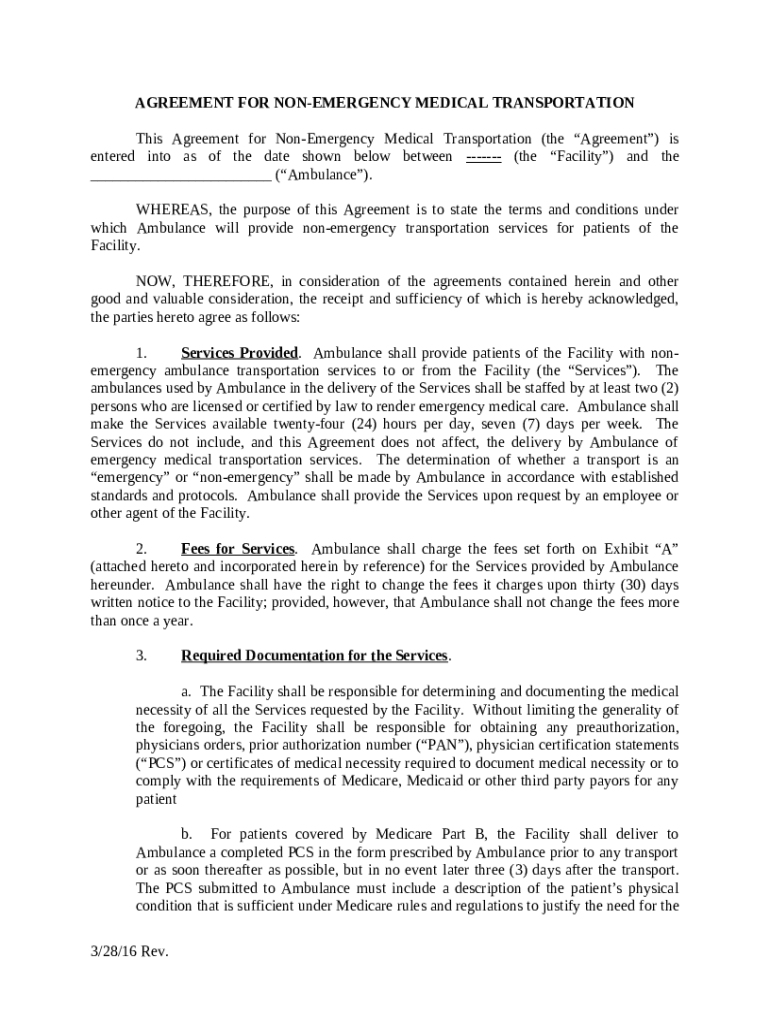
The "Agreement for Non-Emergency Medical Transportation" is a formal contract between a medical facility and a transportation service provider. This agreement specifies the terms under which the service provider will transport patients for non-emergency medical needs. It covers aspects such as service availability, fees, and detailed responsibilities to ensure smooth operational collaboration. The document is crucial for delineating the expectations between both entities, ensuring compliance with legal and health-related standards while facilitating patient transport.
How to Use the Agreement for Non-Emergency Medical Transportation
When using this agreement, both parties need to first review and understand all terms and conditions outlined within the document. This involves:
-
Reviewing Service Details: Ensure all service details such as types of transportation services (wheelchair transport, ambulatory services) and service hours are accurate.
-
Setting Payment Terms: Clearly outline the payment structures, including per-trip fees or contract rates, and payment schedules.
-
Establishing Responsibilities: Define each party's responsibilities, including the facility's obligation to verify the medical necessity and the provider's requirement to adhere to HIPAA regulations.
-
Finalizing and Signing: Both parties should sign the agreement, acknowledging acceptance of terms. Use electronic signing options for efficiency and legal compliance.
Key Elements of the Agreement for Non-Emergency Medical Transportation
- Service Availability and Scope: Specifies the availability of transportation services, including hours of operation and types of patient transport provided.
- Fee Structure: Details the costs associated with various transportation services, including any additional fees for services beyond the basic agreement.
- Documentation and Compliance: Lists required documentation, such as insurance and licenses, to comply with state and federal regulations.
- Termination Clause: Outlines the conditions under which either party may terminate the agreement, thereby protecting both the facility and the service provider.
- HIPAA Compliance: Ensures the privacy and security of patient information during transport operations in accordance with health confidentiality standards.
Steps to Complete the Agreement for Non-Emergency Medical Transportation
-
Gather Required Information: Both parties need to collect all necessary personal and organizational details, including contact information and service capabilities.
-
Fill Out the Agreement: Input all gathered information into the appropriate sections of the form. Be thorough to avoid missing critical details.
-
Review Contract Terms: Double-check each clause for accuracy and mutual understanding. Make amendments if both parties agree to modify terms.
-
Obtain Necessary Approvals: Seek approval from appropriate personnel within each organization to authorize the contractual terms.
-
Finalize Through Signature: Use digital platforms to sign the agreement electronically, ensuring a legally binding document.
Important Terms Related to the Agreement
- Service Provider: The company or entity responsible for delivering transportation services.
- Medical Necessity: The documentation required to justify the non-emergency transport of a patient.
- HIPAA: The Health Insurance Portability and Accountability Act, which ensures patient information confidentiality.
- Termination Clause: Provisions that detail how and when the agreement can be lawfully ended.
- Contracted Rates: Predetermined costs agreed upon for the service provision over specified periods.
Legal Use of the Agreement for Non-Emergency Medical Transportation
This agreement must comply with local, state, and federal laws to ensure legal validity:
- Regulatory Compliance: Both parties should ensure they meet transportation and health service regulations, including proper certification and licensing.
- HIPAA Compliance: The agreement should explicitly state the protection measures in place for patient data and ensure all operations adhere to these privacy regulations.
- Contract Enforcement: The agreement should be structured to allow enforcement in a court of law if necessary, including dispute resolution procedures.
Who Typically Uses the Agreement for Non-Emergency Medical Transportation
- Hospitals and Clinics: To ensure patients have access to reliable transportation for appointments, treatments, and follow-up visits.
- Nursing Homes and Rehabilitation Centers: For scheduled transport of residents to offsite appointments or holiday visits.
- Insurance Companies: Sometimes involved to verify or reimburse the transportation costs if applicable under specific health plans.
- Non-Emergency Medical Transport Companies: To formalize relationships and service agreements with healthcare facilities.


State-Specific Rules for the Agreement for Non-Emergency Medical Transportation
Since regulations can vary by state, it is crucial to:
- Research Local Regulations: Verify that the service provider complies with state-specific health, safety, and insurance requirements.
- Customize the Agreement: Make necessary adjustments to the agreement to reflect state-specific legal requirements, including minimum insurance coverage and operational guidelines.
- Consult Legal Experts: It's advisable to have a legal professional familiar with local laws review the contract to ensure compliance and avoid future disputes.