Understanding the Property Tax Deduction Claim for Veterans in New Jersey
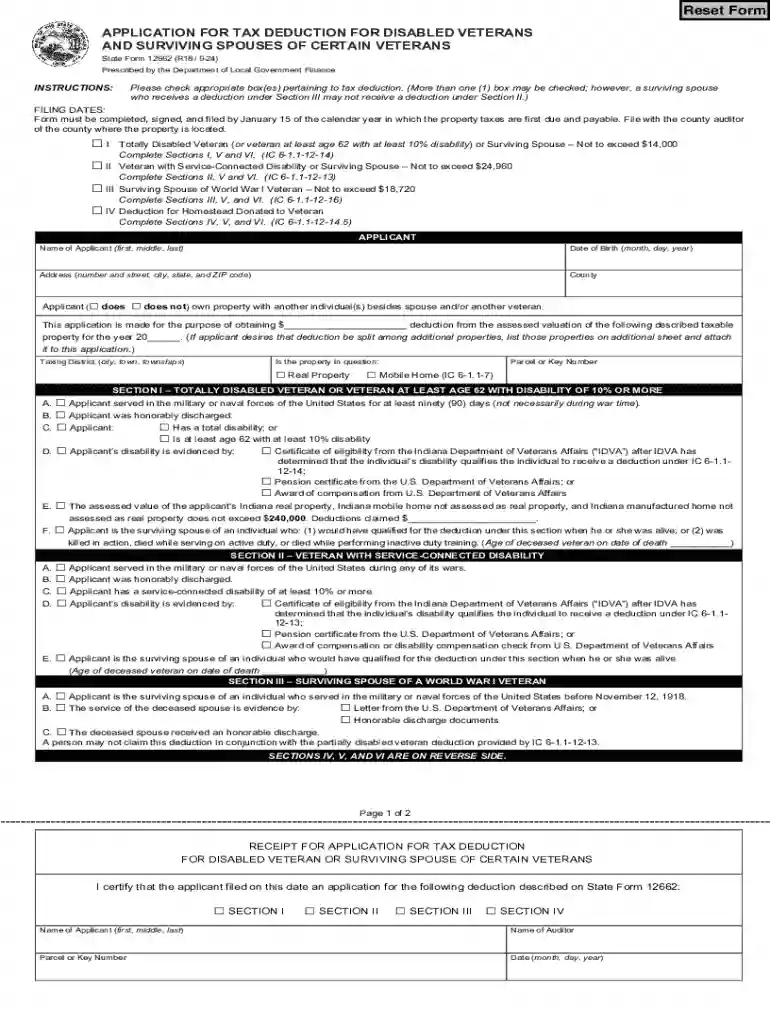
The Property Tax Deduction Claim by Veteran in New Jersey offers financial relief to eligible veterans by reducing their property tax liabilities. This claim is designed to acknowledge the contributions of veterans, and it specifically targets those who have served in the United States Armed Forces.
Edge Cases and Special Conditions
- Surviving Spouses: In certain cases, surviving spouses of veterans may qualify for the deduction if they have not remarried.
- Disability Status: Veterans with service-related disabilities may be eligible for additional property tax benefits.
Steps to Complete the New Jersey Veteran Property Tax Deduction Form
- Obtain the Form: Access the form through the New Jersey Department of Taxation’s website or your local tax assessor’s office.
- Complete the Necessary Information: Fill in personal details, including veteran or surviving spouse information, property identification, and proof of veteran status.
- Gather Required Documents: Collect documents such as discharge papers (DD-214), proof of residence, and any disability verification if applicable.
- Submit the Form: The completed form can be submitted in person, via mail, or through designated online submission portals depending on your local jurisdiction.
- Await Confirmation: Wait for confirmation from the local tax assessor regarding the approval of your deduction claim.
Required Documents for Filing
Filing this claim necessitates the submission of several key documents:
- Discharge Papers (DD-214): Proof of honorable discharge from the military service.
- Proof of Ownership: Legal documents showing ownership of the property.
- Residency Documentation: Evidence that the property is the principal residence, such as utility bills or voter registration.
- Disability Verification (if applicable): Official documents that substantiate any service-related disabilities.
Filing Deadlines and Important Dates
- Annual Deadline: Applications should be submitted by December 31 each year to be considered for that tax year.
- Review Periods: Allow for processing time after submission, as review periods may vary by municipality.
Legal Use and Compliance
Using the deduction in compliance with state rules is critical:
- True Representation: Ensure accuracy and honesty in your application to avoid penalties for fraudulent claims.
- Annual Renewal: Eligible veterans must reaffirm eligibility annually by submitting an updated application with supporting documentation.
Penalties for Non-Compliance
Non-compliance or fraudulent claims can lead to:
- Financial Penalties: Repayment of the improperly claimed deduction plus possible fines.
- Legal Consequences: Potential legal action for knowingly submitting false information.
Examples of Penalties
- Unreported Change of Status: Failure to report changes in eligibility, like a move out of state or death of a veteran, can lead to penalties.
Software Compatibility
For those utilizing software for financial management:
- Integration Options: Most tax preparation software, such as TurboTax or QuickBooks, may offer features to track and integrate deductible amounts into overall tax calculations.
- Manual Entry: Ensure that the deduction is manually entered if the software does not automatically include this option.
State-Specific Rules and Comparisons
New Jersey's rules for veteran property tax deductions may differ from those of other states:
- Comparison with Neighboring States: Review and compare New Jersey's provisions to those in New York or Pennsylvania to understand regional differences.
- Uniformity: The core requirements for veteran status are typically consistent across states, though implementation and additional benefits may vary.
Key Takeaways
- Filing for the Property Tax Deduction Claim by Veteran in New Jersey can provide significant financial relief for eligible veterans.
- Verification of status, timely submission, and precise documentation are crucial for successfully claiming this deduction.
- Annual renewal and compliance with legal standards are essential to avoid penalties and ensure continued eligibility.