






Definition and Meaning
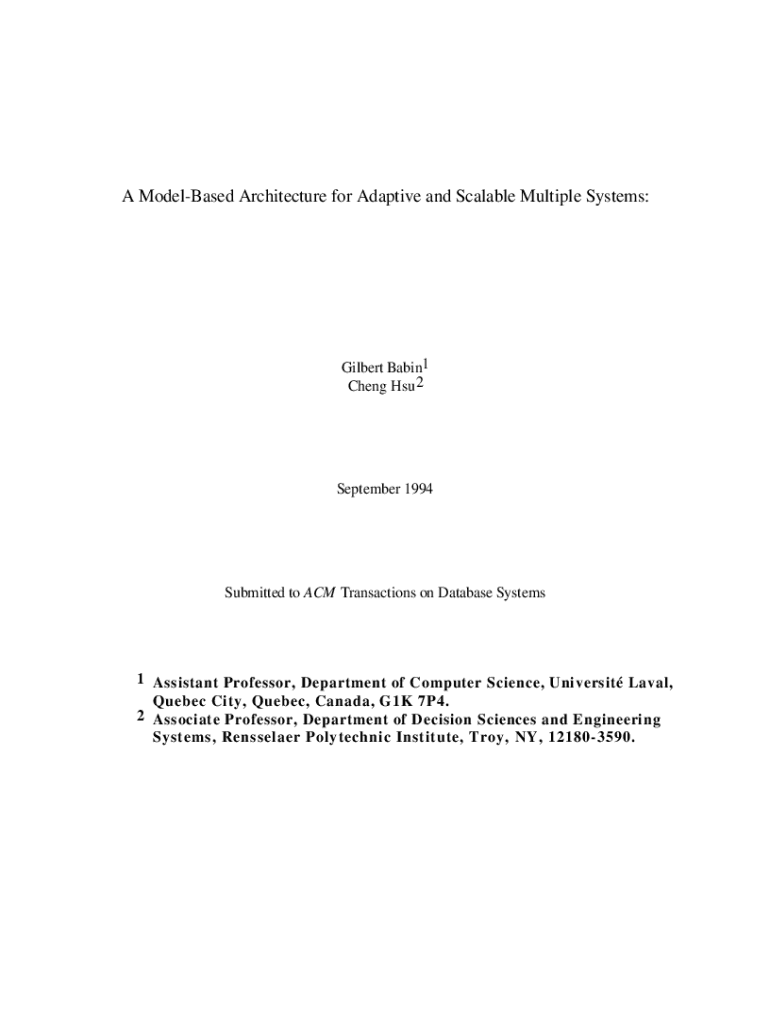
Enterprise Integration and Modeling at Rensselaer Polytechnic refers to a structured approach for integrating and managing diverse data and knowledge systems within an organization. This model emphasizes adaptiveness and scalability, addressing the challenges of interoperability and performance that often hinder traditional systems. By utilizing a metadatabase model, enterprises can incrementally integrate legacy and non-standard systems, facilitating a more cohesive and efficient data architecture.
Applications of the Model
- Data Management: Integrates multiple data sources to create a unified system.
- Knowledge Systems: Enhances the functionality and scalability of knowledge systems.
- System Interoperability: Resolves compatibility issues among diverse systems.
Practical Example: Imagine a manufacturing company using an older inventory system that struggles to communicate with newer financial software. Enterprise Integration and Modeling can bridge these gaps, facilitating seamless data flow.
How to Use the Model
To employ this enterprise integration approach, initiate a comprehensive evaluation of current systems and identify areas lacking interconnectivity. Once problem areas are pinpointed, utilize the Rule-Oriented Programming Environment (ROPE) to develop rule-oriented shells that facilitate concurrent processing and ensure data integrity.
Steps to Effective Integration
- Assessment: Audit existing systems and identify integration needs.
- Planning: Develop a strategic roadmap that outlines the stages of integration.
- Execution: Implement ROPE to facilitate logical operation between systems.
- Testing: Deploy prototype solutions in controlled environments.
- Review: Continuously monitor system performance and interoperability.
Example: A banking institution might use this process to connect systems handling customer data, risk assessments, and transaction processing, thus enhancing operational efficiency.
Key Elements of the Model
Metadatabase Model
The cornerstone of Enterprise Integration and Modeling is its metadatabase framework, which allows for the flexible integration of diverse systems without a complete overhaul.
- Flexibility: Adapts to evolving technology landscapes.
- Scalability: Grows with the organization's needs.
- Incremental Integration: Facilitates gradual incorporation of legacy systems.
Example Scenario: A university’s research arm uses the metadatabase model to integrate different research datasets for comprehensive analytics.
Important Terms
Understanding the key terminology is essential to master Enterprise Integration and Modeling.
- Interoperability: The ability of different IT systems and software applications to communicate and exchange data effectively.
- Scalability: The capability of a system to handle growth in workload or expansion demands.
- Rule-Oriented Shells: Frameworks within ROPE that control system rules and allow for parallel data processing.
Example: In a telecommunications context, interoperability might involve different devices and platforms working together seamlessly.
Who Typically Uses This Model
Various types of organizations benefit significantly from implementing Enterprise Integration and Modeling.
Primary Users
- Manufacturing Enterprises: Streamlines production and operations.
- Healthcare Systems: Integrates patient management systems with administrative functions.
- Financial Services: Synchronizes customer relationship management with financial databases.
Example Scenario: A hospital system utilizing this model can ensure that electronic health records and billing systems operate cohesively.
Legal Use and Compliance
Incorporating this model must align with legal standards, especially concerning data protection and privacy.
Compliance Considerations
- Data Protection: Ensures encryption and secure data transfer between systems.
- Regulatory Adherence: Meets industry-specific regulations such as HIPAA for healthcare and GDPR for data protection.
Example: A tech company deploying this model must comply with federal and state regulations on data privacy and consumer protection.
Examples of Application
Enterprise Integration and Modeling is not just theoretical; numerous organizations have applied these principles successfully.
Case Studies
- Automotive Industry: A car manufacturer utilized the model to synchronize supply chain management with production scheduling.
- E-commerce Platforms: Online retailers harmonized their inventory management systems with customer data analytics to enhance user experience.
- Educational Institutions: Universities integrated various departmental databases to improve administrative efficiency.
Example Summary: An e-retailer applied the model, resulting in a 30% decrease in data processing times across departments.
Software Compatibility
Compatibility with existing software systems is vital for the implementation of Enterprise Integration and Modeling.
Supported Systems
- ERP Platforms: Compatible with popular ERP solutions for streamlined operations.
- Cloud-Based Solutions: Integrates with cloud storage and computing services for enhanced remote accessibility.
Example: A retail business uses an existing ERP system alongside the integration model to optimize their inventory turnover rate effectively.
Business Types That Benefit Most
Some industries inherently gain more advantages from employing Enterprise Integration and Modeling techniques.
Benefited Industries
- Logistics and Transportation: Coordinates routing systems with client databases for efficient service delivery.
- Energy Sector: Integrates resource management systems with financial reporting.
- Public Sector: Harmonizes different governmental departments’ data handling systems.
Example: A public transit authority uses the model to ensure real-time bus tracking and scheduling systems are aligned with user information portals.