






Definition & Meaning
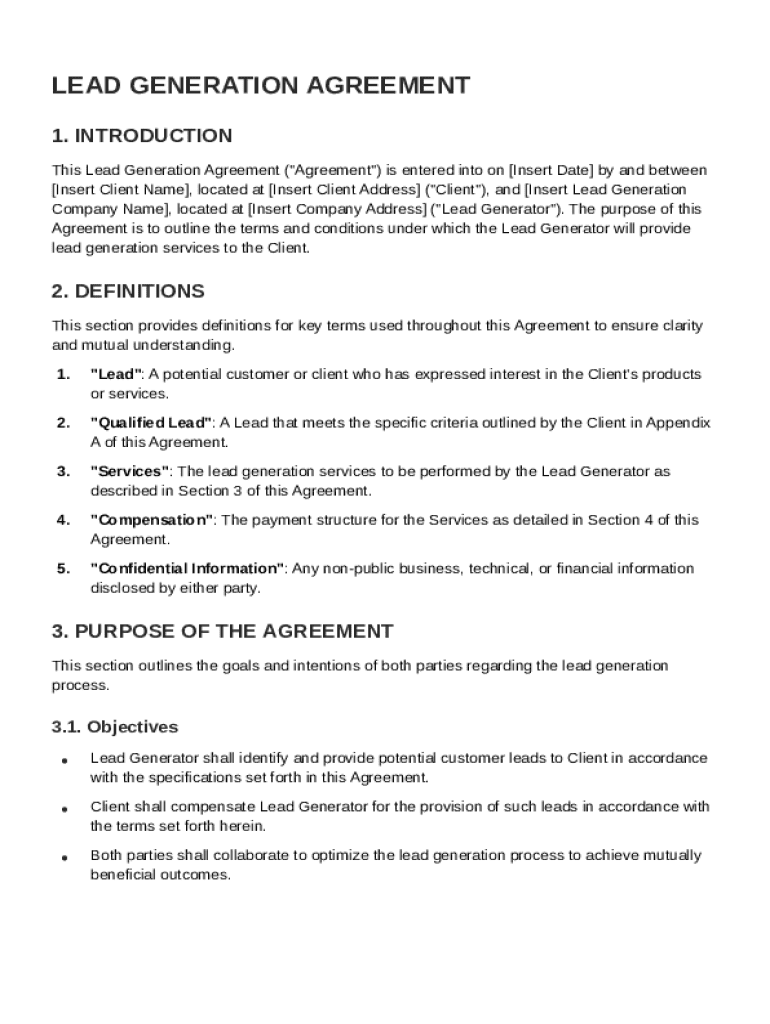
The Lead Generation Agreement Template is a contractual document used to define the relationship between a client and a lead generator. It provides a detailed framework that outlines the terms for providing lead generation services, ensuring both parties have a clear understanding of their responsibilities and obligations. Within the agreement, crucial terms such as 'Lead' and 'Qualified Lead' are explicitly defined to avoid any misunderstandings. This helps maintain a focused approach to generating potential customer leads, enhancing the effectiveness and value of the services provided.
Important Terms Related to Lead Generation Agreement Template
Having a firm grasp of the important terms used in the Lead Generation Agreement Template is essential for all parties involved. Key terms include:
- Lead: Refers to an individual or entity that has expressed interest in a client's products or services.
- Qualified Lead: A lead that meets pre-defined criteria, indicating a higher likelihood of conversion.
- Compensation Structure: The financial model agreed upon for remunerating the lead generator, which could be commission-based, flat fee, or performance-driven.
- Confidentiality Obligations: Measures put in place to protect sensitive information shared between parties.
- Termination Conditions: The circumstances under which the agreement can be ended by either party.
Understanding these terms ensures that the agreement serves its intended purpose effectively.
Key Elements of the Lead Generation Agreement Template
A comprehensive Lead Generation Agreement encompasses several key elements that lay the foundation for what each party can expect from the arrangement:
- Scope of Services: A detailed description of the lead generation services to be provided, including any specific methods or channels to be employed.
- Responsibilities: The roles and duties each party is expected to fulfill throughout the agreement's duration.
- Confidentiality: Provisions related to the nondisclosure of proprietary information.
- Compensation Details: Clear specification of how and when payments will be made.
- Duration and Termination: The length of the agreement and conditions under which it may be terminated.
These components ensure clarity and prevent disputes by clearly outlining expectations and responsibilities.
How to Use the Lead Generation Agreement Template
To effectively use the Lead Generation Agreement Template, follow these steps:
- Review the Template: Thoroughly read the template to understand all clauses and sections.
- Tailor to Specific Needs: Customize the document to reflect the unique aspects of the agreement, such as specific services and compensation structures.
- Define Clear Terms: Ensure all definitions, such as those for 'Lead' and 'Qualified Lead,' are clearly outlined and agreed upon.
- Assign Responsibilities: Clearly delineate the duties and responsibilities of both parties.
- Include Legal Safeguards: Incorporate necessary legal protections related to confidentiality and data security.
- Review with Legal Counsel: Have the completed document reviewed by a legal professional to ensure compliance with applicable laws.
By following these steps, both parties can ensure the agreement is comprehensive and enforceable.
Legal Use of the Lead Generation Agreement Template
The Lead Generation Agreement Template should be used in accordance with legal standards to ensure its enforceability. The template adheres to guidelines established by relevant U.S. laws, such as those pertaining to contract formation, data privacy, and confidentiality. Legal compliance ensures that the agreement is binding and protects the interests of both parties. Key aspects include:
- ESIGN Act Compliance: Ensures electronic signatures are legally valid.
- Data Privacy: Adheres to federal regulations concerning the handling of personal and sensitive data.
- Confidentiality Clauses: Protect against unauthorized information sharing.
Reviewing the agreement with a legal professional familiar with U.S. laws can provide peace of mind that it meets all necessary legal standards.
Examples of Using the Lead Generation Agreement Template
Adopting the Lead Generation Agreement Template can lead to successful partnerships when used correctly. Real-world scenarios that illustrate its application include:
- Freelancer Agreements: Independent contractors provide lead generation services to various clients, using the agreement to outline service specifics.
- Corporate Collaborations: Companies work with external lead generation agencies to expand their market reach, solidifying terms through the agreement.
- Startup Initiatives: New businesses employ lead generators to build customer bases, clearly defining expectations and compensation.
These examples highlight the adaptability of the template across various business contexts.
Business Types That Benefit Most from Lead Generation Agreement Template
Certain business types find the Lead Generation Agreement Template particularly beneficial due to their reliance on acquiring new leads:
- Digital Marketing Agencies: Regularly collaborate with clients to drive traffic and generate leads.
- Real Estate Companies: Depend on lead generation to find prospective buyers or renters.
- Software as a Service (SaaS) Providers: Utilize lead generation to increase subscriptions and user engagement.
- Online Retailers: Implement lead generation strategies to boost sales and customer loyalty.
These businesses can enhance their operations by formalizing lead generation partnerships using the agreement template.
State-by-State Differences
When using the Lead Generation Agreement Template, it's crucial to recognize state-specific regulations that might impact its terms and enforceability. Differences may exist in:
- Consumer Privacy Laws: Some states, like California, have stricter guidelines on data protection.
- Electronic Signatures Legality: The acceptance of electronic signatures can vary by state.
- Enforceable Terms: Certain contractual terms may need adjustments based on local jurisdictional requirements.
Understanding and adapting to these differences ensures the agreement remains valid and effective across varying legal landscapes. Consulting a legal advisor knowledgeable of state laws can provide targeted insights.