






Definition & Context of John Marshall and the Defense
John Marshall was a prominent figure in American history, renowned for his role in shaping the early judicial landscape of the United States. His involvement in defending the Alien and Sedition Acts, particularly through the Minority Report, marks a significant chapter in his career and in American legal history. This document reflects Marshall's efforts to balance federal power with individual electoral prospects. Understanding John Marshall's defense during this period is crucial for grasping broader constitutional debates of late 18th-century America.
Historical Background of the Minority Report
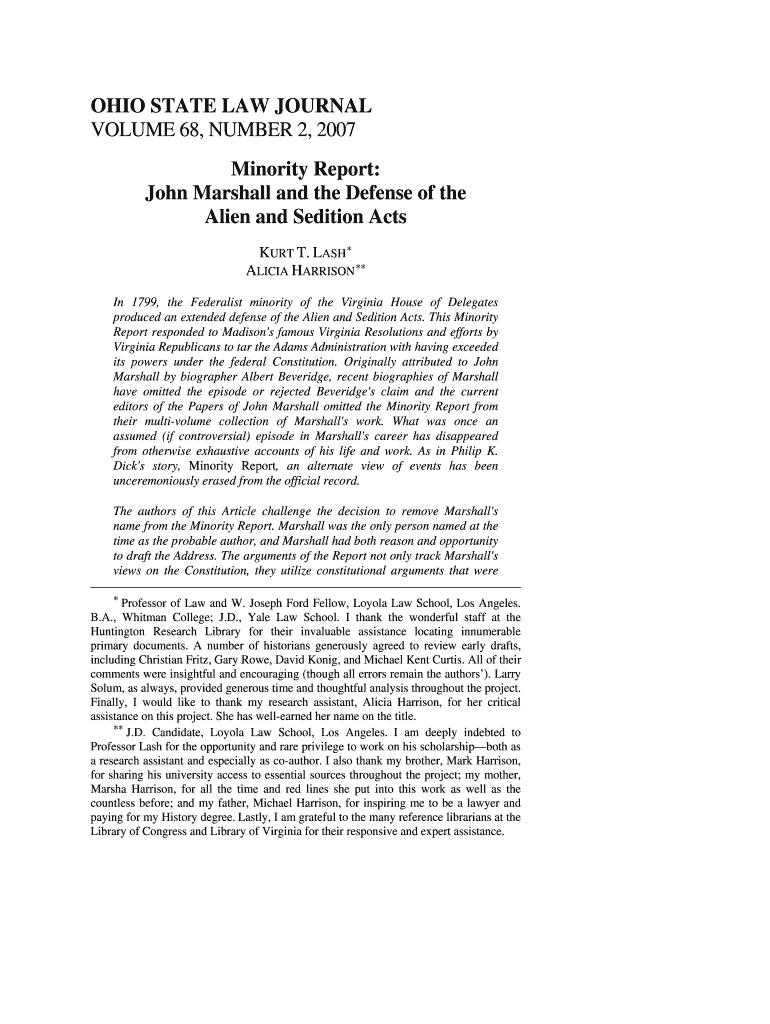
The Minority Report was crafted as a response to growing political tensions surrounding the Alien and Sedition Acts in 1799. This document played a pivotal role in defending these acts, with Marshall's legal ideas closely mirroring their provisions. Critics often disputed authorship, with debates centered on whether Henry Lee or John Marshall himself penned it. Scholars like Kurt T. Lash and Alicia Harrison provide compelling evidence suggesting Marshall's integral involvement in the report's creation or at least significant collaboration.
Importance of John Marshall’s Defense
John Marshall's defense of the Alien and Sedition Acts underpins significant aspects of his legal philosophy, which later influenced key Supreme Court rulings. His arguments in the report mirror the judicial reasonings that became hallmarks of his Supreme Court tenure, reflecting a steadfast commitment to preserving federal authority. Understanding this defense allows for deeper insight into Marshall's later decisions and the foundational principles of federalism in American governance.
Key Elements of the Defense
Several key elements define Marshall's defense within the Minority Report:
- Preservation of Federal Authority: Marshall advocated for robust federal power, which he deemed necessary to maintain national security and socio-political order.
- Constitutional Justification: His defense hinges on a constitutional interpretation that validated the controversial acts as protective measures against external threats.
- Electoral Considerations: Marshall's stance reflects a strategic positioning to safeguard his political career, balancing judicial ideals with pragmatic electoral interests.
Legal Implications of the Defense
The legal implications of Marshall’s defense resonate through the American legal system, influencing how constitutional law interprets federal powers. His routing of federal supremacy shaped subsequent legal debates and set precedents concerning the extent and limits of legislative action against individual liberties during times of perceived national crises.
Prominent Figures and Theories
John Marshall's engagement with the Minority Report involves an intricate interplay with several contemporaneous figures and legal theories:
- Henry Lee: Alleged co-author and significant figure in the controversy regarding the Minority Report's authorship.
- Federalist Ideals: Marshall's defense aligned with Federalist ideals, advocating for a strong centralized government amidst populistic and state-rights rhetoric.
State-Specific Considerations
Marshall's ideas, while nationally significant, faced varied receptions across different states:
- Federal vs. State Powers: Some states viewed these acts, and thus Marshall's defense, as federal overreach, igniting further debates regarding state sovereignty.
- Regional Political Climate: The report's reception was shaped by prevailing local political climates, reflecting broader national divides.
Scholarly Analysis and Modern Perspectives
Contemporary scholars delve into this historical document to unravel its nuances and lasting impact. Modern perspectives argue the extent of Marshall’s ideological commitment to federalism and how it set foundational precedents for his judicial approach as Chief Justice. His ability to navigate complex political landscapes while reinforcing constitutional law offers invaluable insights into the architecting of early American legal doctrines.