
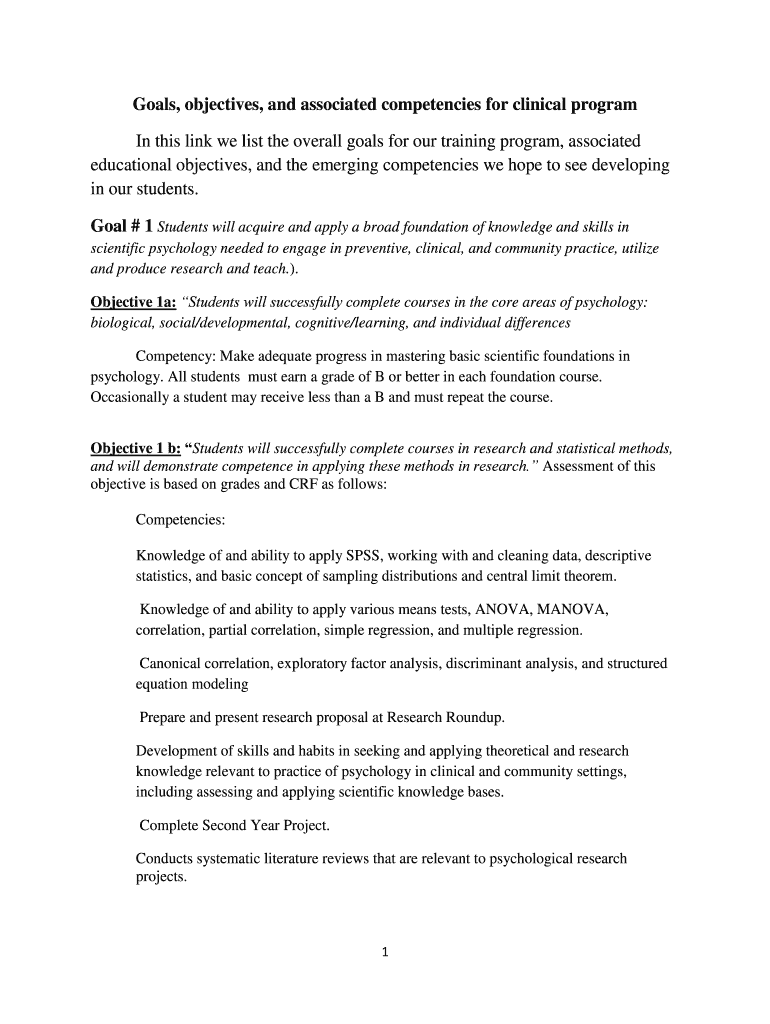







Definition and Meaning of Clinical Program Competencies
In the context of a clinical psychology training program, competencies refer to the essential skills and knowledge that students must acquire to effectively practice in a clinical setting. These competencies encompass a range of abilities, including scientific knowledge, assessment proficiency, evidence-based intervention, professional ethics, cultural competence, and a commitment to lifelong learning. Each competency is defined through specific goals and objectives that outline the expected outcomes for trainees.
Key Components of Competencies
- Scientific Knowledge: Students must understand the foundational theories and research in psychology, allowing them to apply scientific methods to clinical practice.
- Assessment Skills: Trainees should be adept at conducting psychological evaluations using a variety of tools and techniques, ensuring accurate diagnoses and treatment planning.
- Evidence-Based Intervention: Expertise in applying evidence-based therapeutic approaches is essential for effective patient care.
- Professional Ethics: Understanding and adhering to ethical standards is critical for responsible practice.
- Cultural Competence: Appreciating and integrating cultural diversity enhances the ability to provide inclusive and effective treatment.
- Lifelong Learning: A commitment to continuous professional development is necessary to stay current with advances in the field.
How to Use the Clinical Program Form
The "Goals, Objectives, and Associated Competencies for Clinical Program" form serves as a guiding document for both educators and students. It outlines the educational framework and benchmarks that must be met throughout the training program.
Steps for Effective Use
- Initial Review: Begin by examining the form to understand the overarching goals and specific competencies required.
- Integration Into Curriculum: Educators can align their curriculum with the competencies outlined to ensure comprehensive training.
- Self-Assessment: Students can use the form to self-assess their progress and identify areas needing improvement.
- Feedback and Evaluation: The form provides a basis for feedback from mentors and supervisors, promoting targeted support and development.
Steps to Complete the Clinical Program Form
Completing the form requires careful attention to detail and a thorough understanding of the training program's requirements.
- Gather Relevant Materials: Collect all necessary documentation, such as academic records, clinical experience logs, and supervisor evaluations.
- Detail Educational Objectives: Clearly articulate the learning objectives that correspond with each competency.
- Document Competency Achievements: Provide evidence of competencies achieved through coursework, practical experience, and assessments.
- Review With a Mentor: Collaborate with a mentor to ensure all sections of the form are complete and align with program expectations.
- Submit for Approval: Once finalized, submit the form to the appropriate department or committee for evaluation.
Important Terms Related to Clinical Program Competencies
Understanding specific terminology is crucial for interpreting and using the form correctly.
Key Terms
- Foundational Knowledge: Basic understanding of psychological principles and research methodologies.
- Cultural Diversity: Acknowledgment and respect for different cultural perspectives and practices in clinical contexts.
- Ethical Guidelines: Standards governing professional behavior and decision-making in clinical practice.
Legal Use of the Clinical Program Form
Using the form appropriately involves adhering to legal and ethical standards that govern clinical training programs in the United States.
Legal Considerations
- Confidentiality: Protect student and patient information in all documentation.
- Compliance with Licensing Boards: Ensure the program and competencies adhere to requirements set by relevant licensing boards and accrediting bodies.
- Ethical Practice: Maintain ethical standards in all training activities and evaluations.
Examples of Using the Clinical Program Form
Real-world scenarios illustrate how the form facilitates the development of skilled clinical practitioners.
Case Studies
- Academic Integration: A university's psychology department uses the form to structure a two-year curriculum, ensuring all students meet necessary competencies before graduation.
- Professional Development: A psychology intern uses the form to map their learning journey and identify key areas for additional training and development.
Key Elements of Clinical Program Competencies
The form's success hinges on several critical components that define the structure and function of the training program.
Essential Elements
- Alignment with Educational Standards: Competencies should reflect national or state-level educational standards for clinical psychology.
- Emphasis on Practical Skills: Focus on skills application in real-world clinical settings to prepare students for professional practice.
- Assessment and Feedback Mechanisms: Regular evaluations to guide student progress and improve training outcomes.
State-Specific Rules for Clinical Program Competencies
Different states may have unique requirements or standards for clinical psychology competencies, necessitating customization of the form.
Considerations for State Variances
- Licensure Requirements: Be aware of any state-specific licensing requirements that may affect the form's content or application process.
- Regional Cultural Competency: Integrate regionally relevant cultural competencies to ensure inclusivity and relevance in clinical practice.




