
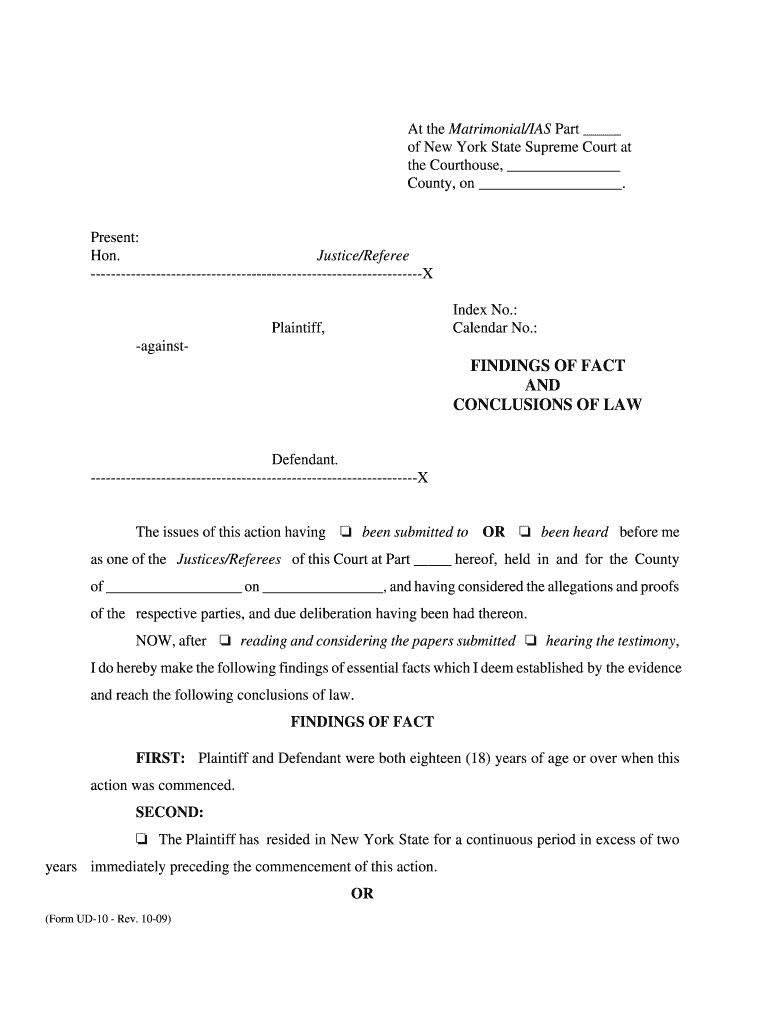







Definition and Meaning of Findings of Fact and Conclusions of Law
Findings of fact and conclusions of law refer to a legal document that summarizes a court's decisions based on the evidence presented during a trial. The findings of fact are the court's determination of the factual circumstances surrounding the case, while the conclusions of law articulate how those facts correlate with applicable legal standards. This dual structure is essential in establishing a legal groundwork for the court's ruling, ensuring that judgments are clear, precise, and legally sound.
Findings of Fact
Findings of fact may include the following elements:
- Factual Determinations: These are specific, verifiable events or circumstances established through testimony, documents, or other evidence presented in court.
- Contextual Analysis: Courts often provide context for the facts by discussing the significance of the evidence and how it influences the legal outcome.
- Credibility Assessments: Judges may assess the credibility of witnesses, providing insight into why certain facts were given more weight.
Conclusions of Law
The conclusions of law typically cover:
- Legal Standards: They outline the legal issues at hand, explaining how the relevant laws apply to the established facts.
- Rulings: This section states the legal implications of the findings, determining liability, rights, or duties based on the established facts.
- Citations of Law: Courts usually reference the statutes or case law that support their conclusions, providing legal context for their rulings.
How to Use the Findings of Fact and Conclusions of Law
Obtaining and effectively using findings of fact and conclusions of law requires understanding the specific legal context in which they are applied. In the U.S. judicial system, these documents serve as the basis for appeals and further legal proceedings.
Practical Steps for Use
- Referencing in Appeals: If a party intends to appeal a court's decision, findings of fact and conclusions of law are critical. They provide the grounding for arguments that legal interpretations or factual determinations were incorrect.
- Support for Further Litigation: These documents can be utilized in subsequent cases or related legal matters, establishing precedents drawn from past judgments.
- Drafting Legal Briefs: Lawyers may quote specific findings to bolster motions or briefs by illustrating how established facts align with legal arguments.
Steps to Complete the Findings of Fact and Conclusions of Law
Creating findings of fact and conclusions of law involves a structured process:
- Collection of Evidence: Gather all relevant documents, witness statements, and other evidence presented during the trial or hearing.
- Drafting Findings of Fact:
- Identify key factual elements that were established during the legal proceedings.
- Organize these facts logically, ensuring clarity and relevance.
- Formulating Conclusions of Law:
- Analyze the facts in relation to applicable laws and legal principles.
- Draft clear conclusions, citing specific statutes or legal precedents that support the legal determinations.
- Final Review and Submission: Thoroughly review the document for consistency and accuracy. The final version should be submitted to the court for inclusion in the case record.
Legal Use of the Findings of Fact and Conclusions of Law
Findings of fact and conclusions of law have significant legal ramifications in various contexts:
- Court Proceedings: They are foundational documents pertinent to the resolution of disputes within civil litigation.
- Establishing Precedents: Their formal structure allows for easier citation in future legal arguments, contributing to the body of case law.
- Judicial Transparency: These documents provide clarity to all parties involved, including judges, attorneys, and plaintiffs or defendants, regarding the rationale behind a court's decision.
Examples of Using the Findings of Fact and Conclusions of Law
Several scenarios illustrate the application of findings of fact and conclusions of law within the legal framework:
- Divorce Proceedings: In a divorce case, findings of fact might clarify child custody arrangements, while the conclusions of law determine which parent is granted custody based on the best interests of the child.
- Contract Disputes: In cases involving breach of contract, findings may outline the actions taken by both parties, while the conclusions assess damages owed under contract law.
- Personal Injury Claims: Evidence presented in personal injury lawsuits would inform factual findings, which then lead to legal conclusions about liability or negligence.
State-Specific Rules for the Findings of Fact and Conclusions of Law
State courts may have different requirements regarding findings of fact and conclusions of law. Specific considerations can include:
- Responsive Filings: Some states require parties to submit proposed findings prior to a ruling, which must align with local court rules.
- Formatting Requirements: Each jurisdiction may have distinct rules surrounding how these documents should be formatted and what content must be included.
- Timeframes for Submission: There are often specific time limits imposed for filing findings after a ruling, which varies by state.
Important Terms Related to Findings of Fact and Conclusions of Law
Understanding legal terminology is crucial when dealing with findings of fact and conclusions of law:
- Burden of Proof: The obligation to prove one's assertion, whether in civil or criminal cases, defines how findings are established.
- Preponderance of Evidence: This standard is commonly used in civil cases, meaning the evidence must show that something is more likely true than not.
- Judicial Notice: Refers to the court's acceptance of a fact as true without requiring formal proof, impacting the findings and conclusions.
Quick Facts about Findings of Fact and Conclusions of Law
- Nature: These documents combine factual determinations and legal analyses.
- Permanence: They become part of the official court record, usable in ongoing or future legal contexts.
- Importance: They ensure transparency and clarity regarding judicial reasoning, enhancing the overall integrity of the legal process.




