






Definition and Purpose of Form 60
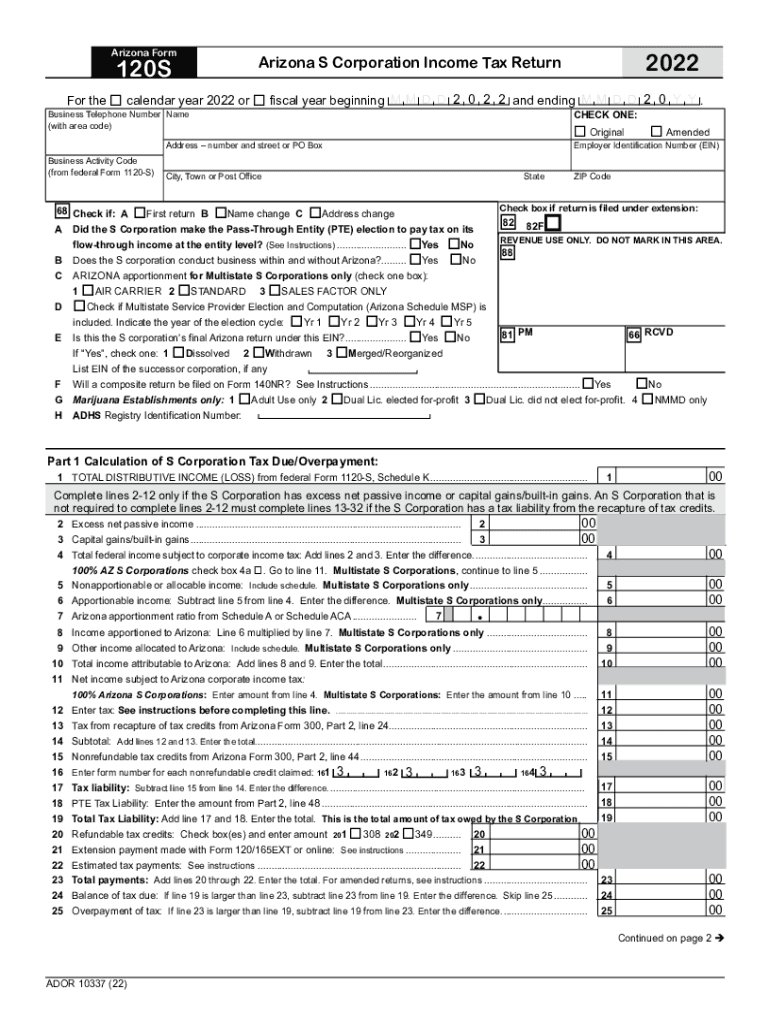
Form 60 - S Corporation Income Tax Return (2022) is a tax document used by S Corporations to report their income, deductions, and financial activities to the Internal Revenue Service (IRS) for the 2022 tax year. This form assists in declaring the corporation's profits and losses and transfers pertinent income information to shareholders. It is a critical part of maintaining compliance with federal tax regulations for S Corporations.
- Income Reporting: Form 60 is used to detail the revenues an S Corporation generates throughout the fiscal year.
- Deductions and Expenses: Corporations can list allowable deductions that reduce their taxable income, showcasing financial health and business expenditures.
- Tax Liabilities: The form helps calculate any taxes owed after deductions, taking into account shareholder allocations and applicable credits.
Key Elements of Form 60
Understanding the essential components of Form 60 is vital for accurate completion. These sections ensure that corporations provide comprehensive and transparent financial data.
- Corporate Information: Includes the corporation's name, address, Employer Identification Number (EIN), and tax year covered.
- Shareholder Details: Information about each shareholder's portion of the corporation’s income, losses, and credits.
- Income and Deduction Summary: A consolidated overview of the corporation's total income and eligible deductions.
- Apportionment Formulas: Necessary for multistate corporations to calculate income subject to taxation in different jurisdictions.
- Elections and Disclosure: Options and necessary disclosures relevant to S Corporation status and federal tax compliance.
Steps to Complete Form 60
Filing the Form 60 requires attention to detail and adherence to IRS instructions to avoid errors and ensure compliance.
- Gather Necessary Information: Collect the corporation’s financial records, including income statements, balance sheets, and shareholder details.
- Complete Corporate Information: Fill in the corporation’s name, EIN, and the tax period.
- Record Income and Deductions: Enter gross receipts, cost of goods sold, and total deductions to determine net income.
- Apportion Income: For businesses operating in multiple states, calculate the income subject to state taxes using the apportionment formulas.
- Shareholder Allocations: Determine each shareholder’s proportional share of the corporation's income, losses, and credits.
- Finalize and Review: Double-check all entries for accuracy before submitting to the IRS.
Who Typically Uses Form 60
Form 60 is primarily intended for entities classified as S Corporations under IRS rules. These organizations benefit from pass-through taxation, meaning their corporate income, deductions, and other financial aspects are reported directly by shareholders on their personal tax returns.
- Newly Formed S Corporations: Recently established businesses that elect S Corporation status must utilize this form for federal tax reporting.
- Existing S Corporations: Companies that have maintained their S Corporation status in prior tax years.
- Multistate Corporations: Businesses operating in more than one state are required to use allocation and apportionment procedures.
Filing Deadlines and Important Dates
It is crucial for S Corporations to adhere to specified deadlines to avoid penalties.
- General Deadline: Form 60 is due by the 15th day of the third month following the end of the tax year, typically March 15 for calendar year corporations.
- Extension Filing: Corporations may file for an automatic six-month extension if more time is needed, usually extending the deadline to September 15.
- Estimated Taxes: S Corporations might be required to pay estimated taxes throughout the year to avoid underpayment penalties.
Required Documents for Form 60
Accurate and timely submission of Form 60 necessitates organizing and referencing several critical documents.
- Financial Statements: Income statements and balance sheets showing detailed fiscal activity for the year.
- Previous Year’s Tax Return: For comparative purposes and to verify carryforwards or carrybacks.
- Shareholder Information: Records of shareholder ownership percentages and distributions received.
Submission Methods for Form 60
Depending on preference and technological accessibility, S Corporations can submit their completed Form 60 through various channels:
- Online Filing: Use IRS approved electronic filing systems, offering a fast and secure method of submission.
- Mail: Corporations can mail paper forms to specified IRS addresses, allowing for traditional documentation processing.
- In-Person Submission: Though less common, it remains an option for those preferring direct interaction with the IRS.
Penalties for Non-Compliance
Failure to file Form 60 accurately and on time can lead to penalties that affect a corporation’s financial standing.
- Late Filing Penalties: Charges accrue monthly for overdue submissions, calculated per shareholder.
- Inaccurate Return Penalties: Filing false or incomplete returns can result in additional fines.
- Interest on Underpayments: Late payment or underestimation of taxes owed results in accruing interest, adding to fiscal liabilities.