






Definition & Meaning
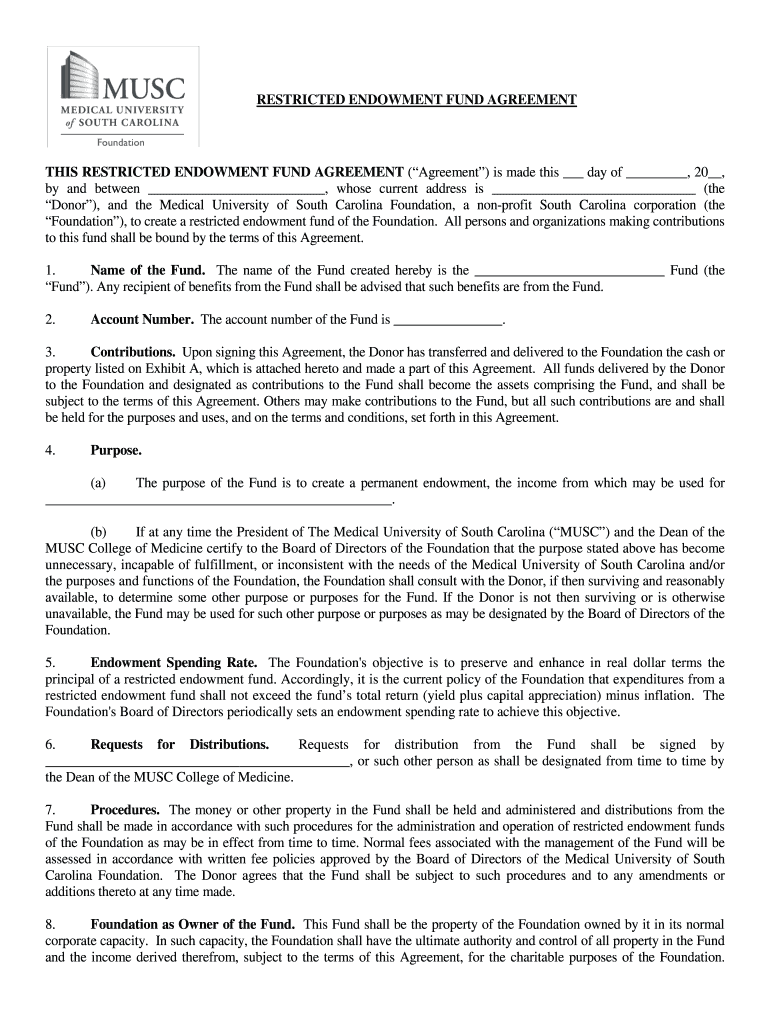
A Restricted Endowment Fund Agreement is a formal arrangement typically established between a donor and an institution, such as the Medical University of South Carolina Foundation. This agreement outlines the creation and management of a permanent endowment fund. The primary purpose is to ensure that the fund's income is used for specific charitable goals as defined by the donor. These agreements generally include stipulations such as the fund's name, purposes, spending rate, and the procedures for requesting distributions.
Core Components
- Donor Contribution: Details the financial commitment and timeline of contributions.
- Fund Management: Describes how the fund will be managed and overseen by the institution.
- Purpose of Fund: Clearly outlines the intended uses and objectives of the fund.
Key Elements of the Restricted Endowment Fund Agreement
The structure of the agreement often includes several critical elements that must be thoroughly understood by all parties involved. These include, but are not limited to, the following:
Naming the Fund
- Recognition: The fund usually bears a name agreed upon by the donor and the institution, often to recognize the donor or honor someone specified by the donor.
- Naming Rights: Terms may outline conditions under which the fund's name can be changed or amended.
Contribution Obligations
- Initial Contribution: The minimum amount required to establish the fund.
- Subsequent Contributions: Guidelines for any additional contributions and their timelines.
Spending Policy
- Rate of Distribution: Specifies the percentage or formula used to calculate the funds available for expenditure on an annual basis.
- Restrictions: Conditions on distribution to ensure fund sustainability.
Investment Management
- Investment Strategy: The institution's commitment to how the fund will be invested.
- Risk Factors: Acknowledgment of the potential risks associated with investment strategies.
Steps to Complete the Agreement
Completing this type of form requires careful attention to detail and understanding of the requirements:
- Preparation: Gather initial documents, including identification and financial records.
- Understanding Terms: Review the entire agreement to comprehend all terms, conditions, and implications.
- Consultation: Consider legal advice, particularly to ensure the terms serve your goals and are legally sound.
- Drafting Details: Fill in required sections accurately, such as contribution amounts and fund purpose.
- Review: Double-check each section for accuracy and legal compliance.
- Finalize: Signatures from all parties involved to formalize the agreement.
Who Typically Uses the Form
Restricted Endowment Fund Agreements are commonly used by:
- Philanthropists: Individuals looking to support specific causes long-term.
- Medical Institutions: For maintaining and managing funds to support educational, research, or facility improvements.
- Legal Advisors: Assisting clients in the setup of endowments.
- Financial Planners: Helping clients align philanthropic efforts with financial goals.


Legal Use of the Agreement
The legal foundation of these agreements is critical, particularly in contexts within the United States where federal and state regulations may differ.
Compliance
- State Laws: Each state may have distinct legal frameworks dictating how such funds are managed.
- Federal Regulations: Must comply with IRS rules regarding charitable contributions and endowments.
Legal Framework
- Binding Nature: Once signed, this document is legally binding and enforceable.
- Amendments: Typically, any modification requires mutual consent from all parties involved.
Important Terms Related to the Agreement
Familiarity with key terms can facilitate a smoother process when working with these agreements:
- Principal: The original sum of money contributed, which is meant to remain untouched.
- Income: Earnings generated from the principal, available for expenditure under predefined rules.
- Fiduciary Duty: The responsibility of managing the fund in the best interest of the donor’s intentions.
Who Issues the Form
The form is usually issued by the institution (e.g., Medical University of South Carolina Foundation) that manages the restricted endowment, ensuring legal structure and compliance with institutional policies.
Collaboration
- Finance Departments: Often collaborate with legal teams to issue and manage agreements.
- Legal Departments: Responsible for drafting and finalizing agreements.
Penalties for Non-Compliance
Non-compliance with terms or legal requirements can lead to significant consequences:
- Legal Action: Breaches may lead to litigation or legal challenges.
- Financial Repercussions: Potential loss of tax-exempt status or penalties on distributions.
- Reputational Damage: Harm to the institution or donor's reputation if the fund fails to meet legal or ethical standards.
Understanding these blocks provides a comprehensive guide to the purpose, use, and legal aspects fundamental to a Restricted Endowment Fund Agreement in a medical context, aligned with the priorities of U.S.-centric philanthropic and institutional policies.