




01. Edit your form online
Type text, add images, blackout confidential details, add comments, highlights and more.

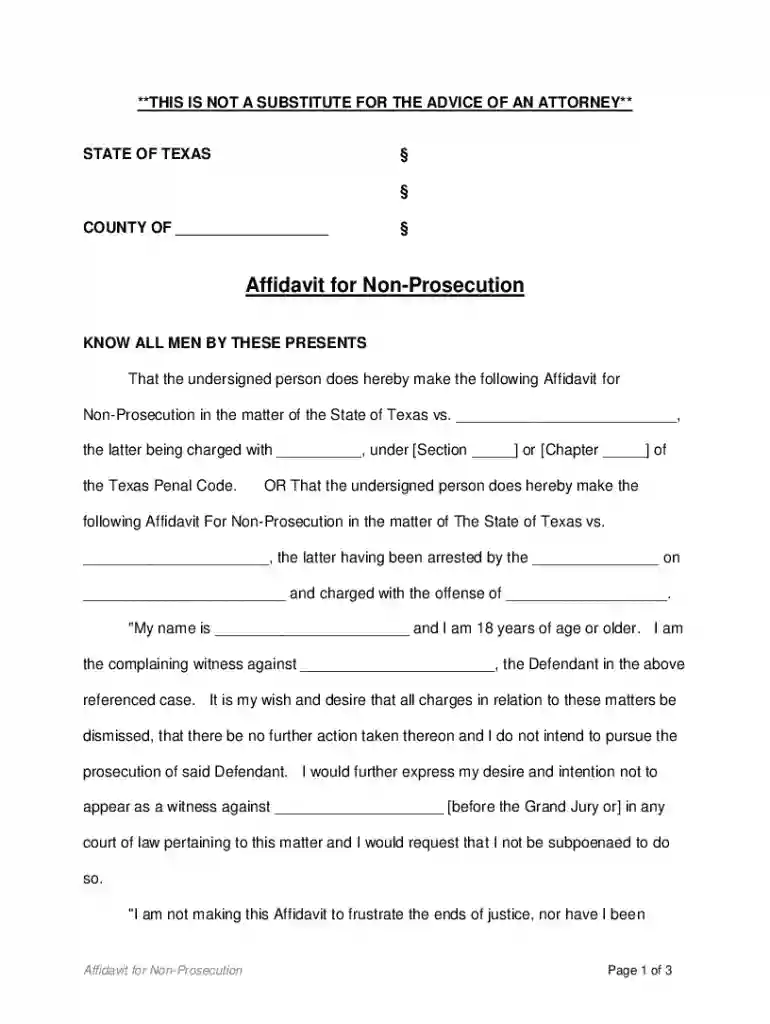
Type text, add images, blackout confidential details, add comments, highlights and more.

Draw your signature, type it, upload its image, or use your mobile device as a signature pad.

Send it via email, link, or fax. You can also download it, export it or print it out.
An "Affidavit for Non-Prosecution" is a legal document in which a witness states their wish not to pursue legal charges against a defendant. Typically used in criminal cases, this affidavit communicates to the court that the complainant no longer wants the case to proceed. This document is particularly significant in the State of Texas where it serves as a formal request from the witness to dismiss charges, reflecting their voluntary decision made without coercion. It is crucial to note that while submitting this affidavit might influence prosecutorial discretion, it does not guarantee the dismissal of charges as the ultimate decision rests with the prosecutor.
The document should be carefully filled out with complete and accurate information. Individuals intending to use this affidavit must:
To acquire an Affidavit for Non-Prosecution, interested parties can:
The affidavit plays a crucial role within the legal system, particularly in terms of influencing the continuation of a case. While it represents the wishes of the complainant, the legal implications of submitting this document include:
The affidavit must contain several essential elements to be effective:
State laws vary concerning the impact and process of submitting an Affidavit for Non-Prosecution:
Consider a domestic dispute where the complaining party decides they do not wish to press charges after a peaceful resolution. The use of an Affidavit for Non-Prosecution can formalize their decision, informing the court of their desire for dismissal. Prosecutors might review the affidavit alongside other evidence before deciding whether to proceed with the case.
Through these sections, we delve into the critical aspects of the Affidavit for Non-Prosecution, offering guidance for understanding and using this legal form effectively within U.S. legal contexts.
We've got more versions of the Affidavit for Non-Prosecution form. Select the right Affidavit for Non-Prosecution version from the list and start editing it straight away!
At DocHub, your data security is our priority. We follow HIPAA, SOC2, GDPR, and other standards, so you can work on your documents with confidence.

by LM Jacobson-Connor 2008 In addition, relationship type and length appeared to predict victims filing affidavits of non-prosecution. We also found evidence that advocates played aRead more
Jul 3, 2026 Yes, mandatory under the Lokpal (Complaint) Rules 2020. Affidavit on ₹100 non-judicial stamp paper, notarised. The cost (~₹150-300 with notary)Read more
Jun 5, 2026 Non-Prosecution Affidavit of Non-Prosecution nunc. AS County Telephone Operator 817-884-1111 as a public service.


