






Definition & Meaning
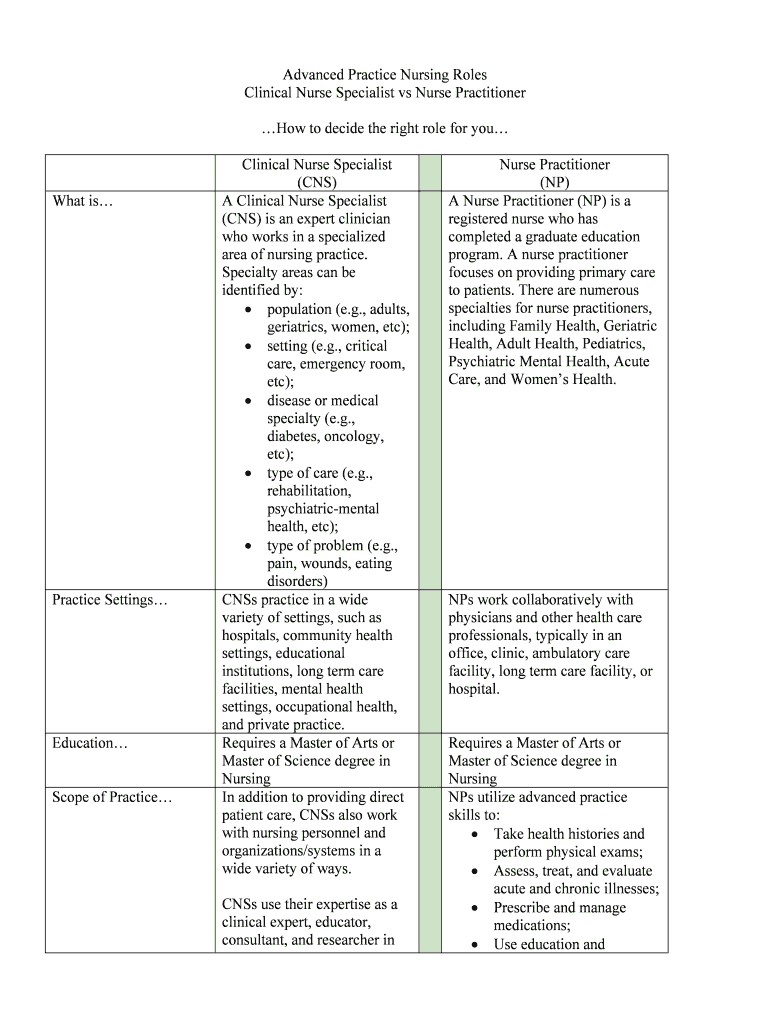
Advanced practice nursing roles are specialized positions within the nursing field that require a higher level of education, expertise, and clinical skills. These roles include Clinical Nurse Specialists (CNS), Nurse Practitioners (NP), Certified Nurse Anesthetists (CRNA), and Certified Nurse Midwives (CNM). Each role has specific responsibilities and a distinct scope of practice, focusing on various aspects of patient care, healthcare systems, and community health. Advanced practice nurses often serve as both primary and specialty care providers, utilizing evidence-based practices to improve patient outcomes.
Key Elements of Advanced Practice Nursing Roles
- Clinical Focus: Advanced practice nurses specialize in a specific area of healthcare, such as pediatrics, gerontology, or mental health, providing expert care and guidance within that specialty.
- Education: These roles require advanced degrees, typically a master's or doctoral degree in nursing, along with the appropriate certifications and licenses.
- Scope of Practice: The scope includes performing physical exams, diagnosing and treating illnesses, prescribing medications, and providing education on disease prevention and management.
- Interdisciplinary Collaboration: Cooperation with physicians, healthcare providers, and patients to develop comprehensive care plans is crucial for effective treatment.
Eligibility Criteria
To qualify for advanced practice nursing roles, candidates must meet specific educational and clinical requirements:
- Education: A Bachelor of Science in Nursing (BSN) is the foundational degree necessary before pursuing advanced degrees.
- Advanced Degree: Completion of a Master's or Doctoral program in nursing is required, depending on the specific role pursued.
- Certification: Obtaining certification from a recognized certifying body, such as the American Nurses Credentialing Center (ANCC), is mandatory.
- Licensure: A valid Registered Nurse (RN) license and additional state-specific licensure for practicing as an advanced practice nurse.
- Clinical Experience: Several years of clinical nursing experience, typically two to four years, are required before entering an advanced practice nursing program.


How to Obtain Advanced Practice Nursing Roles
- Educational Pathway: Begin by earning a BSN, followed by enrolling in an accredited Master's or Doctoral nursing program focusing on the desired specialty.
- Certification and Licensure: After completing the advanced degree, apply for certification through relevant professional organizations and obtain state licensure.
- Clinical Training: Engage in clinical practice required by the program under supervision to gain hands-on experience.
- Continued Education and Renewal: Engage in ongoing education and renew certifications periodically to stay current with healthcare advancements and maintain licensure.
Steps to Complete Advanced Practice Nursing Roles Forms
- Gather Required Documents: Collect all relevant educational transcripts, clinical experience records, and proof of existing nursing licenses.
- Verify Eligibility: Ensure that all prerequisites, such as education and certification requirements, are fulfilled based on role and state guidelines.
- Complete Application Forms: Fill out the necessary application forms accurately, covering all aspects of personal, educational, and professional information.
- Submit Supporting Documentation: Provide all supporting documents, including proof of clinical hours, certifications, and references.
- Await Approval: Submit the application and await confirmation from the certifying body or state licensing board.
State-Specific Rules for Advanced Practice Nursing Roles
State regulations can significantly impact the practice of advanced practice nurses. Key state-specific considerations include:
- Prescriptive Authority: Varies by state, affecting the nurse's ability to prescribe medications independently or require physician oversight.
- Licensure Requirements: Differing state board regulations may influence the specific credentials and certifications necessary to practice.
- Practice Environment: Some states allow greater autonomy in practice, while others mandate collaborative agreements with physicians.
Who Typically Uses the Advanced Practice Nursing Roles
- Clinical Nurse Specialists (CNS): Operate within hospitals and specialized clinics, focusing on enhancing system efficiency and patient care outcomes.
- Nurse Practitioners (NP): Work in a variety of settings, including clinics and private practices, providing direct primary and specialty care to patients.
- Certified Nurse Anesthetists (CRNA): Administer anesthesia and provide pain management in surgical settings.
- Certified Nurse Midwives (CNM): Offer maternity care, childbirth support, and reproductive health services.

Legal Use of Advanced Practice Nursing Roles
- Practice Agreements: In some states, legal agreements with supervising physicians are necessary for prescribing and certain interventions.
- Compliance with Standards: Adherence to national and state-specific nursing standards and guidelines is essential for legal practice.
- Patient Privacy and Consent: Maintain confidentiality and secure informed consent before treatments, ensuring compliance with health laws like HIPAA.
Examples of Using Advanced Practice Nursing Roles
- Clinical Scenarios: A nurse practitioner diagnosing and managing chronic conditions such as diabetes in a primary care clinic.
- Hospital Interventions: A clinical nurse specialist implementing a new pain management protocol to enhance patient recovery in a surgical unit.
- Community Health Initiatives: Certified nurse midwives conducting educational workshops on prenatal care in underserved communities.