01. Edit your form online
Type text, add images, blackout confidential details, add comments, highlights and more.

Type text, add images, blackout confidential details, add comments, highlights and more.

Draw your signature, type it, upload its image, or use your mobile device as a signature pad.

Send it via email, link, or fax. You can also download it, export it or print it out.
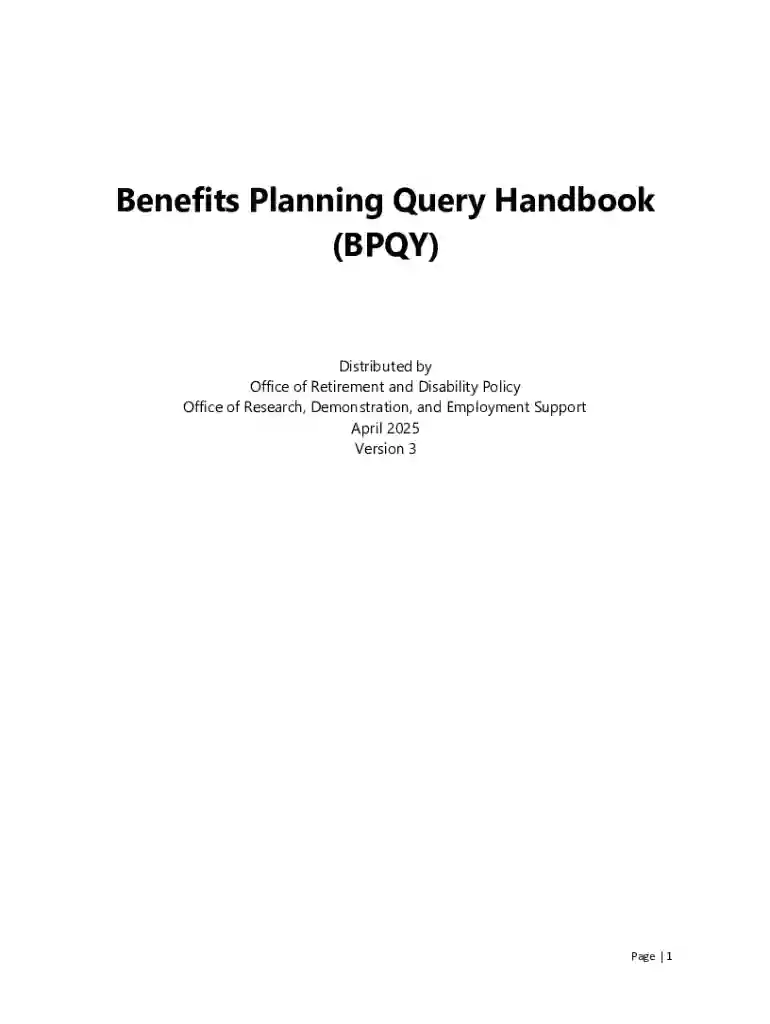
The Benefits Planning Query Handbook, commonly known as BPQY, is a comprehensive guide developed by the Social Security Administration (SSA) to assist individuals receiving Social Security Disability Insurance (SSDI) benefits and Supplemental Security Income (SSI) in understanding their benefits and related work incentives. The handbook serves as a vital resource by detailing the components included in a BPQY statement, which provides a beneficiary’s cash benefits overview, medical reviews, health insurance status, and work history. Moreover, it explains processes and instructions for requesting a BPQY statement, which are useful to both beneficiaries and third-party representatives.
Identifying the Right Source: The BPQY guide is available directly from the Social Security Administration. To obtain it, you need to contact your local SSA office or request it via the official SSA website.
Submitting a Request: Requests for the BPQY should be made following the instructions provided by the SSA. Typically, you may be required to fill out a specific request form, which can be submitted online, via mail, or in person at an SSA office.
Providing Necessary Information: When requesting a BPQY, ensure that you provide all required information accurately. This may include your Social Security number, name, contact information, and any other details necessary for verification.
Awaiting Processing: Once the request is submitted, you might have to wait for a certain period for the processing and delivery of your BPQY. The timeline can vary and might be affected by the SSA's current workload or other factors.
The BPQY handbook encompasses several essential elements that provide in-depth insights into the beneficiary’s status and eligibility:
The BPQY is primarily used by SSDI beneficiaries and SSI recipients who are actively seeking to manage and understand their benefits better. It is also a crucial tool for:


The BPQY handbook includes many specific terms that are pivotal for understanding the SSA processes and benefit management:
The BPQY handbook ensures beneficiaries and their representatives comply with SSA guidelines and legal requirements for benefit management:
While the BPQY provides a federal-level overview of benefits, several rules might vary by state, primarily concerning:
Real-world scenarios demonstrate how beneficiaries can utilize the BPQY:
While the BPQY is specialized for understanding SSA benefits, related resources include:
Understanding filing deadlines is crucial for effective benefits management through the BPQY:
Focusing on these critical areas ensures that the structured content surrounding the BPQY handbook is both comprehensive and practical, directly addressing the needs of beneficiaries and other stakeholders involved.
We've got more versions of the Benefits Planning Query Handbook (bpqy) form. Select the right Benefits Planning Query Handbook (bpqy) version from the list and start editing it straight away!
At DocHub, your data security is our priority. We follow HIPAA, SOC2, GDPR, and other standards, so you can work on your documents with confidence.