
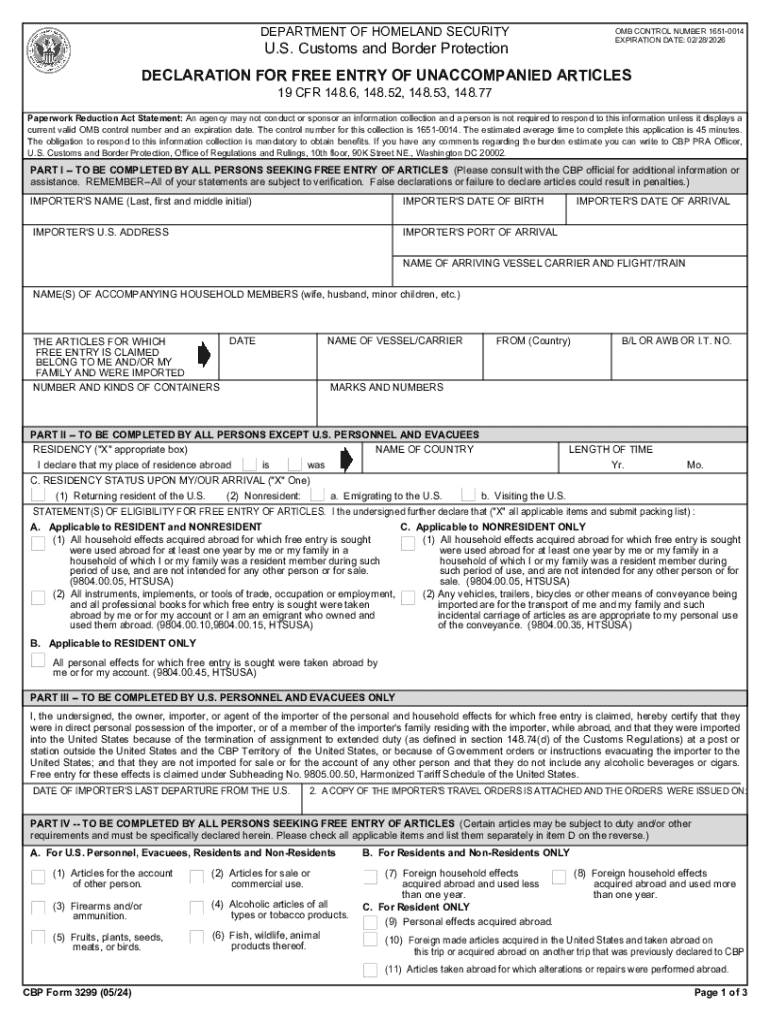







Definition and Purpose of CBP Form 3299
CBP Form 3299, also known as the Declaration for Free Entry of Unaccompanied Articles, is a critical document required by U.S. Customs and Border Protection. It facilitates the duty-free entry of personal and household effects into the United States. Typically, this form is used when individuals are relocating to the U.S. or returning after a long absence and wish to bring their possessions without incurring customs duties. The form requires detailed information about the importer and the items being imported, ensuring a simplified customs clearance process.
Steps to Complete CBP Form 3299
Completing CBP Form 3299 involves several important steps:
- Personal Information: Begin by filling in your personal details, including your full name, date of arrival, and the port of entry in the United States.
- Declaration Details: Clearly list all articles being imported. This includes item descriptions, quantity, and value.
- Certification and Signature: Ensure that the form is signed by the importer, certifying that all information provided is true and accurate to the best of their knowledge.
Completing each section accurately is crucial, as errors can delay the importation process or result in penalties.
How to Obtain CBP Form 3299
CBP Form 3299 can be obtained through several channels:
- Online Resources: The official U.S. Customs and Border Protection website provides downloadable versions of the form.
- At the Port of Entry: Physical copies are often available at U.S. ports of entry where customs declarations are processed.
- Customs Brokers: Individuals working with customs brokers can request the form and any additional assistance needed for completion.
Accessing the form through digital platforms allows for convenience and ensures you receive the most current version.
Key Components of CBP Form 3299
Understanding the essential elements of CBP Form 3299 is necessary for accurate completion:
- Article Information Section: List each item separately and provide a description, value, and intended use.
- Exemption Clauses: Ensure familiarity with items that are typically exempt from duties under specific conditions.
- Signature and Date: This section certifies the honesty of the declaration and must be completed to validate the form.
Each component plays a vital role in the customs process, ensuring that all regulations are met.
Legal Implications and Compliance
Failure to comply with CBP Form 3299 requirements can result in significant legal consequences:
- Penalties for False Information: Submitting incorrect information may lead to fines or legal action by customs authorities.
- Seizure of Goods: Items not correctly declared may be subject to seizure, and the importer might face additional scrutiny on future imports.
Ensuring compliance with all legal aspects of the form is essential to avoid these negative outcomes.
Who Typically Uses CBP Form 3299
CBP Form 3299 is commonly used by:
- Returning U.S. Citizens: Individuals moving back to the U.S. with personal goods acquired abroad.
- Foreign Nationals: Non-citizens relocating to the U.S. who want to bring their belongings without paying customs duties.
- Corporate Relocators: Companies settling employees in the U.S. as part of international assignments.
These groups find the form beneficial for a seamless transition through U.S. customs.
Required Documents Accompanying Form 3299
Proper documentation is essential to support the CBP Form 3299 application:
- Passport Copy: A valid passport is typically required to verify identity and travel history.
- Invoice or Receipt for High-Value Items: Documentations such as purchase receipts for valuable items ensure proper valuation.
- Proof of Residency: Address documents or lease agreements may be needed, especially when claiming residency for duty-free importation.
Gathering and submitting these documents helps verify declarations and facilitates the processing of the form.
Form Submission Methods
There are several ways to submit CBP Form 3299:
- Online Submission: Certain platforms may allow electronic submission through a customs broker or designated websites.
- Mail Delivery: Physical forms can be posted to designated customs addresses for processing before arrival.
- In-Person at Ports of Entry: Direct submission upon arrival in the U.S. where customs officials can oversee the process.
Choosing the most convenient method depends on the individual's circumstances and access. Each method provides a viable way to handle document processing pre- or post-arrival.
Penalties for Non-Compliance
Non-compliance with the regulations surrounding CBP Form 3299 can result in:
- Fines: Financial penalties imposed for incorrect or fraudulent information.
- Legal Actions: Persistent non-compliance may invite legal scrutiny and actions by customs authorities.
- Delayed or Denied Entry of Goods: Improperly declared goods may be held at customs, causing potential losses.
Understanding and adhering to the form's requirements is crucial to prevent such repercussions and ensure a smooth customs experience.




