






Definition and Purpose of the Renewal Application for Facility Oil Discharge Contingency Plan
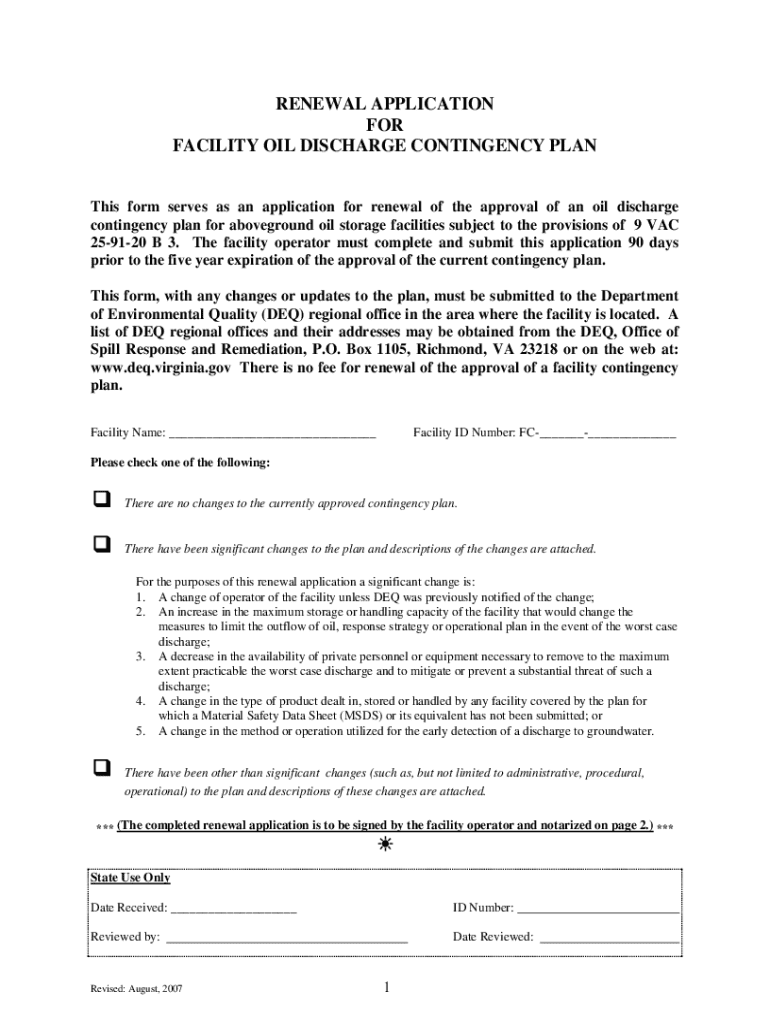
The Renewal Application for Facility Oil Discharge Contingency Plan is a critical document required for aboveground oil storage facilities in the United States. It ensures these facilities are prepared to handle potential oil discharge incidents. Facility operators must submit this application to the Department of Environmental Quality (DEQ) 90 days before the current plan's expiration. The application serves as a commitment to maintaining an updated and effective response strategy, incorporating any recent changes or updates in operational protocols.
- Objective: To validate and renew the facility's oil spill contingency plan.
- Regulatory Requirement: Mandated by environmental protection regulations.
- Submission Entity: Department of Environmental Quality (DEQ).
Obtaining the Renewal Application for Facility Oil Discharge Contingency Plan
Facility operators can procure the Renewal Application for Facility Oil Discharge Contingency Plan directly from the DEQ. The process of obtaining this application often involves accessing specific online portals or requesting physical forms via mail.
- Online Access: Many DEQs offer downloadable forms on their official websites.
- Request via Mail: Paper forms can be requested by contacting the DEQ directly.
- Contact Information: It's advisable to check the specific state's DEQ website for contact details.
Steps to Complete the Renewal Application
Completing the Renewal Application for Facility Oil Discharge Contingency Plan involves several key steps that ensure thorough compliance with legal and operational standards.
- Review Current Plan: Begin by assessing the existing oil discharge contingency plan to identify necessary updates.
- Compile Required Information: Gather all essential data, including operational changes and updated contact information.
- Complete Application Sections:
- Facility Information: Verify and enter accurate details about the facility.
- Plan Changes: Document any modifications to the response strategy.
- Certification: Facility operators must sign off on the document, validating the accuracy of the information.
- Notarization: Have the completed application notarized as required by the DEQ.
- Submission: Submit the application to the DEQ well in advance of the expiration deadline.
Required Documents for Submission
The application process for the Renewal Application for Facility Oil Discharge Contingency Plan necessitates the submission of specific supporting documents.
- Current Plan Copy: Include a copy of the existing plan with noted changes.
- Operational Alterations: Documentation of any operational or procedural changes since the last approval.
- Certification Statement: A signed certification by the operator affirming the truthfulness of the submission.
- Notarized Signature: If required, the application should be notarized to confirm its validity.
Legal Implications and Compliance
Ensuring compliance with the Renewal Application for Facility Oil Discharge Contingency Plan has significant legal implications. Failing to submit a revised application may result in penalties or operational restrictions.
- Regulatory Compliance: Adherence to environmental laws is crucial for maintaining operational licenses.
- Penalties: Non-compliance can lead to fines and enforcement actions by regulatory bodies.
- Legal Standing: The application reinforces the facility's commitment to regulatory standards, aiding in potential legal defenses.
Who Typically Uses the Renewal Application
The primary users of the Renewal Application for Facility Oil Discharge Contingency Plan are operators of aboveground oil storage facilities. These entities range from large refineries to smaller fuel storage companies.
- Facility Managers: Responsible for the day-to-day operations of oil storage.
- Environmental Compliance Officers: Tasked with ensuring ongoing adherence to environmental regulations.
- Corporate Environmental Departments: Oversight of multiple facilities ensuring unified compliance procedures.


Key Elements of the Renewal Application
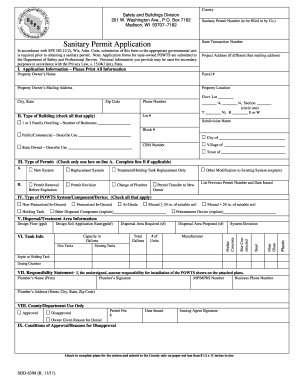
The Renewal Application for Facility Oil Discharge Contingency Plan contains several crucial sections that must be accurately completed.
- Facility Identification: Details including location, capacity, and operational status.
- Response Strategy Changes: Any alterations or updates to the existing contingency plans.
- Certification and Signatures: Sections requiring official sign-off by operators and, if applicable, notarization.
State-by-State Differences
The exact requirements and procedures for the Renewal Application for Facility Oil Discharge Contingency Plan may vary by state, reflecting differing local environmental laws.
- State Variations: Different states might have additional requirements or forms.
- Regional Adjustments: Some states may require specific contingency measures due to geographical factors.
- Local Support: State DEQ offices often provide guidance tailored to regional regulations and needs.