






Definition & Meaning
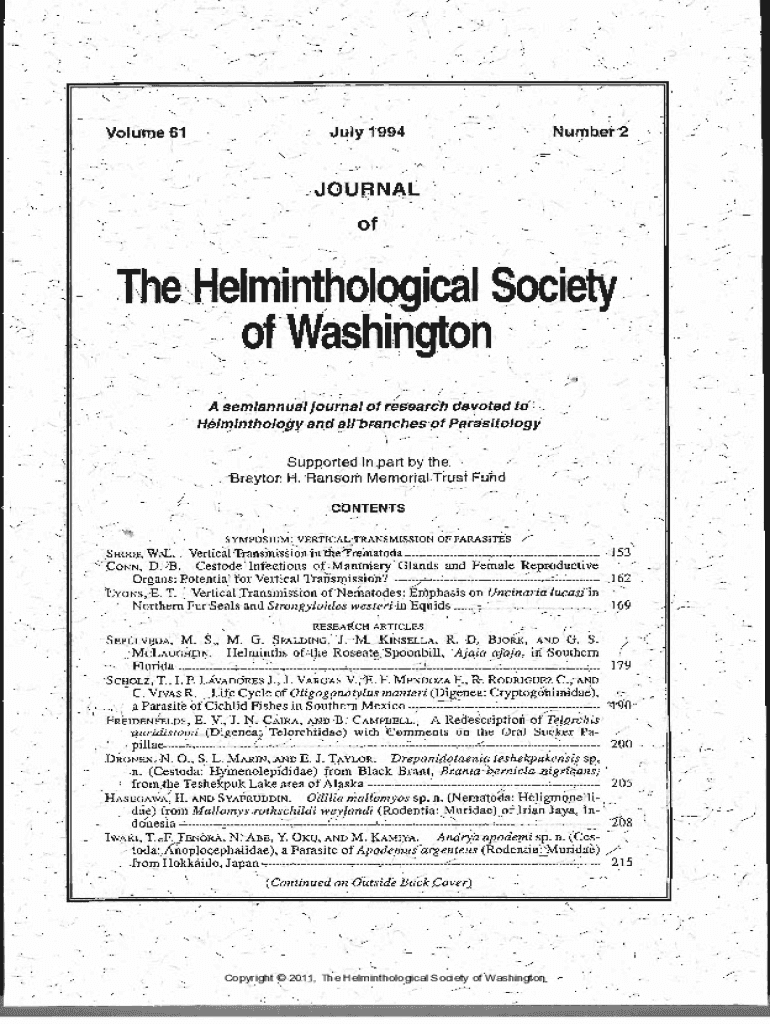
A semiannual journal of research devoted to helminthology is a specialized publication that focuses on the scientific study of helminths, also known as parasitic worms. This field of study is crucial for understanding parasites that affect humans, animals, and plants, and it extends to various branches of parasitology. These journals are critical resources for researchers and professionals within the biological sciences who are interested in the biology, lifecycle, and impact of helminths. Key sections often cover new findings in helminth taxonomy, control measures, and the ecological impact of parasites.
How to Use the Journal
Using the journal effectively involves several steps to ensure you gain maximum value from its contents. First, identify your area of interest within helminthology and search the journal's index or database for relevant articles. This could involve topics such as parasite-host relationships, immune responses, or geographical distributions of specific helminths. Read the abstracts to quickly assess the relevancy of the papers to your research. Once you’ve selected the articles, download them for thorough reading and reference them in your own research works or case studies.
How to Obtain the Journal
To obtain a copy of the semiannual journal, you can subscribe through academic publishers or libraries that catalog scientific journals. Many universities and institutions offer online access to their databases where these journals are stored. Additionally, some journals may offer individual article purchases if a full subscription is not feasible. For those affiliated with academic institutions, inter-library loan services provide another avenue to access the journal.
Key Elements of the Journal
The journal contains several key elements that enhance its utility for researchers:
-
Research Articles: These are the core of the journal, providing peer-reviewed studies that shed new light on various aspects of helminthology.
-
Case Reports: These provide detailed accounts of specific helminth infestations, offering vital insights into treatment and management strategies.
-
Review Papers: Summarize the existing literature on a given topic, highlighting gaps in current knowledge and suggesting future research directions.
-
Technical Notes: Shorter reports that focus on particular techniques or innovations in the field of helminthology.
Important Terms Related to Helminthology
Understanding the terminology specific to helminthology is crucial for interpreting the research presented in the journal. Some key terms include:
- Nematodes: A type of helminth that includes roundworms.
- Cestodes: Another class of parasitic worms known as tapeworms.
- Trematodes: Also known as flukes, these are flatworms that often require multiple hosts throughout their lifecycle.
- Anthelmintics: Drugs used to treat infections by helminths.
Examples of Using the Journal
Researchers frequently utilize the journal for several purposes:
- Comparative Studies: By comparing findings from different articles, researchers can develop broader insights into helminth ecology across regions or species.
- Education and Teaching: Academics use the journal as a teaching tool to provide students with the latest research findings.
- Policy Development: Studies from the journal may inform policy decisions on public health and agricultural practices involving helminth management.
Digital vs. Paper Version
With technological advancements, many researchers opt for digital versions of the journal due to convenient access and search functionalities. Digital formats allow easier integration with reference management software, which is essential for efficiently citing sources in scientific writing. However, some still prefer paper versions for in-depth study, highlighting, and personal archiving.
State-Specific Rules for Submissions
For researchers interested in submitting to the journal, it’s important to understand any state-specific guidelines that may apply. These could relate to ethical research standards, especially if studies involve human or animal subjects. Always ensure compliance with the state-specific ethical and legal standards related to your research methodology before submission.