
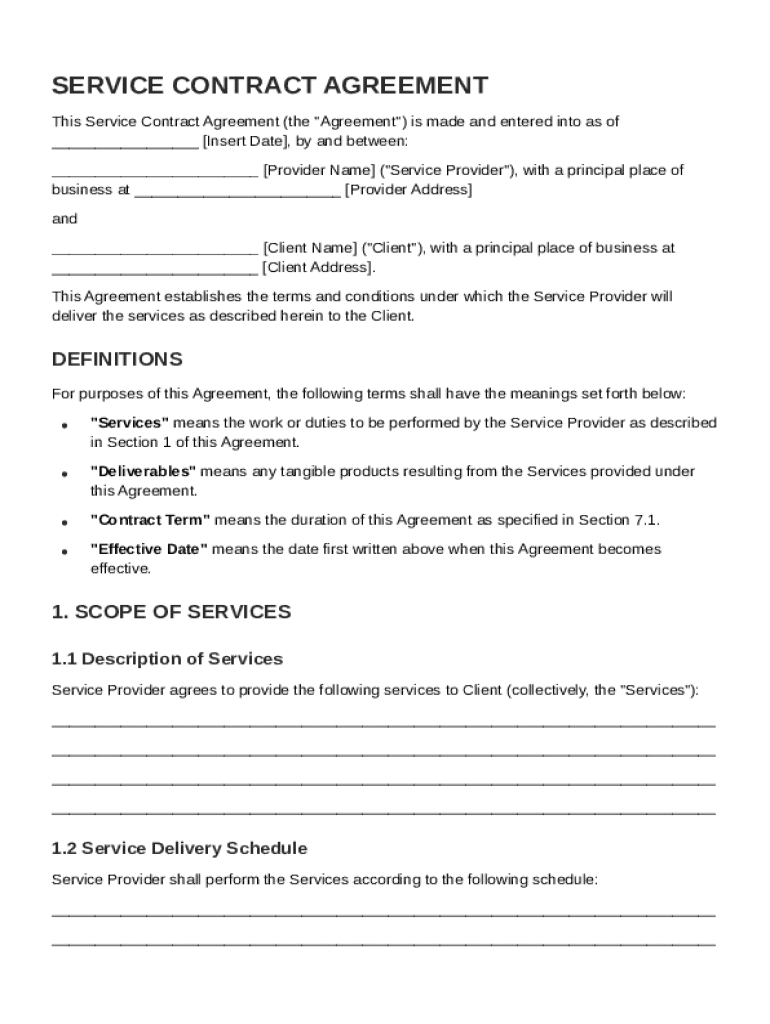







Definition and Meaning
A Service Contract Agreement, often referred to simply as a service contract, is a legally binding document between a Service Provider and a Client. This agreement defines the scope of services to be provided, expected outcomes, and obligations of both parties. It serves as a formal commitment to ensure that both the service provider and the client understand their responsibilities, rights, and the terms under which services will be provided. Service contracts are vital for setting clear expectations and providing a recourse if either party fails to uphold their end of the agreement.
How to Use the Provide Service Contract Template
To utilize a service contract template effectively, start by downloading the template to your preferred document editing software that supports formats like DOC or PDF. These templates typically come pre-filled with standard clauses. Review each section to tailor it to your specific agreement. For example, insert the full legal names of both parties, detailed descriptions of the services to be rendered, and address any service-specific requirements. Ensure you complete sections regarding payment terms, including amounts, timelines, and methods. Finally, validate all included details with both parties before signing the document digitally or in print.
Steps to Complete the Provide Service Contract Template
Completing a service contract template involves several key steps:
- Review the Template: Familiarize yourself with the structure and content of the template to understand each section and its requirements.
- Fill in Party Information: Enter the full legal names and contact details of the service provider and client.
- Define Service Scope: Detail the services to be provided, including descriptions, timelines, and deliverables.
- Specify Payment Terms: State the compensation details, payment schedule, and preferred methods of payment.
- Outline Responsibilities: Clearly list the responsibilities of each party to ensure mutual understanding.
- Include Confidentiality and Security Clauses: If the services involve sensitive information, add clauses outlining confidentiality obligations and data security measures.
- Review Legalese: Read through the legalese, including warranties, indemnities, and termination clauses, to ensure they align with your expectations.
- Seek Legal Advice (optional): Consider having a legal professional review the agreement to ensure its completeness and compliance with local regulations.
Key Elements of the Provide Service Contract Template
A comprehensive service contract template should include several key elements:
- Identification of Parties: Clearly names both the service provider and the client.
- Service Description: Precise detailing of services to be performed, with specifics on deliverables and project milestones.
- Compensation and Billing: Outlines the fee structure, payment terms with deadlines, and any late payment penalties.
- Duration and Termination: Specifies the contract's validity period and conditions under which it can be terminated prematurely.
- Confidentiality and Non-Disclosure: Protects any sensitive information exchanged between parties.
- Dispute Resolution: Describes how disputes will be handled, such as mediation, arbitration, or choice of legal venue.
- Miscellaneous Provisions: Any additional clauses deemed necessary, like force majeure or jurisdiction.
Legal Use of the Provide Service Contract Template
The legal use of a service contract template is critical to ensure enforceability. It must be tailored accurately to reflect the agreement's unique aspects and specific legal considerations relevant to its intended usage. Adhere to local and federal regulations to prevent legal challenges. Contracts need to be in compliance with applicable laws such as the Uniform Commercial Code (UCC) in the United States. It is essential that both parties have legal capacity, meaning they are of sound mind and not under influence, to consent validly. Furthermore, the terms should not violate public policy or laws.
Who Typically Uses the Provide Service Contract Template
Service contract templates are used by a wide array of users, including but not limited to:
- Freelancers and Consultants: Individuals who provide professional services independently and need formal agreements with their clients.
- Small and Medium Enterprises (SMEs): Businesses that engage external service providers for tasks like IT support, marketing, or cleaning services.
- Large Corporations: Big enterprises that require consistent, legally binding service agreements for ongoing contracts with vendors.
- Non-Profit Organizations: Entities that hire external providers for event planning or administrative tasks often rely on these templates for clarity and protection.
- Government Agencies: Public sector bodies use such templates to formalize contracts with private contractors.


Important Terms Related to Provide Service Contract Template
Understanding the common terminology in service contracts is vital for both parties. Terms to be familiar with include:
- Scope of Work (SOW): A detailed description of the work to be completed.
- Force Majeure: Clause relieving parties from obligations due to unforeseen events beyond their control.
- Indemnity: A provision to compensate for any losses or damages incurred.
- Warranty: Guarantees that services will meet certain standards or specifications.
- Confidentiality: Obligations to conceal sensitive information shared during the engagement.
- Termination Clause: Specifies conditions under which the agreement may be ended prior to completion.
State-Specific Rules for the Provide Service Contract Template
Service contracts must comply with various state-specific rules and regulations within the United States. These rules can influence contract enforceability and interpretation. For example:
- Governing Law Clauses: Specify which state’s laws govern the contract terms.
- Unique State Requirements: Some states, like California or New York, have unique stipulations regarding independent contractors and employment classification.
- Statutes of Limitation: Define the period within which parties must bring lawsuits for breach of the contract.
- Notarization: Certain states may require notarization of service contracts under particular circumstances.
Each of these regulations ensures the legality and enforceability of the contract within the jurisdictions applicable.




