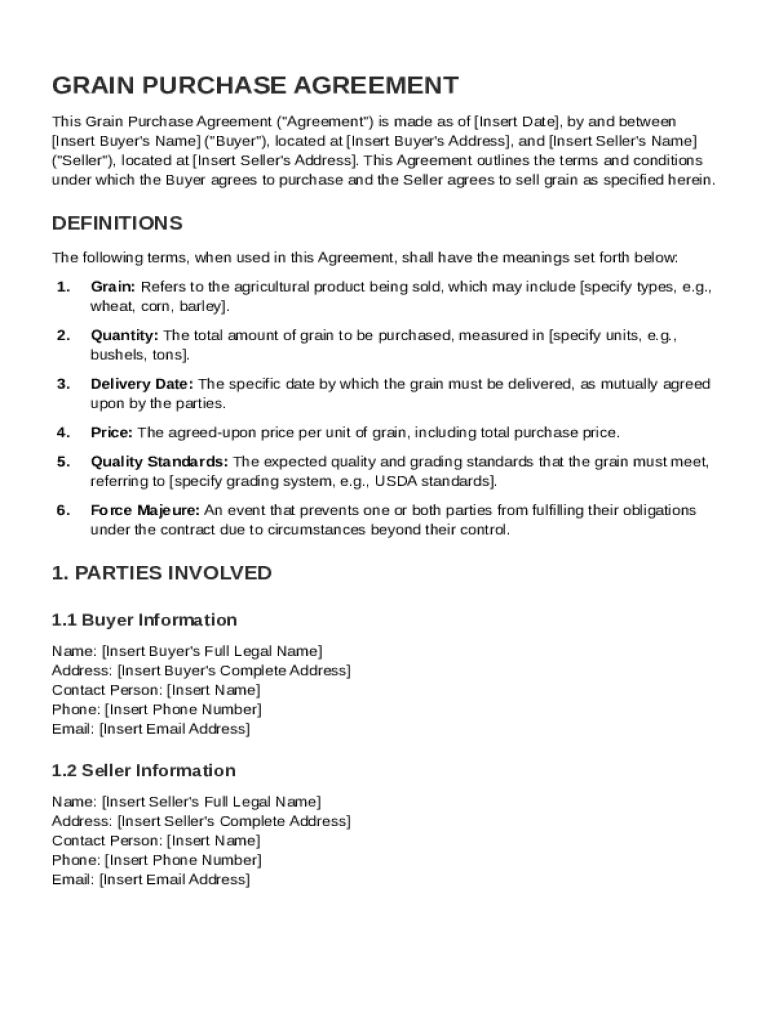







Definition and Meaning of the Grain Contract Template
The Grain Contract Template is a standardized document used to outline the terms and conditions of a transaction involving grain sales. This template typically serves as a comprehensive framework to ensure both parties—the Buyer and the Seller—understand their obligations in the transaction. The agreement defines key terms, such as the type of grain being sold, quality standards, and delivery specifications. Pricing, payment terms, and dispute resolution methods are also key components. Utilizing this contract helps minimize misunderstandings and provides a legal basis for recourse if needed.
How to Use the Grain Contract Template
To effectively use the Grain Contract Template, certain steps must be followed to ensure each aspect of the transaction is covered. Initially, both parties should review the template thoroughly, focusing on customizable sections such as pricing, payment terms, and delivery schedules.
-
Customize the Template: Begin by filling in specific details unique to the transaction, such as parties' names and addresses, grain type, and quantity.
-
Review Key Elements: Confirm that quality standards and warranties align with both parties' expectations.
-
Include Additional Clauses: Add any specific requirements or clauses that address unique aspects of the transaction, such as insurance or storage provisions.
-
Legal Review: It is advisable to seek legal counsel to ensure the contract complies with applicable laws and regulations.
-
Execute the Contract: Once finalized, both parties need to sign the contract, making it legally binding.
This template simplifies contract creation by providing a thorough framework that requires only customization to fit specific needs.
Who Typically Uses the Grain Contract Template
The Grain Contract Template is widely used by various stakeholders in the agricultural industry. Typical users include:
-
Farmers: Use this template to formalize sales agreements with buyers, ensuring both parties are clear on expectations.
-
Grain Buyers: Purchase grain from multiple sources and need standardized contracts for consistency and legal protection.
-
Agricultural Cooperatives: Facilitate transactions between member farmers and external buyers.
-
Commodity Brokers: Use the template to structure deals between sellers and purchasers in the commodities market.
This broad applicability ensures that the template can accommodate a variety of transaction types and parties involved.


Key Elements of the Grain Contract Template
The Grain Contract Template consists of several critical elements essential for outlining transaction terms:
-
Definitions and Parties Involved: Clearly defines who the buyer and seller are, along with key terms used in the contract.
-
Grain Specifications: Details the type, quality, and quantity of grain being sold.
-
Pricing and Payment Terms: Specifies the price per unit and payment methods, as well as any terms for late or early payments.
-
Delivery Obligations: Outlines delivery schedules, locations, and responsibilities regarding transportation.
-
Quality Standards and Warranties: Establishes the standards the grain must meet and any warranties the seller provides.
-
Termination Conditions: Describes the conditions under which either party may terminate the contract.
Each of these elements ensures that both parties are fully informed about their rights and obligations under the agreement.
State-Specific Rules for the Grain Contract Template
When using the Grain Contract Template in the United States, it's crucial to consider state-specific rules that may affect contract terms.
-
State Regulations: Some states have specific agricultural laws that override general contract provisions, requiring adaptation to comply with local legislation.
-
Customary Practices: Practices such as grain inspection and transportation regulations can vary by state and should be reflected in the template if applicable.
-
Tax Implications: Some states may have specific taxes or fees associated with agricultural contracts that must be included in payment terms.
Reviewing state-specific requirements ensures the contract is legally enforceable in the jurisdiction where the transaction takes place.
Digital vs. Paper Version
The Grain Contract Template can be utilized in both digital and paper forms, each offering distinct advantages:
-
Digital Version: Provides ease of access and editing, making collaboration and revisions straightforward. Digital storage and signing options enhance convenience and security.
-
Paper Version: Offers a tangible record that some parties may prefer for physical archiving. However, it lacks the flexibility and security features of digital alternatives.
Utilizing a platform like DocHub can streamline the use of digital templates, offering features like annotation, electronic signatures, and secure storage.
Legal Use of the Grain Contract Template
When deploying the Grain Contract Template, legal compliance is paramount. The template is crafted to meet general legal standards but should be reviewed for:
-
Compliance with Federal Regulations: Ensures adherence to laws such as the Federal Grain Inspection Act, affecting quality and grading standards.
-
State-Specific Compliance: Adjust for any local regulations that differ from federal laws.
-
Contract Enforceability: Verifies that the contract is legally binding, requiring careful review of clauses related to disputes and termination.
Through legal review, both parties can safeguard against potential breaches and ensure the contract's enforceability in a court of law.
Software Compatibility for the Grain Contract Template
For those using digital versions, compatibility with popular software platforms is crucial:
-
DocHub Compatibility: The platform supports various file formats, including DOC, PDF, and more, facilitating seamless import and editing.
-
Integration with Cloud Services: Users can integrate with Google Drive, Dropbox, and similar services for easy access and storage.
-
Document Editing Tools: Platforms like DocHub offer annotation and fillable form features, enhancing the utility of the template for complex transactions.
By leveraging compatible software, users can enhance the efficiency and effectiveness of the contract creation process.