







Definition & Meaning
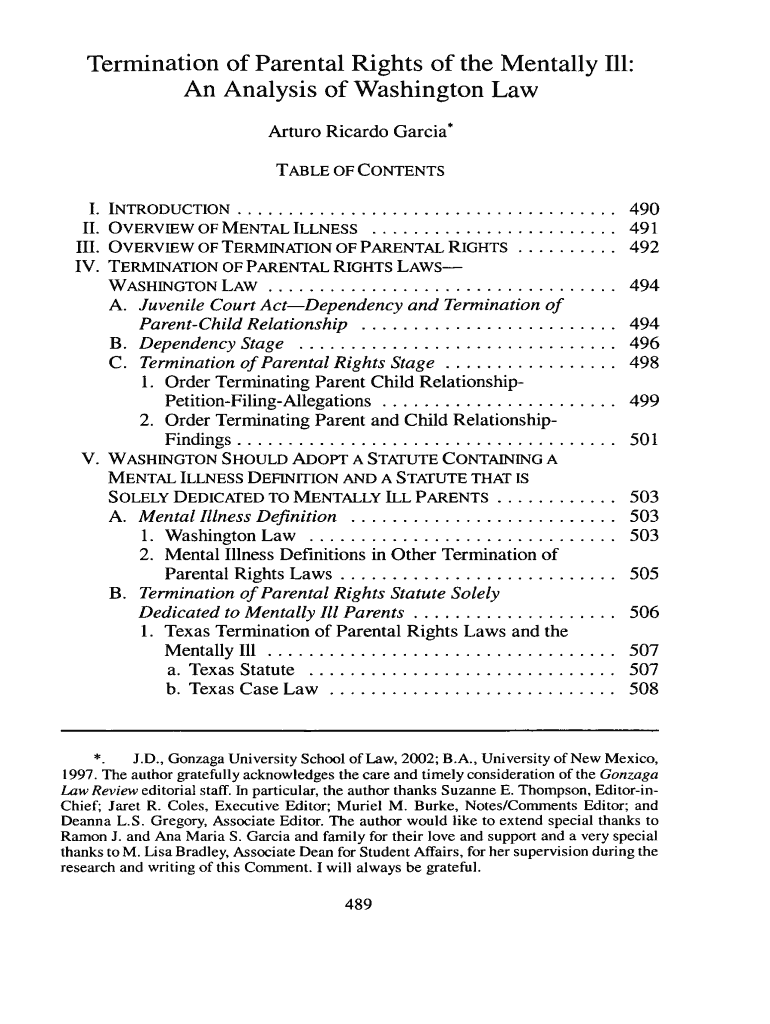
The "Termination of Parental Rights of the Mentally Ill" refers to a legal process by which a court permanently ends the legal rights of a parent who is mentally ill, over their child or children. This procedure is intended to prioritize the child's welfare and safety, ensuring they are in a stable and nurturing environment. The paramount consideration in these cases is the child's best interests, including emotional and psychological needs.
Key Elements of the Termination of Parental Rights
The termination process involves several critical components. First, there must be substantial evidence of the parent's mental illness and its significant impact on their ability to fulfill parental duties. This could involve assessments from psychiatric evaluations and testimony from mental health professionals. The court also examines whether the parent's condition is likely to improve within a reasonable period and any attempts made towards rehabilitation and treatment.
State-Specific Rules for Termination
The rules governing the termination of parental rights can vary significantly from state to state. Some states may have more detailed statutes that directly address cases involving mentally ill parents, while others incorporate these cases into broader family law statutes. For instance, Washington has been noted to require a more specific definition of mental illness in these contexts. It is crucial to consult the specific state laws or seek legal guidance to understand the procedural and substantive aspects required in each jurisdiction.
Eligibility Criteria
To initiate the termination of parental rights, certain eligibility criteria must be met. Typically, the petitioner must establish that the parent has a chronic mental illness that significantly hampers their ability to care for the child adequately. Other factors could include previous cases of neglect or abuse attributed to the parent's mental health condition, as well as any failed attempts at family reunification or offering necessary support services.


Steps to Complete the Termination Process
- Filing a Petition: The process begins by filing a formal petition with the court, outlining the reasons for seeking termination and providing evidence of the parent's mental illness.
- Notification: The parent in question must be notified about the proceedings to ensure they can participate and have legal representation if desired.
- Court Hearings: The court will schedule hearings where evidence is presented. This includes expert testimonies, documented evaluations, and any relevant history of the parent's interactions with the child.
- Judicial Decision: After evaluating all presented information, the judge will decide whether to grant the termination, focusing solely on the child's best interests.
Legal Use of the Termination Form
The termination of parental rights is a profound legal action, bearing long-term consequences for both the child and the parent. It is used only when there is compelling evidence that maintaining the parental relationship would be detrimental to the child. Courts employ this action to facilitate the child's adoption to a nurturing and stable family environment when the original parent cannot meet these needs.
Important Terms Related to Termination
- Best Interests of the Child: A legal standard used to determine what arrangements serve the child’s physical, emotional, and psychological needs best.
- Due Process: Legal requirement ensuring fair treatment in the judicial process, including the parent's right to be heard and contest evidence.
- Rehabilitation: Efforts made by the mentally ill parent to seek treatment and improve parenting capacities.
Examples of Termination Cases
Consider a scenario where a parent with severe bipolar disorder has repeatedly failed to adhere to treatment plans, resulting in neglectful parenting. Despite efforts to provide family support services, there remains a consistent inability to care for the child safely. In such cases, the court might decide to terminate rights, particularly if there is a stable adoptive family ready to provide care.
State-by-State Differences
While some states offer detailed statutes addressing mental illness specifically, others generalize the procedure. For example, Texas law provides more protective measures for mentally ill parents compared to generic laws in other states. Therefore, understanding state-specific statutes is essential for navigating these complex cases effectively. Ensuring awareness of these differences helps inform involved parties about what to expect during the legal process.




