







Definition & Meaning
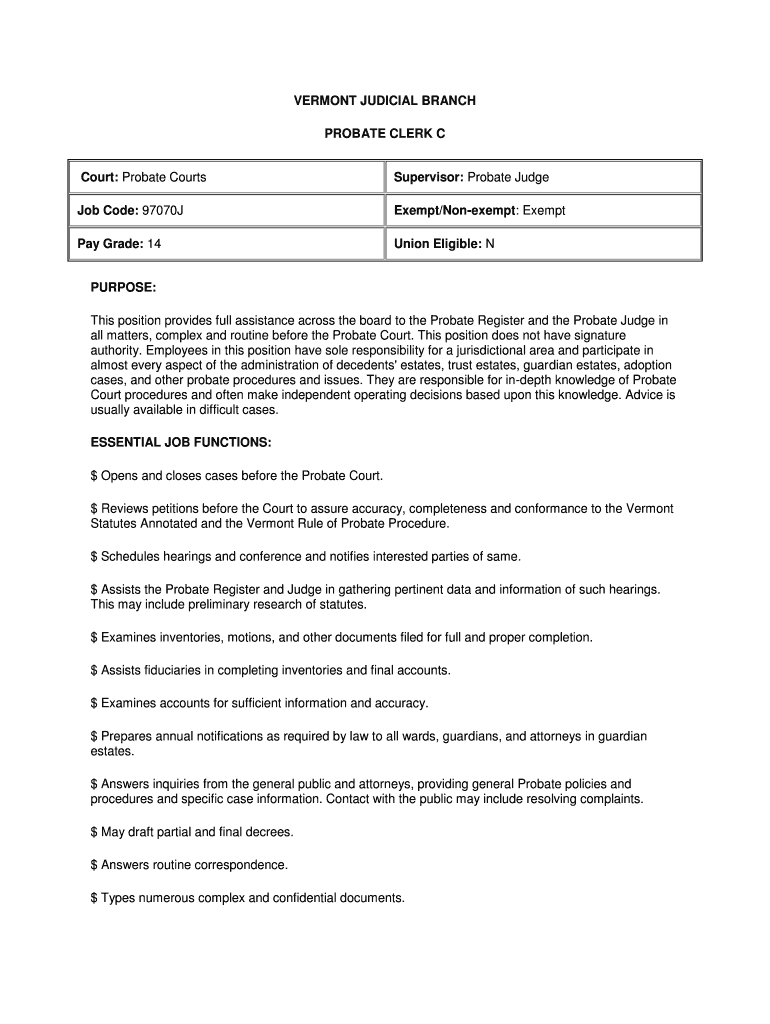
The Vermont Judicial Branch Probate Clerk C role is a specialized position within the state's probate courts. This job focuses on providing clerical and administrative support to manage probate cases. Essential tasks include assisting the Probate Register and Judge in handling case files, reviewing legal documents, and scheduling hearings. This role requires a comprehensive understanding of probate court procedures to ensure the effective and efficient operation of the court system. It plays a critical part in the judicial process by facilitating case flow and ensuring proper court record management.
Key Elements of the Probate Clerk Role
The position is defined by several core responsibilities that demand both administrative competence and legal knowledge:
- Case Management: Opening and closing probate cases efficiently and ensuring all necessary procedures are followed. This involves organizing case files and documenting all pertinent information accurately.
- Document Review: Analyzing and verifying the completeness and accuracy of legal documents submitted to the court.
- Public Assistance: Providing accurate information and guidance to the public regarding probate processes and cases, thereby serving as a point of contact between the court and external parties.
- Scheduling: Arranging and managing court hearings. The role involves coordinating schedules with the judge, attorneys, and other involved parties to ensure timely proceedings.
- Clerical Duties: Performing general office tasks such as data entry, filing, and document management, which form the backbone of court operations.
Important Terms Related to the Probate Clerk Position
Understanding the terminology specific to probate courts is essential for this position. Here are some key terms associated with the job:
- Probate: The legal process of administering the estate of a deceased person, which includes validating the will, appraising the estate, and distributing assets to beneficiaries.
- Estate: All the money, property, and other assets owned by an individual at the time of their death.
- Executor/Administrator: An individual appointed by a court to manage the estate of another person. An executor is usually named in a will, whereas an administrator is assigned when there is no will.
- Beneficiary: A person or organization designated to receive a portion of the decedent's estate.
How to Use the “Probate Clerk C” Position Description
Understanding the position description thoroughly is crucial for applicants and professionals interacting with the probate system:
- Job Preparation: Use the description to prepare for exams or interviews by focusing on the core responsibilities and necessary skills outlined.
- Training: New hires can refer to the description to understand expected duties and align their work with the court’s requirements.
- Performance Evaluation: It is useful as a benchmark for evaluating job performance and identifying areas for skill development and improvement.
- Public and Legal Professionals: Understanding the clerk's duties helps external parties interact effectively with court personnel.
Steps to Complete Job Applications for the Probate Clerk Position
Completing an application for the Probate Clerk C position requires careful attention to detail and preparation:
- Review the Job Description: Thoroughly read and comprehend all aspects of the position to tailor your resume and cover letter.
- Gather Required Documents: Prepare your resume, cover letter, and any relevant certifications or transcripts.
- Application Submission: Submit your application by the specified method, whether it be online, by mail, or in-person as directed by the Vermont Judicial Branch.
- Follow-Up Interview Preparation: Practice potential interview questions related to probate procedures, customer service skills, and legal document handling.
Legal Use and Compliance
Ensuring adherence to legal standards and ethical practices is a priority for this role:
- Confidentiality: Strict adherence to confidentiality regarding court proceedings and personal information of those involved in probate cases.
- Timeliness: Handling cases and paperwork promptly to prevent delays in legal processes, which is vital for the smooth operation of the court.
- Accuracy: Maintaining high standards in document review and record-keeping to avoid errors that could affect legal outcomes.
Required Documents for the Probate Clerk Role
Applicants need to submit specific documents in support of their application:
- Resume: Detailed employment history and skills relevant to the role.
- Cover Letter: Personal statement highlighting your interest in the position and your qualifications.
- References: Professional references who can vouch for your experience and work ethic.
- Educational Transcripts: Proof of educational qualifications, such as a high school diploma or relevant course certificates.
Each of these elements provides crucial context and insight into the requirements and operations related to the Vermont Judicial Branch Probate Clerk C position, giving applicants, current employees, and public service users a comprehensive understanding of the role and its significant impact within the courtroom environment.




