




01. Edit your 2210 f form online
Type text, add images, blackout confidential details, add comments, highlights and more.

Type text, add images, blackout confidential details, add comments, highlights and more.

Draw your signature, type it, upload its image, or use your mobile device as a signature pad.

Send irs 2210 f via email, link, or fax. You can also download it, export it or print it out.
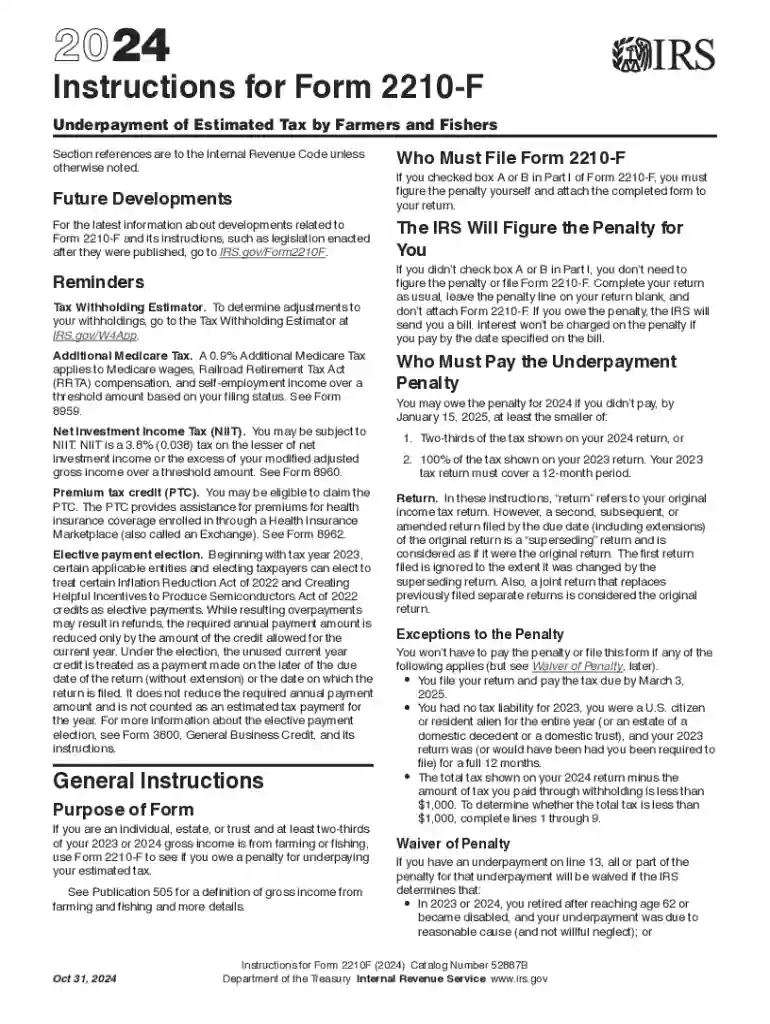
Form 2210-F, also known as the Underpayment of Estimated Tax by Farmers and Fishers, is an IRS document used by individuals classified under these professions to determine whether they owe a penalty for failing to pay enough in estimated taxes throughout the year. Unlike other taxpayers who must pay estimated tax quarterly, farmers and fishers have unique payment schedules due to the seasonal and fluctuating nature of their income.
Obtaining Form 2210-F is straightforward, as it is available directly from the IRS website in a printable PDF format. The form can be easily downloaded and printed for manual completion. Additionally, farmers and fishers can access the form through tax preparation software, which typically includes printable versions of this form.
Successfully completing Form 2210-F involves a few detailed steps, ensuring all necessary financial figures are accurately calculated and reported.
Elligibility for Form 2210-F applies predominately to farmers and fishers whose primary source of income is from activities related to these industries. The form applies to those who:


Several sections are crucial to the completion of Form 2210-F. Understanding these aspects fosters a complete and accurate submission:
The IRS provides comprehensive guidelines to assist farmers and fishers in navigating Form 2210-F. These guidelines detail:
Farmers and fishers must be acutely aware of specific deadlines to avoid penalties:
Penalties for failing to meet estimated tax payments are enforced by the IRS. It's critical to understand:
Multiple options exist for submitting Form 2210-F, allowing flexibility for different preferences and situations:
Modern tax preparation software streamlines the Form 2210-F completion process. Applications such as TurboTax or QuickBooks automatically calculate liabilities and underpayments:
We've got more versions of the 2210 f form form. Select the right 2210 f form version from the list and start editing it straight away!
At DocHub, your data security is our priority. We follow HIPAA, SOC2, GDPR, and other standards, so you can work on your documents with confidence.

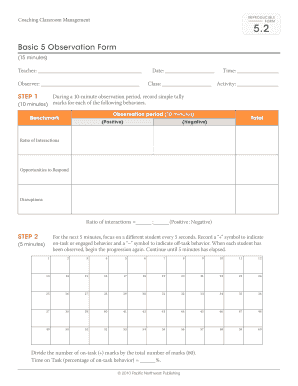


Underpayment of Estimated Tax by. Farmers and Fishermen. Attach to Form 1040 below. Part II. Figure Your Underpayment. 1. Enter your 2022 tax after creditsRead more
Apr 2, 2026 Farmers eligible for relief under the Notice are not required to attach Form 2210-F, Underpayment of Estimated Tax by Farmers and Fishermen,


