






Definition and Meaning
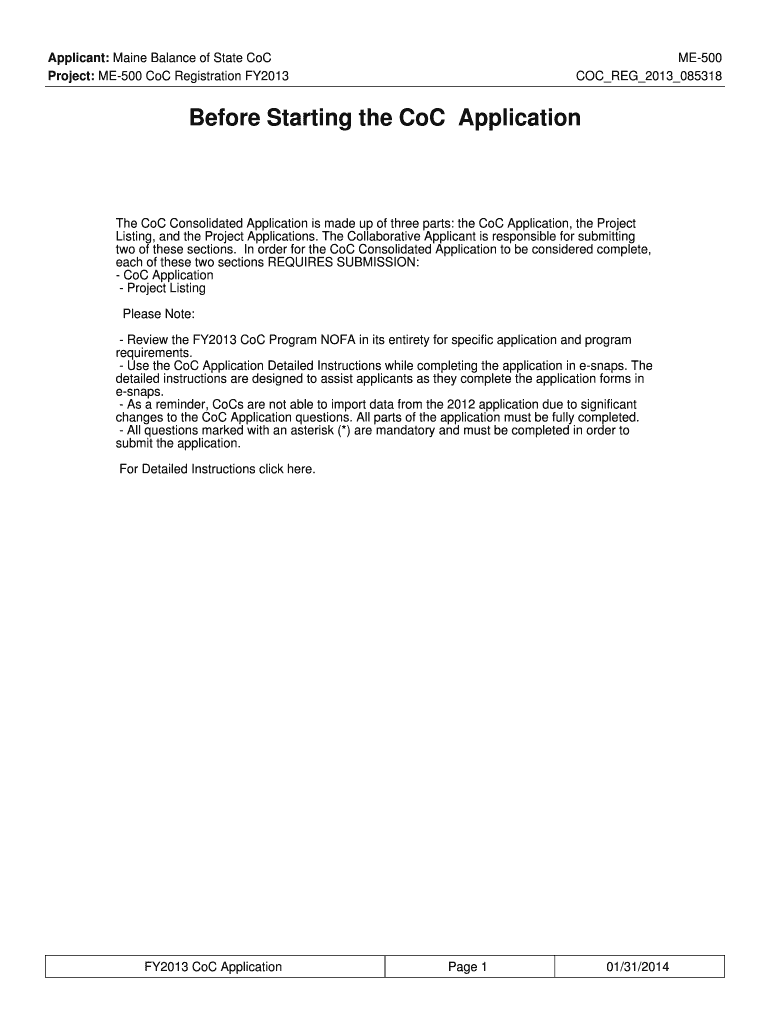
The Maine Balance of State Continuum of Care (CoC) Project, specifically the ME-500 CoC Registration FY2013, is an application process designed for coordinating efforts to manage homelessness within designated areas. This form serves as a critical component in obtaining funding under the Continuum of Care Program, which is overseen by the U.S. Department of Housing and Urban Development (HUD). The registration encompasses various projects and initiatives that aim to provide housing solutions and support services for homeless individuals and their families. Understanding its purpose is fundamental for stakeholders who play a role in addressing homelessness through collaborative community efforts.
How to Use the Maine Balance of State CoC Registration FY2013
To effectively utilize the Maine Balance of State CoC Registration FY2013, applicants should meticulously follow the guidelines established by HUD. This form is used to consolidate the projects under the CoC umbrella into a unified application. Applicants need to ensure that they have gathered all relevant data pertaining to their projects, such as budget projections, intended outcomes, and performance metrics. The form facilitates the submission of a coordinated application for funding and is essential for communicating the impact and scope of each CoC project within the targeted geographic area.
Important Steps for Submission
- Collect and organize all project-related documents, including budgets and performance goals.
- Ensure alignment with HUD's priorities and requirements for CoC funding.
- Collaborate with partners and stakeholders to validate project details.
Key Elements of the CoC Registration FY2013
Several components are essential when completing the Maine Balance of State CoC Registration FY2013. Key elements include:
- Project Overview: Detailed descriptions of the projects seeking funding, their objectives, and their alignment with broader CoC goals.
- Collaboration Details: Involvement of various stakeholders, including local government agencies and non-profits, is crucial for illustrating community cooperation.
- Performance Metrics: Current and projected outcomes provide necessary evidence for effectiveness and need for funding.
These elements reflect the foundational aspects of the application that HUD evaluates to determine eligibility and funding levels.
Steps to Complete the Registration
Completing the Maine Balance of State CoC Registration involves several crucial steps:
- Gather Required Information: Compile data on the CoC projects, including descriptions, objectives, and participant details.
- Community Involvement: Engage with local stakeholders to substantiate project alignment with community needs.
- Draft the Application: Use gathered data to draft the comprehensive registration form, ensuring all sections are filled accurately.
- Review and Revise: Verify all information for accuracy and relevance, revising any unclear or incomplete sections.
- Submit the Final Version: Once complete, submit the form according to the specified HUD deadlines and procedures.
Who Typically Uses the CoC Registration Form
The primary users of the Maine Balance of State CoC Registration FY2013 are organizations focused on combating homelessness. These include:
- Non-Profit Organizations: Entities handling shelters and transitional housing projects.
- Local Government Agencies: Departments managing public housing and community development programs.
- Collaborative Networks: Groups that consist of various stakeholders aiming to create a coordinated approach to homelessness alleviation.
These users collaborate to ensure comprehensive coverage and support for homeless populations in their respective regions.


Legal Use of the CoC Registration FY2013
The legal use of the Maine Balance of State CoC Registration FY2013 adheres to federal guidelines established by HUD. Projects must comply with the legal stipulations concerning the allocation and use of federal funds. Moreover, organizations are required to ensure all submitted information is accurate and truthful, as providing misleading data can lead to disqualification or legal repercussions. Compliance with HUD regulations is a critical aspect of ensuring the proper use of the form and securing necessary funding.
State-Specific Rules for Maine
In Maine, several state-specific rules may influence the completion and submission of the CoC Registration FY2013. These rules might include specific documentation requirements reflective of local governance structures or needs assessments that align with regional priorities. Understanding and adhering to these rules ensures that applications meet not only federal but also state obligations, enhancing the likelihood of successful funding acquisition.
Important Dates and Filing Deadlines
Applicants must be aware of critical dates associated with the CoC Registration FY2013 submission process. HUD typically sets annual deadlines for registration, which are crucial for project planning and execution. Missing these deadlines can result in a loss of funding opportunities. It is advised to regularly check for updates on filing timelines and to begin the application process well in advance to accommodate any unforeseen delays.
Tips for Staying on Track
- Maintain a calendar of important deadlines and reminders.
- Start preparation as early as possible to allow thorough review.
- Keep communication lines open with HUD representatives for guidance.
Required Documents for CoC Registration
Various documents are integral to the successful submission of the Maine Balance of State CoC Registration FY2013. These typically include:
- Project Descriptions: Detailed information on each CoC project.
- Budgetary Details: Comprehensive financial plans outlining the use of funds.
- Performance Data: Metrics demonstrating prior success or potential impact of the projects.
Ensuring that all required documents are accurate and complete is vital for a successful application process.