







Definition & Meaning
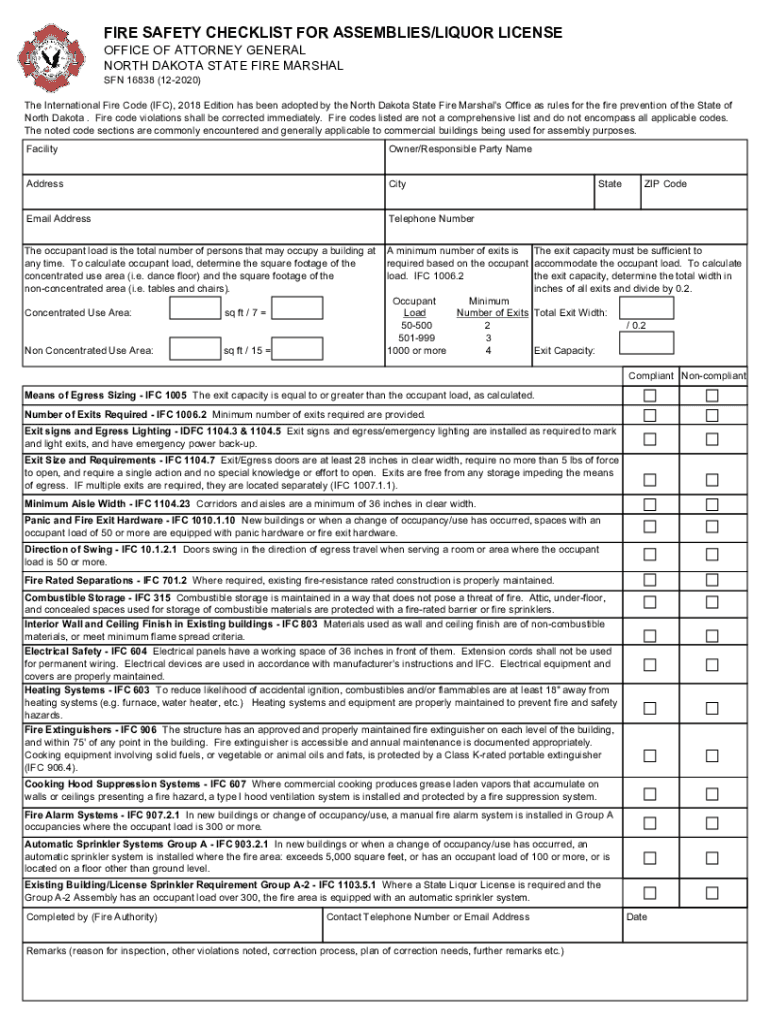
The "fire safety checklist for assemblies liquor license - office of attorney" is a structured document used to ensure that venues hosting assemblies, particularly those serving alcohol, comply with fire safety regulations as stipulated by legal requirements in North Dakota. This checklist is based on the 2018 International Fire Code and aims to guide facility owners in maintaining safety standards, which includes understanding both the physical layout of the venue and the safety features that must be present. Its primary function is to help verify compliance with necessary fire safety protocols to protect occupants and assets.
How to Use the Fire Safety Checklist
Using the fire safety checklist involves a systematic review of the venue's compliance with fire codes. Key steps include:
- Identifying Checkpoints: Owners or managers should start by familiarizing themselves with the checklist sections, which cover occupant load calculations, exit requirements, and alarm system maintenance.
- Site Inspection: Conduct a thorough walk-through of the venue to observe and note any discrepancies from the checklist.
- Documentation: Use the checklist to record any deficiencies and create a plan for compliance, including deadlines for rectifying issues.
- Review Process: Regularly review and update the checklist to ensure ongoing compliance, especially when modifications to the venue or operations occur.
Key Elements of the Checklist
The checklist is comprehensive, focusing on several critical areas essential for fire safety compliance:
- Occupant Load Calculations: This defines the maximum number of people who can safely occupy the venue and is crucial in preventing overcrowding.
- Exit Requirements: Ensures all exits are clearly marked, unobstructed, and accessible.
- Egress Lighting: Verifies if emergency lighting is installed and operational, ensuring visibility during evacuations.
- Fire Extinguisher Placement: Checks the availability, accessibility, and maintenance of fire extinguishers.
- Alarm Systems: Confirms that fire alarms are installed and functional, with routine checks documented.
Steps to Complete the Fire Safety Checklist
Completing the fire safety checklist is a detailed process:
- Pre-Assessment: Gather any previous safety reports and familiarize yourself with the layout and existing safety measures.
- Detailed Inspection: Walk through each area covered by the checklist, making observations and recording findings.
- Implement Changes: Address any noted deficiencies by scheduling upgrades or repairs as necessary.
- Verification: Once changes are made, re-assess the site to ensure all checklist items are compliant.
- Documentation: Keep records of completed checklists and improvements for future audits or inspections.
Legal Use of the Checklist
The checklist serves as a legal document to demonstrate compliance with fire safety standards to regulatory bodies:
- Proof of Compliance: Use checklist records to evidence adherence to fire safety laws during inspections or audits.
- Insurance Requirements: It may help satisfy conditions set by insurers for coverage by proving operational safety measures.
- Litigation Defense: In cases of safety-related lawsuits, a completed checklist can serve as evidence of due diligence in maintaining safety standards.
State-Specific Rules
While this checklist is specific to North Dakota, users should be mindful of variations in local amendments to the International Fire Code. These variations can affect requirements such as specific exit width measurements or particular fire defense systems, depending on regional environmental risks or population density. Always consult regional authorities for the most accurate information.
Who Typically Uses the Checklist
The fire safety checklist is primarily used by:
- Facility Owners and Managers: Responsible for ensuring that venues comply with legal safety standards.
- Fire Inspectors: Utilize the checklist during inspections to determine compliance.
- Legal and Insurance Professionals: Assess compliance data for legal proceedings or insurance evaluations.


Important Terms Related to the Checklist
Understanding the language of fire safety regulations helps in checklist administration:
- Egress: Refers to the flow of occupants out of a building.
- Flammable Materials: Any substances or materials that can easily catch fire.
- Fire Barrier: Structural elements aimed at containing or slowing fire spread.
- Hazardous Area: Any location with increased risk of fire due to stored materials or operational processes.
- Sprinkler System: Automatic systems designed to suppress fires.
Application Process & Approval Time
The process to apply for and use the checklist is straightforward but requires attention to detail:
- Application: Obtain the checklist through the state's fire regulatory agency or the appropriate legal office.
- Approval: Implement necessary changes identified in the checklist to achieve compliance.
- Review Period: Approval time may vary; reach out to the local fire department for inspection schedules and approval pacing. Ensure any noted discrepancies are addressed promptly to avoid delays.




