




01. Edit your form online
Type text, add images, blackout confidential details, add comments, highlights and more.

Type text, add images, blackout confidential details, add comments, highlights and more.

Draw your signature, type it, upload its image, or use your mobile device as a signature pad.

Send it via email, link, or fax. You can also download it, export it or print it out.
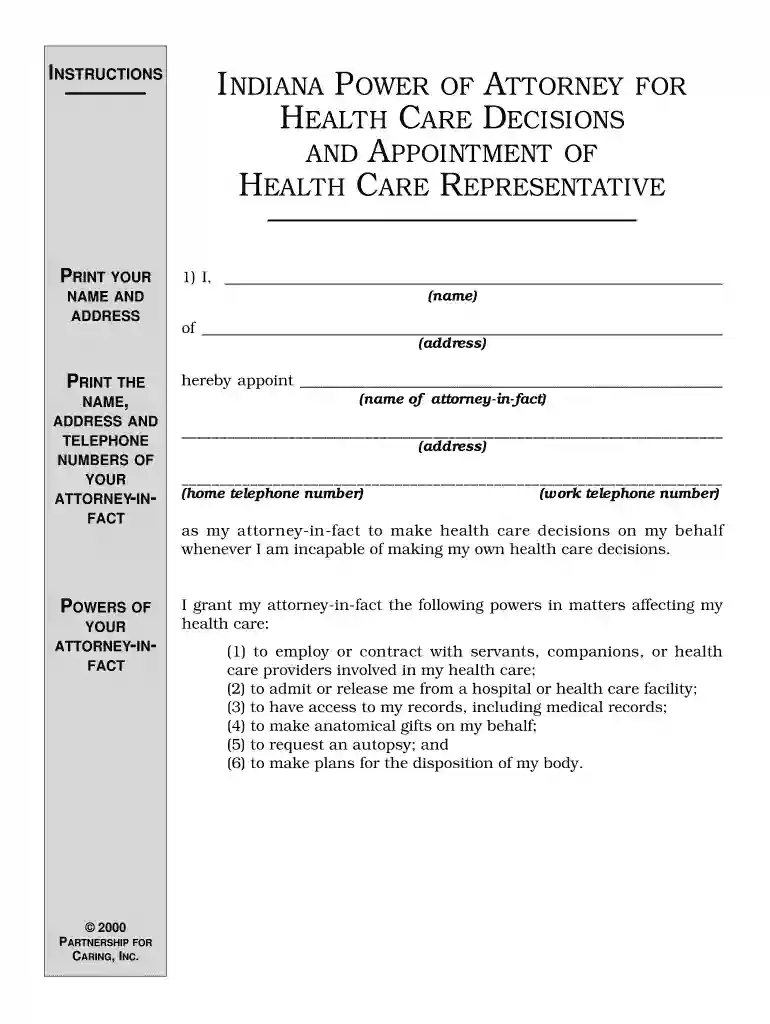
The Indiana Power of Attorney for Health Care Decisions allows individuals to appoint an attorney-in-fact to manage their health care decisions if they become unable to do so themselves. This legal document empowers the attorney-in-fact with the authority to make medical treatment choices, communicate with healthcare providers, and ensure that the principal's wishes regarding their health are respected. The form is crucial for preserving the principal's autonomy in health-related matters and ensuring that their treatment preferences are carried out in the event of incapacitation.
Information Gathering: Collect all necessary personal data, including the full names and contact details of the principal and the chosen attorney-in-fact. Ensure clarity regarding medical preferences and any instructions concerning specific treatments.
Form Filling: Carefully enter the gathered information into the form. Make sure to specify any particular health care decisions, like organ donation or life support preferences, that the attorney-in-fact should consider.
Review: Verify all details for accuracy and completeness, checking for any errors or omissions that could lead to misunderstandings.
Execution: Sign the completed form in the presence of a notary public or two adult witnesses who are not related to the principal or the attorney-in-fact. This step is crucial for the document's legality.
Distribution: Provide copies of the finalized document to the attorney-in-fact, healthcare providers, and family members to ensure seamless access to the directives when needed.
This form serves as a proactive measure to manage health care preferences efficiently. The appointed attorney-in-fact will utilize the document to guide decisions during medical situations where the principal cannot express their wishes. It acts legally to communicate the principal's consent or refusal for specific medical treatments, advocate for the principal's healthcare rights, and collaborate with healthcare professionals, thereby ensuring the protection of the principal's health-related interests.
This legal instrument is recognized under Indiana law, aligning with the state's acknowledgment of individuals' rights to dictate their health care preferences and the delegation of such decisions when incapacitated. It provides the attorney-in-fact with the legal standing to interact with healthcare professionals on behalf of the principal, ensuring courses of action comply with the principal's directives as stated in the document. The form also serves as legal evidence in disputes to affirm the principal's intent.
Indiana law stipulates specific requirements for executing a valid Power of Attorney for Health Care Decisions:
This document is critical for individuals wishing to maintain control over their health care in unforeseen circumstances. By selecting a trusted individual to manage these decisions, the principal can ensure their medical and personal values guide their treatment. Additionally, it provides peace of mind that their health care path will follow their express directives, reducing potential conflicts among family members and healthcare providers.
Consider a scenario where an individual undergoes emergency surgery but lacks the capacity to make informed decisions about subsequent treatments. The appointed attorney-in-fact can use the power of attorney to consult with doctors, consent to necessary treatments aligned with the principal's wishes, and refuse those that contravene prior directives.
Upon receiving a cancer diagnosis, Jane completed the Indiana Power of Attorney for Health Care Decisions to delegate her brother as her attorney-in-fact. Her meticulous detailing of her treatment preferences and life-prolonging procedures helped alleviate family tensions and ensure her wishes were respected during her treatment journey.
At DocHub, your data security is our priority. We follow HIPAA, SOC2, GDPR, and other standards, so you can work on your documents with confidence.








Indiana law prioritizes who can make those decisions for you: first a legally appointed representative, then a spouse, then an adult child, then a parent, then
The POST form may be completed by a patient, or if applicable, a patients legal representative or proxy. A representative may be a parent of a patient that isRead more


