Detainer warrant 2026

Get Form
what is a detainer warrant Preview on Page 1

Here's how it works

01. Edit your what is a detainer warrant online
Type text, add images, blackout confidential details, add comments, highlights and more.

02. Sign it in a few clicks
Draw your signature, type it, upload its image, or use your mobile device as a signature pad.

03. Share your form with others
Send it via email, link, or fax. You can also download it, export it or print it out.

Definition and Meaning of Detainer Warrant

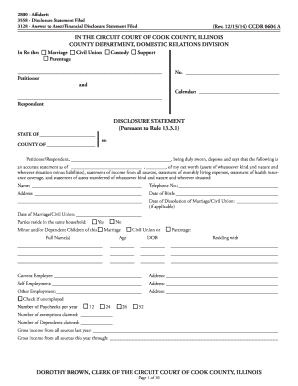
A detainer warrant is a legal document commonly used in the United States, specifically within the housing and property sector, to address situations where an occupant remains in possession of a property without legal right. Issued by court authorities, this warrant mandates the return of the property to the rightful owner. Predominantly applied in landlord-tenant disputes, this warrant helps in reclaiming property from tenants who refuse to vacate after the expiration or termination of a lease. In Tennessee, for example, detainer warrants are utilized by the Court of General Sessions, providing a systematic legal route for property restitution.

How to Use the Detainer Warrant

Using a detainer warrant involves a legal process that typically begins with the filing of a complaint by the property owner or landlord. It requires the owner to prove the unlawful detention of their property by a tenant or occupant. The process includes filing the warrant with the appropriate court, serving notice to the defendant, and attending a court hearing.

  • Pre-Filing: Ensure all lease terms have been violated.
  • Filing: Submit the warrant to the appropriate court.
  • Notice: Serve the detainer warrant to the tenant.
  • Hearing: Attend the court hearing to present your case.
  • Judgment: Court decides on property restitution.

How to Obtain a Detainer Warrant

To obtain a detainer warrant, the property owner must file a formal request through the court system. The process involves:

  1. Verification of Occupancy Misuse: Establish that the tenant is holding over without legal grounds.
  2. Court Application: File a formal application with the court, often requiring copies of all relevant lease agreements.
  3. Documentation: Present evidence such as unpaid rent notices or expired lease agreements.
  4. Filing Fee: Pay any applicable filing fees as mandated by the court.
  5. Court Date: Secure a hearing date upon filing the request successfully.

Steps to Complete the Detainer Warrant

Completing a detainer warrant follows a sequence to ensure legal compliance:

  1. Identification: Clearly identify all parties involved, including names and addresses.
  2. Statement of Facts: Provide a detailed account of the tenancy and reasons for the eviction.
  3. Evidence: Attach supporting documents, such as rental agreements and correspondence.
  4. Signatures: Ensure the document is signed by all necessary parties and notarized if required.
  5. File with Court: Submit the completed warrant with the court for processing.

Who Typically Uses the Detainer Warrant

Detainer warrants are predominantly used by landlords and property management firms. These entities rely on warrants to legally reclaim properties from tenants who violate lease terms or fail to vacate premises. Additionally, collection agencies and real estate lawyers may use these warrants as part of their eviction services to facilitate compliance with court orders.


decoration image ratings of Dochub

Key Elements of the Detainer Warrant

Several critical elements are inherent in a detainer warrant:

  • Plaintiff and Defendant Information: Detailed information about the property owner and the tenant.
  • Property Description: Accurate description of the involved property.
  • Grounds for Eviction: Specific reasons for pursuing a detainer warrant.
  • Court Appearance Requirements: Details of subsequent court appearances if immediate actions are not resolved.
  • Legal Language: References to the applicable laws supporting the warrant issuance.

State-Specific Rules for the Detainer Warrant

Detainer warrant procedures and requirements can vary significantly by state. For instance, Tennessee law stipulates particular notice periods and filing processes distinct from those in states like California or Texas. It's essential to understand:

  • Filing Deadlines: Varies by state and impacts when a warrant can be filed post-lease violation.
  • Notice Requirements: States may require specific formats for notifying tenants before filing.
  • Court Systems: Different states may use different court levels for processing these warrants.

Legal Use of the Detainer Warrant

Legally, a detainer warrant serves as a judicial tool to enforce property rights without resorting to self-help actions. It provides landlords with a framework within which they can evict tenants who either breach lease agreements or refuse to vacate post-tenancy. It ensures all parties engage in a transparent and lawful process to resolve property possession issues. Essential legal aspects include:

  • Compliance: Adherence to both state and federal laws regulating evictions.
  • Americans with Disabilities Act (ADA) Considerations: Ensures access to judicial processes for disabled individuals engaged in the process.
  • Judgment Execution: Legal enforcement methods for reclaiming property, including possible possessions or financial recompensation for damages.

Exploring the full scope of nuances, state-specific variations, and legal protocols provides comprehensive insights into effectively utilizing detainer warrants within the U.S. property management landscape.

be ready to get more

Complete this form in 5 minutes or less

Get form

Got questions?

We have answers to the most popular questions from our customers. If you can't find an answer to your question, please contact us.
Contact us
A warrant is a writ permitting or directing someone to take a specific action, often issued by a judge. It authorizes law enforcement personnel to conduct activities such as making an arrest, searching a location, or seizing property.
A detainer warrant is similar to a summons in that it directs the tenant to appear in court at a specific time and date. Should the tenant fail to appear in court, a default judgment will be entered against him.
New Filings Filing TypeClerk FeeLit Tax Detainer Warrant $44.00 $41.75 Immediate Possession $44.00 $41.75 Sue and Attach $44.00 $41.75 Warrant to Recover $44.00 $41.751 more row
Trial and other court costs vary from up to $50 in document filing fees, $62-300 court charges, $2 for courtroom security, and $6 for issuing subpoenas.
There is no cost to file for a restraining order. You do not need a lawyer to file for a restraining order. However, you may wish to have a lawyer, especially if the abuser has a lawyer. If you can, contact a lawyer to make sure that your legal rights are protected.

Security and compliance

At DocHub, your data security is our priority. We follow HIPAA, SOC2, GDPR, and other standards, so you can work on your documents with confidence.
Learn more
ccpa2
pci-dss
gdpr-compliance
hipaa
soc-compliance
be ready to get more

Complete this form in 5 minutes or less

Get form

People also ask

How Much Does an Eviction Cost in Tennessee? ActionApproximate Cost (General Sessions)Approximate Cost (Circuit) Filing fee $42 $225 Issuance of court summons Varies by county $6 Service of court summons by sheriff $40 in person; $10 by mail $40 in person; $10 by mail Each requested continuance $5 $59 more rows May 28, 2025

Related links