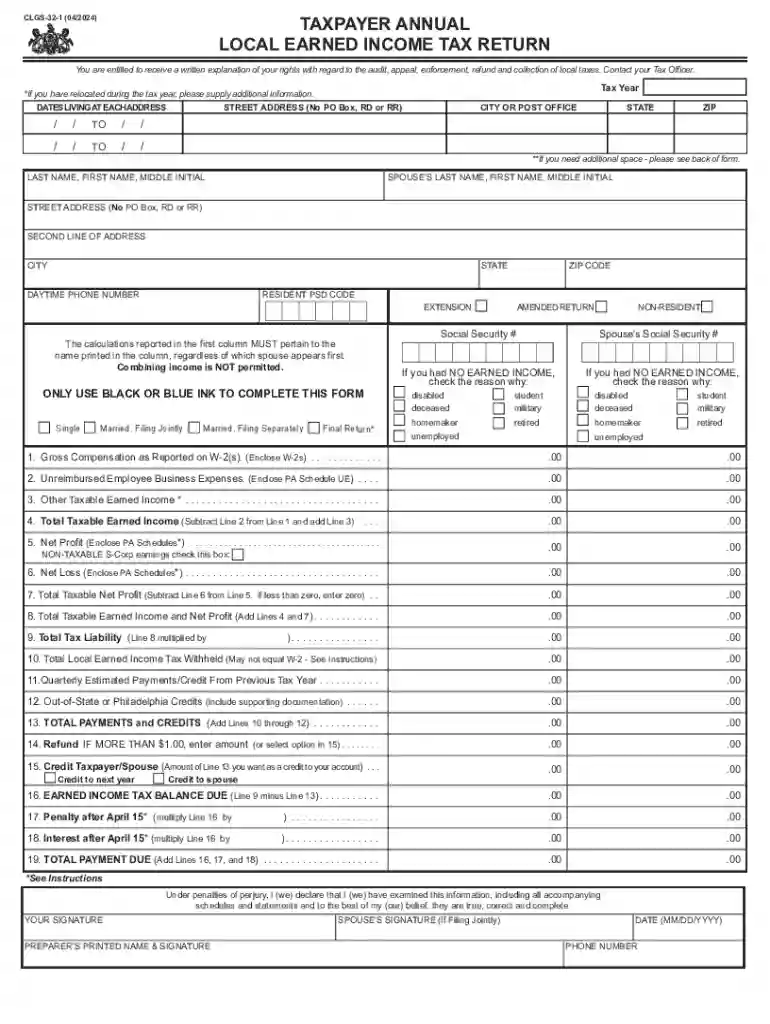
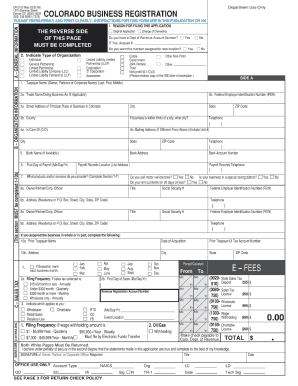
WHEN TO FILE: This return must be completed and filed by all persons subject to the tax on or before 2026

Get Form
clgs 32 1 Preview on Page 1

Here's how it works

01. Edit your clgs 32 1 online
Type text, add images, blackout confidential details, add comments, highlights and more.

02. Sign it in a few clicks
Draw your signature, type it, upload its image, or use your mobile device as a signature pad.

03. Share your form with others
Send it via email, link, or fax. You can also download it, export it or print it out.

Definition & Importance of Filing Deadlines

Filing deadlines are crucial as they mark the last date by which tax returns or documents must be submitted to avoid penalties. These deadlines are determined by tax authorities to ensure taxpayers comply with financial obligations timely. Missing a deadline could result in penalties, interest, or even legal action, highlighting the importance of knowing precisely when to file any required return.

Example Real-World Scenarios

  • Individuals working multiple jobs need to submit accurate tax returns reflecting all income sources by the due date to avoid discrepancies and potential audits.
  • Small business owners must file corporate tax returns by the deadlines to maintain good standing with state and federal authorities and prevent fines.

How to Use Filing Deadlines Effectively

Effective use of filing deadlines involves meticulous planning and organization. Taxpayers should maintain a calendar with all pertinent dates highlighted to prevent last-minute filings.

Steps for Effective Management

  1. Create a Checklist: List all documents and information required for filing.
  2. Set Reminders: Utilize digital calendars or apps to alert you weeks and days before the deadline.
  3. Seek Professional Advice: Consult with a tax advisor if the financial situation changes or if complex tax scenarios arise.

Steps to Complete the Form

Completing the tax return form requires comprehensive understanding and careful attention to detail.

Detailed Steps:

  1. Gather Documents: Collect all necessary tax documents, including income statements, previous tax returns, and any deduction receipts.
  2. Understand Taxable Income: List all income sources and validate taxable vs. non-taxable income.
  3. Calculate Deductions: Identify eligible deductions that can reduce taxable income.
  4. Complete Form Sections: Carefully fill out each section of the form, ensuring all necessary fields are completed accurately.

Practical Example:

For a taxpayer filing the CLGS-32-1, understanding local income sources and appropriate deductions is fundamental to ensure compliant filing.

Legal Use & Compliance

Legal use of tax forms refers to ensuring that all information provided is truthful and that the form is used solely for its intended purpose.

Considerations:

  • Accuracy: Ensure all details match official records. Misstating income or deductions could lead to penalties.
  • Confidentiality: Protect sensitive information by using secure submission methods like encrypted digital filings.

Who Typically Uses and Files

The filing requirement applies to various entities and individuals based on income-earning activities.

Common Use Cases:

  • Individuals: Especially those with multiple income sources or significant deductions.
  • Businesses: Corporations and partnerships must file to report earned income and expenses.
  • Nonprofits: Even tax-exempt organizations might need to file specific forms to report activities.

Penalties for Non-Compliance

Failure to comply with filing regulations can result in severe repercussions, including fines.

Types of Penalties:

  • Late Filing Penalties: These are calculated based on the delay duration and outstanding tax.

Example:

A corporation that misses the CLGS-32-1 filing might incur a late penalty, directly affecting fiscal health.

Form Submission Methods

Different methods allow for flexible form submission based on user preference and access.

Options:

  • Online Transmission: Secure portals enable quick and encrypted submissions.
  • Mail: Traditional mailing remains a stalwart method for those preferring physical documentation.
  • In-Person: Direct submission at regional tax offices can provide immediate confirmation.

Required Documents for Submission

Meeting documentation requirements prevents delays and ensures acceptance of the filing.

Essential Documents:

  • Income Statements: W-2s and 1099s detail all earnings.
  • Expense Records: Receipts for deductions claimed must be provided.
  • Previous Tax Return: Often needed for comparison and reference.

Filing Deadlines & Important Dates

Knowledge of critical dates helps maintain compliance and avoids penalties.

Key Milestones:

  • Annual Filing Deadline: Generally, individual tax returns are due April 15, with variations depending on specific tax types.
  • Quarterly Payments: Businesses may need to make estimated tax payments quarterly.

Software Compatibility for Filing Returns

Using compatible software simplifies the tax filing process by ensuring entries are accurate and comprehensive.

Recommended Software:

  • TurboTax: Offers features tailored for individuals with straightforward tax scenarios.
  • QuickBooks: Ideal for small business owners needing to integrate accounting with tax filing.

State-Specific Rules and Variations

State-specific guidelines dictate unique requirements that may deviate from federal rules.

Considerations:

  • Local Tax Variations: Different states have varying rules regarding deductions and credits.
  • Filing Methods: Some states offer exclusive online portals for digital submissions.

Understanding these elements facilitates a smooth filing process, respecting all legal requirements and optimizing potential refunds or deductions.

be ready to get more

Complete this form in 5 minutes or less

Get form

Got questions?

We have answers to the most popular questions from our customers. If you can't find an answer to your question, please contact us.
Contact us
Filing after the October 15 deadline can have a number of adverse and irreversible effects, including: Failure-to-file penalty calculated as 5% of the taxes owed for each month outstanding (capped at 25% of the total tax liability).
Individual income tax returns are typically due April 15, unless the date falls on a weekend or holiday or you file Form 4868 seeking an extension until October 15.
You have to file your Self Assessment by 31st January after the end of the tax year it applies to. Tax years run from 6th April to 5th April. You dont have to wait, though. If youre employed, you can submit your Self Assessment as soon as you receive your Form P60 from your employer.
30th December 2025 - The deadline to submit your online tax return for automatic payment of owed taxes from your pension and wages. 31st January 2026 - The deadline for online self-assessment tax returns for the 2024/25 tax year to be completed. 5th April 2026 - The final day for the current tax year.
When to file. If youre a calendar year filer and your tax year ends on December 31, the due date for filing your federal individual income tax return is generally April 15 of each year.

Security and compliance

At DocHub, your data security is our priority. We follow HIPAA, SOC2, GDPR, and other standards, so you can work on your documents with confidence.
Learn more
ccpa2
pci-dss
gdpr-compliance
hipaa
soc-compliance
be ready to get more

Complete this form in 5 minutes or less

Get form

People also ask

We want to remind you that you can still file after the deadline, and there are a number of CRA services that can make the process easy. Filing your tax return is important for several reasons: You may be eligible for a refund.
In that case, you should have lodged your tax return by 31 October and youre now late. In theory that means you may be liable to a late lodgement penalty. This amounts to $330 for the first 28 days after the lodgement date.
Most people need to lodge a tax return or a non-lodgement advice before 31 October each year.

Related links