Definition & Meaning
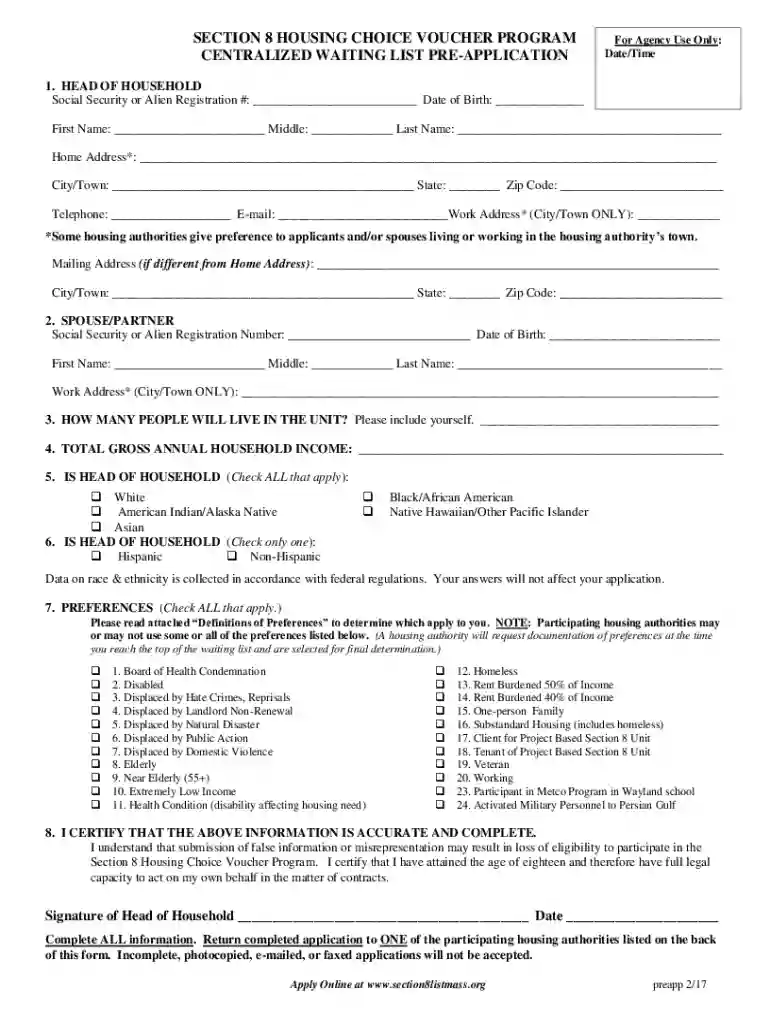
The Section 8 Housing Choice Voucher Program Centralized serves as a key component of the United States' efforts to assist low-income families, the elderly, and the disabled in securing affordable housing. Through this program, beneficiaries receive vouchers that subsidize a portion of their rent, allowing them greater housing options in the private market. It's crucial to understand that these vouchers do not cover the full rent amount; instead, they offer partial assistance, with participants paying the difference between the voucher value and the total rent. This initiative supports housing stability and fosters community diversity by enabling low-income individuals to reside in neighborhoods of their choosing.
How to Use the Section 8 Housing Choice Voucher Program Centralized
Once an individual receives a Section 8 voucher, they can start searching for rental properties that accept these vouchers. Here is a general process to follow:
- Locate Accepting Properties: Identify landlords or property managers in your desired area who participate in the program.
- Voucher Application: Present your voucher to potential landlords and apply to lease their property. The landlord must agree to the terms set by the housing program.
- Inspections: The rental property must pass a housing quality inspection conducted by the public housing agency to ensure it meets health and safety standards.
- Lease Agreement: Upon passing the inspection, you will sign a lease agreement and begin paying the subsidized rent amount decided by the voucher program standards.
Steps to Complete the Section 8 Housing Choice Voucher Program Centralized
To apply for the Section 8 Housing Choice Voucher Program, you need to follow several steps:
- Check Eligibility: Visit the Department of Housing and Urban Development (HUD) website or your local housing authority to ensure you meet the income and other eligibility criteria.
- Gather Required Documents: Prepare necessary documentation, including proof of income, identification, social security numbers, and family composition details.
- Complete the Application: Fill out the program application form meticulously, ensuring that all information is accurate and complete.
- Submit the Application: Submit the application to your local Public Housing Agency (PHA) either online, via mail, or in person as per their instructions.
- Wait for Notification: There may be a waiting list due to high demand. Be prepared for a potential wait before receiving notification about your status.
Important Terms Related to Section 8 Housing Choice Voucher Program Centralized
Understanding specific terminology related to the program is essential for effective navigation:
- Voucher Payment Standard: The maximum amount the voucher will cover, which varies by location and family size.
- Housing Quality Standards (HQS): Health and safety criteria that a rental unit must meet to qualify for the program.
- Portability: The ability of a voucher holder to move and maintain assistance across different jurisdictions.
- Participating Landlords: Property owners who accept Section 8 vouchers as part of their rental agreements.
- Subsidized Rent: The portion of rent covered by the voucher; tenants are responsible for any remainder.
Legal Use of the Section 8 Housing Choice Voucher Program Centralized
Users of the voucher program must adhere to specific legal guidelines:
- Accurate Information: All application details and continued participation details must be truthful and complete.
- Compliance with Lease: Tenants must fulfill all lease responsibilities, including timely rent payment and adherence to property rules.
- Changes in Circumstances: Any changes in income, family composition, or employment status must be reported to the housing authority immediately.
- Non-Discrimination: Landlords must comply with fair housing laws, ensuring no discrimination based on race, color, national origin, religion, sex, familial status, or disability.
State-Specific Rules for the Section 8 Housing Choice Voucher Program Centralized
While the program is nationally governed by HUD, states may enact additional rules:
- Eligibility Thresholds: States may adjust income eligibility limits based on local cost of living and available funding.
- Waitlist Preferences: States can set preferences, such as prioritizing homeless families or individuals with disabilities.
- Inspection Standards: Additional state-specific health and safety standards may be enforced for housing inspections.
- Local Subsidy Variations: Adjustments to the payment standard and rental caps may differ based on housing markets within the state.
Application Process & Approval Time
Applying for the Section 8 Housing Choice Voucher Program requires patience due to the high demand and complex approval process. Typically, the process involves:
- Application Submission: Submit your application along with all requisite documentation to the appropriate housing authority.
- Verification: The housing authority will verify provided information, including income levels and household composition.
- Eligibility Determination: Following verification, an assessment of your eligibility for the program will be conducted.
- Waiting Period: Even if approved, there may be a waiting list due to limited voucher availability.
- Acceptance and Briefing: Upon voucher approval, you will attend a briefing to understand your rights and responsibilities under the program.