







Definition & Meaning
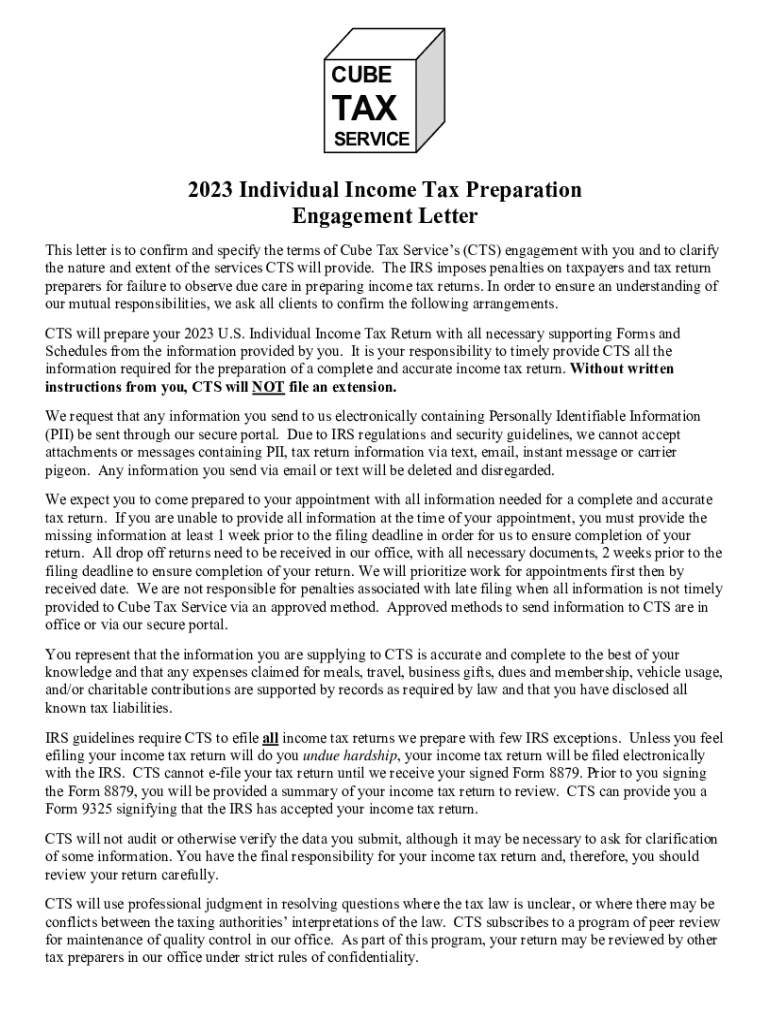
Tax engagement letters are critical documents that outline the terms and responsibilities involved in a tax preparation engagement between a tax professional and their client. These letters serve as a formal agreement detailing the nature of the services to be provided, the responsibilities of each party, and the expectations for the tax filing process. The Tax Engagement Letters 2 Form covers engagements over these specific years, ensuring that both parties have a clear understanding for each tax season. This form not only helps in establishing the scope of work but also protects both the tax preparer and client by setting clear boundaries and expectations.
How to Use the Tax Engagement Letters 2 Form - Fill Out and
Using the Tax Engagement Letters 2 Form involves several key steps to ensure the document fulfills its intended purpose. The process typically includes:
- Identifying the Parties: Clearly indicate the names and contact details of both the tax preparer and the client.
- Defining the Scope of Work: Specify the services to be provided, such as tax return preparation, filing, and consultation.
- Outlining Responsibilities: Include stipulations that require the client to provide accurate and timely information for the tax preparation process.
- Detailing Fees and Payment Terms: Describe the fee structure, payment methods, and any additional costs that may arise.
- Adding Confidentiality Clauses: Ensure that the document outlines how client information will be protected.
- Signing the Document: Both parties should sign and date the letter to signify agreement and acceptance of the terms.
Steps to Complete the Tax Engagement Letters 2 Form
Completing the Tax Engagement Letters 2 Form accurately is crucial for establishing a legally binding agreement:
- Review the Form: Start by familiarizing yourself with each section of the form to understand its components.
- Gather Information: Collect all necessary information from the client, such as contact details and relevant tax documents.
- Customize the Form: Tailor the form to reflect the specific services and terms agreed upon with the client.
- Draft the Engagement Letter: Use clear and precise language to draft the letter, ensuring all terms are explicitly stated.
- Verify Information: Double-check all details for accuracy and ensure that all required sections are complete.
- Sign and Date: Both the tax preparer and the client should sign and date the form to formalize the agreement.
Key Elements of the Tax Engagement Letters 2 Form
A comprehensive Tax Engagement Letter includes several critical elements:
- Parties Involved: Clearly list both the tax professional's and client's details.
- Scope of Services: Define what services will be rendered, including any limitations or exclusions.
- Client's Responsibilities: Outline the client's obligations, such as providing accurate information.
- Fee Schedule: Include the pricing structure, expected fees, and any potential additional charges.
- Confidentiality Agreement: Ensure there are clauses to protect client data and maintain confidentiality.
- Termination Conditions: Describe scenarios under which the engagement can be terminated by either party.
Legal Use of the Tax Engagement Letters 2 Form
The Tax Engagement Letters 2 Form is a legally binding document when properly executed. It serves multiple legal purposes:
- Formal Agreement: Establishes a formal contract between the tax professional and the client.
- Dispute Resolution: Provides clear terms that can be referenced to resolve disputes over service delivery.
- Confidentiality Clauses: Protects client information under legal confidentiality obligations.
- Compliance: Ensures adherence to IRS regulations by setting clear guidelines for both parties.
Penalties for Non-Compliance
Failure to adhere to the terms outlined in the Tax Engagement Letter or non-compliance with legal obligations can result in several penalties:
- For Tax Professionals: May include fines, loss of license, or other professional disciplinary actions.
- For Clients: Could lead to penalties for inaccurate or late tax filings if responsibility lies with the client to provide accurate data.
Software Compatibility (TurboTax, QuickBooks, etc.)
The Tax Engagement Letters 2 Form can be managed efficiently using software solutions like TurboTax and QuickBooks, which provide tools to facilitate:
- Document Creation: Streamline the drafting and customization of engagement letters.
- Data Management: Integrate client information seamlessly for tax preparation purposes.
- Record Keeping: Maintain digital records of signed engagement letters for easy access and audit trails.
Filing Deadlines / Important Dates
Awareness of key filing deadlines and important dates is crucial to the effectiveness of the Tax Engagement Letters 2 Form:
- Tax Filing Deadline: Typically April 15 each year, unless extended by IRS announcements.
- Engagement Deadlines: Establish clear deadlines within the letter for clients to provide necessary documentation.
- Extension Requests: Include provisions for handling extension requests to accommodate client needs.




