Definition & Meaning
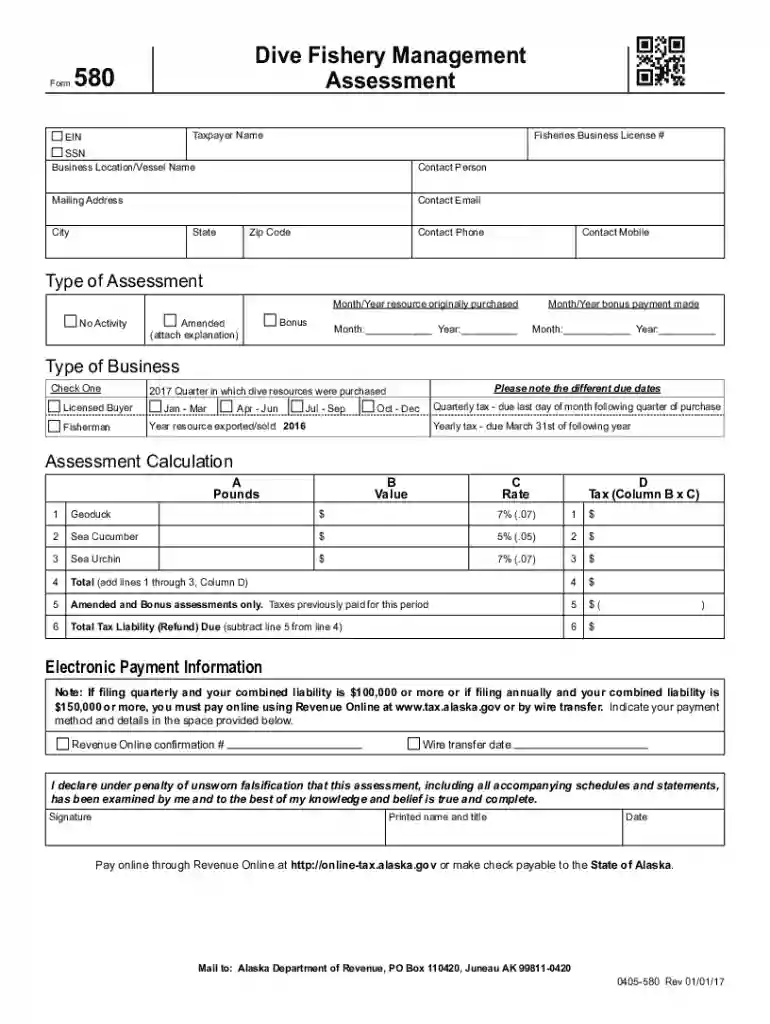
The "Alaska DOR Tax Programs Tax Revenue Collections and" form is part of the Alaska Department of Revenue's series of tax collection documents. It is designed to facilitate the reporting and calculation of tax liabilities specific to different sectors within Alaska, particularly those involving natural resources. The form plays a critical role in the accurate collection of tax revenue from resources like geoducks, sea cucumbers, and sea urchins.
Purpose of the Form
- Revenue Collection: Ensures proper tax revenue collection from dive fisheries in Alaska.
- Tax Liability Calculation: Facilitates accurate calculation of required taxes based on the market value of resources extracted.
- Compliance: Assists in maintaining compliance with state tax laws for businesses and individuals involved in resource extraction.
How to Use the Alaska DOR Tax Programs Tax Revenue Collections and
The form involves several steps that must be carefully followed to ensure compliance and accurate tax reporting. It is primarily used by businesses involved in dive fishery activities within Alaska.
Step-by-Step Usage
- Gather Information: Collect details about the business and each resource being evaluated, including types and quantities.
- Input Data: Enter all business-related data, taxpayer information, and dive resource specifics into the designated fields.
- Calculate Liability: Use the calculation section to determine tax liabilities based on provided values and rates.
- Review and Verify: Double-check all entered information for accuracy before final submission.
Examples of Information Required
- Business name and IRS identification number.
- Types of resources harvested, such as geoducks and sea urchins.
- Tax rates applicable to each resource type.
Key Elements of the Alaska DOR Tax Programs Tax Revenue Collections and
The form is structured to capture a wide array of information critical to tax assessment.
Major Components
- Taxpayer Information Section: Collects essential details about the entity responsible for filing the form.
- Resource Valuation: Requires detailed descriptions and values of extracted resources to calculate total liabilities.
- Submission and Payment Instructions: Provides guidelines for form submission and instructions for electronic tax payments.
Essential Areas of Focus
- Specific details about harvested resources.
- Tax calculation methodology.
- Due dates for quarterly and annual tax payments.
Legal Use of the Alaska DOR Tax Programs Tax Revenue Collections and
Using the form correctly ensures adherence to Alaska state tax laws and regulations, providing a legally recognized mechanism for reporting and paying taxes due.
Legal Implications
- Compliance Enforcement: Failure to use the form accurately can result in penalties or legal actions by the state.
- Official Documentation: Serves as an official document validating reported tax liabilities and payments.
Protection Against Discrepancies
- Maintaining detailed records of resource extraction.
- Consistent use of the form protects businesses against disputes with tax authorities.
State-Specific Rules for the Alaska DOR Tax Programs Tax Revenue Collections and
Alaska has specific regulations governing the extraction of resources and the associated tax liabilities.
Regulations and Requirements
- Resource-specific Taxation: Different sea resources have specific tax rates and valuation methods.
- State Deadlines: Strict adherence to state-imposed deadlines for tax filings is mandatory.
- Variance in Standards: Alaska's unique natural resource landscape results in tax policies distinct from other states.
Compliance Strategies
- Regularly update knowledge of tax rate changes.
- Use local tax professionals familiar with Alaska regulations.
Important Terms Related to Alaska DOR Tax Programs Tax Revenue Collections and
Understanding key terminology is essential for accurately completing the form.
Glossary of Terms
- Taxpayer Identification Number (TIN): A unique identifier for businesses or individuals.
- Assessment Value: The assigned value to resources for tax calculation.
- Resource Type Code: Specific codes used to classify different natural resources.
Practical Implications
- Accurate reporting hinges on understanding these terms.
- Documentation may be required to support claims related to these definitions.
Filing Deadlines / Important Dates
Knowing the critical deadlines for the form helps avoid penalties and ensures compliance with state tax obligations.
Key Dates to Remember
- Quarterly Payments: Specific deadlines for quarterly tax submissions and payments.
- Annual Filing Date: A comprehensive deadline for the consolidated annual tax report.
Consequences of Missing Deadlines
- Late filing may result in fines.
- Delayed tax payments could lead to interest charges.
Penalties for Non-Compliance
Failure to properly complete or submit the form can result in severe penalties.
Types of Penalties
- Financial Fines: Monetary penalties imposed for late filings or inaccurate information.
- Legal Actions: Potential legal consequences include audits and further state investigations.
- Interest Charges: Accrued on overdue tax amounts until full payment is made.
Mitigation Strategies
- Early preparation and submission of the form.
- Consulting with tax professionals to ensure compliance and accuracy.