







Definition and Meaning
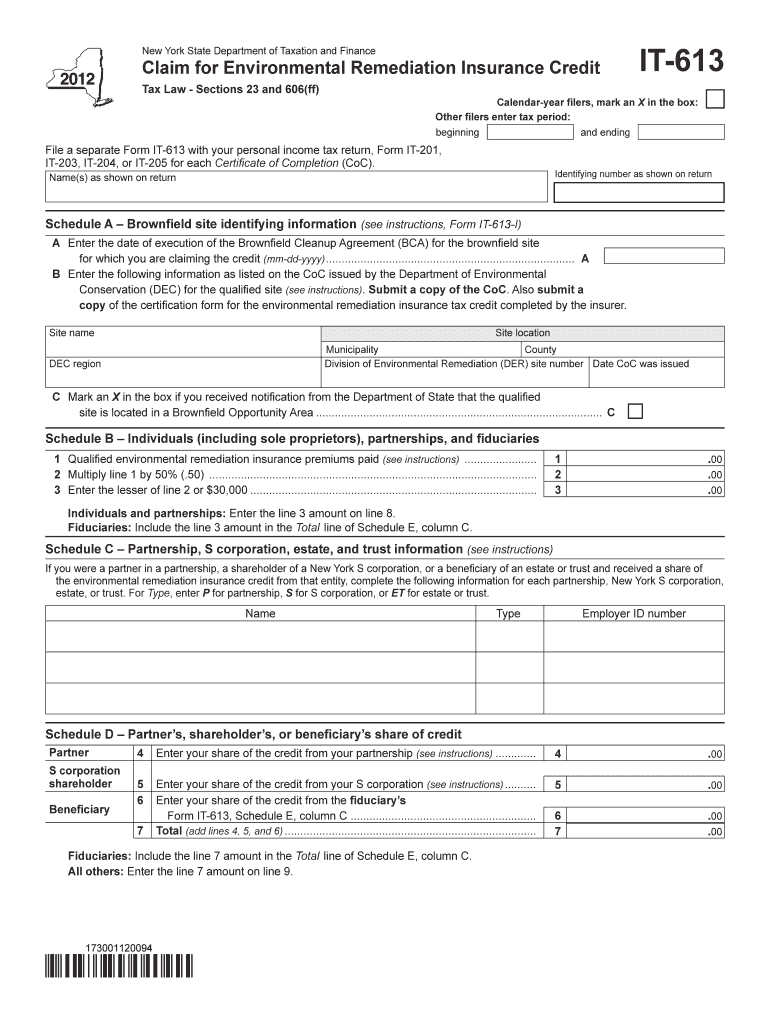
The New York State Department of Taxation and Finance Claim for Environmental Remediation Insurance Credit is a document used primarily to facilitate the process of claiming insurance credits related to environmental remediation projects. This form is integral for taxpayers in New York state who seek to recover costs through tax credits due to expenditures related to brownfield site cleanups or other qualified environmental projects. Understanding the specifics of this document and its purpose can greatly aid individuals and businesses in effectively managing their tax-related activities involving environmental remediation efforts.
Purpose of the Form
- Claim Insurance Credits: Designed to help taxpayers recoup expenditures through tax credits.
- Environmental Remediation Projects: Specifically targets projects aimed at cleaning contaminated sites.
- Financial Incentives: Encourages businesses and individuals to participate in environmental cleanup by offering financial relief.
Importance of Understanding
- Financial Planning: Accurate knowledge of this form aids in effective financial planning and tax strategy.
- Compliance and Reporting: Ensures compliance with state laws and accurate reporting of tax claims.
Steps to Complete the Form
Completing the New York State Department of Taxation and Finance Claim for Environmental Remediation Insurance Credit requires careful attention to detail and a methodical approach. It is crucial to be familiar with each step to ensure the form is filled out accurately and efficiently.
Detailed Process
- Gather Necessary Documentation: Collect all relevant documents related to the environmental remediation project, such as contracts, invoices, and receipts.
- Review Eligibility Criteria: Verify that your project qualifies for the credit by meeting all necessary conditions as stipulated by the New York State Tax Department.
- Fill Out Identification Information: Enter basic information such as name, address, and taxpayer identification number.
- Report Qualified Insurance Premiums: Accurately record all premiums paid for qualifying insurance related to the remediation project.
- Complete Required Schedules: Some claims may require additional schedules to provide detailed project or financial information.
- Double-Check Entries: Review all entries for accuracy and completeness before submission.
Eligibility Criteria
Eligibility for the New York State Department of Taxation and Finance Claim for Environmental Remediation Insurance Credit involves meeting certain requirements to qualify for the associated benefits. These criteria ensure that only legitimate and qualifying projects receive the state’s financial incentives.


Key Eligibility Factors
- Brownfield Cleanup Agreements: Must be part of a recognized agreement aiming toward brownfield site cleanup.
- Project Certification: Projects should have official certification from relevant state authorities.
- Insurance Premiums: Only the premiums paid for qualifying environmental insurance can be claimed.
Common Eligibility Tests
- Location of Project: Must take place within New York state boundaries.
- Type of Expenditures: Only certain types of expenditures, like cleanup and insurance for remediation, qualify.
Required Documents
Submitting the New York State Department of Taxation and Finance Claim for Environmental Remediation Insurance Credit requires various documents to verify the claim and ensure compliance with state regulations. This section details what documents are necessary for a successful claim.
Necessary Supporting Documents
- Proof of Payment: Documentation such as receipts or bank statements showing payment of insurance premiums.
- Environmental Reports: Official records showing the necessity and scope of remediation works.
- Legal Agreements: Copies of project contracts or agreements that detail the scope and terms of the cleanup project.
Importance of Accurate Documentation
- Verification: Ensures the state can verify the legitimacy and qualifications of the claim.
- Compliance: Compliant documentation aids in smooth processing or acceptance of the credit.
Form Submission Methods
The New York State Department of Taxation and Finance Claim for Environmental Remediation Insurance Credit can be submitted through varying channels, ensuring flexibility and accommodation for different taxpayer preferences or needs.
Submission Options
- Online: The preferred and most convenient method, offering fast processing.
- Mail: Traditional option for those who prefer physical documentation submissions.
- In-Person: Allows for direct submission with any required on-the-spot clarifications.
Pros and Cons of Each Method
- Online: Fast and convenient, but requires digital literacy and stable internet access.
- Mail: Offers a traditional paper trail but is slower in processing and subject to postal delays.
- In-Person: Personal interaction can be beneficial, but time and travel constraints apply.
Important Terms and Legal Considerations
Understanding specific terms and legal nuances related to the New York State Department of Taxation and Finance Claim for Environmental Remediation Insurance Credit is crucial for accuracy and compliance.
Key Legal Terms
- Brownfield Site: Land previously used for industrial purposes now slated for environmental remediation.
- Insurance Premiums: The amount paid for the insurance policy covering the remediation project.
Legal Implications
- Non-Compliance: Failing to adhere to legal requirements or supplying inaccurate information may result in penalties or denial of the claim.
- Disclosure Requirements: Obligations to disclose certain financial and project information to qualify for the credit.
Filing Deadlines and Important Dates
Timeliness is a critical aspect of successfully filing the New York State Department of Taxation and Finance Claim for Environmental Remediation Insurance Credit. Awareness of key deadlines ensures compliance and prevents unnecessary delays or rejections.
Key Dates to Remember
- Annual Filing Deadline: Generally coincides with other New York state tax filings.
- Supplemental Submission Dates: Some supporting documents or schedules may have specific submission timelines.
Consequences of Missing Deadlines
- Penalties: Late submission can lead to financial penalties or loss of eligibility for credits.
- Delays: Missing deadlines can result in processing delays and deferred financial relief.
Common Use Cases and Examples
Real-world applications of the New York State Department of Taxation and Finance Claim for Environmental Remediation Insurance Credit offer insights into how individuals and businesses utilize this form to enhance environmental and financial goals.
Practical Scenarios
- Business Remediation Projects: Companies engaging in industrial site cleanups can use this credit to offset environmental insurance costs.
- Community Initiatives: Local government or non-profits involved in neighborhood cleanups might also qualify for these credits.
Case Studies
- Urban Development: A construction firm undertaking urban renewal projects on brownfield sites successfully claimed credits, significantly reducing project costs.
- Local Government: State-assisted environmental remediation in public areas resulted in substantial claims that promoted further initiative funding.


