






Definition and Purpose of IRS Form 12256
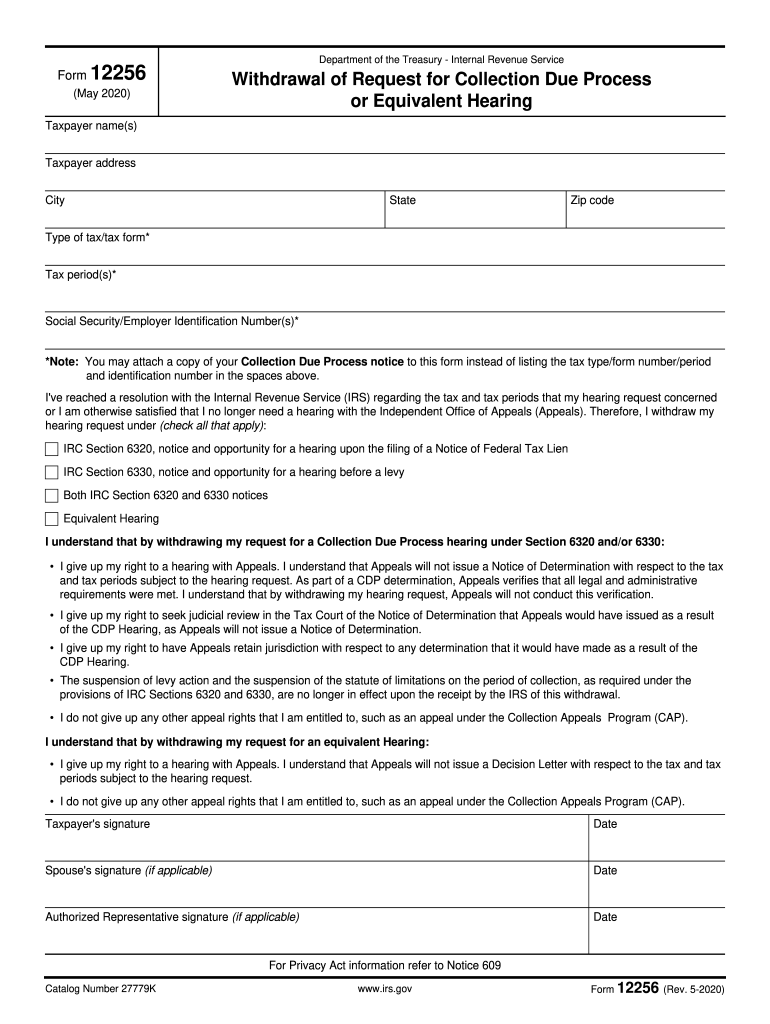
IRS Form 12256 is a document used by taxpayers to officially withdraw their request for a Collection Due Process (CDP) hearing or an equivalent hearing concerning tax issues. By submitting this form, a taxpayer acknowledges the implications of their withdrawal, such as forfeiting the rights to a hearing and potential judicial review of the matter. However, it's crucial to note that withdrawing this request does not affect or remove any other appeal rights the taxpayer might have.
Withdrawal Process and Impact
Steps for Using IRS Form 12256
-
Obtain the Form: Access IRS Form 12256 through the IRS website or request it by visiting a local IRS office.
-
Complete the Form: Carefully fill out all required sections, ensuring accuracy to prevent any delays or misunderstandings.
-
Signature and Date: Once completed, the form must be signed and dated by the taxpayer to validate the withdrawal request.
-
Submission: Submit the form to the IRS using the prescribed method, which may include mail or in-person delivery at an IRS office.
Implications of Form Submission
- Forfeiture of Rights: Submitting Form 12256 means the taxpayer waives their right to a hearing concerning the specific tax issue.
- Preservation of Other Rights: Other appeal rights remain intact and are not affected by the submission of this form.
Why Taxpayers Submit IRS Form 12256
Taxpayers might choose to withdraw their request for a CDP hearing for several reasons:
- Resolution Outside Hearing: The tax issue may have been resolved through other means, rendering the hearing unnecessary.
- Strategic Decisions: Based on legal advice, withdrawing might be more advantageous from a tax strategy perspective.
Key Elements and Important Terms
Main Components of IRS Form 12256
- Taxpayer Information: Includes name, address, and taxpayer identification number (TIN).
- Details of the Withdrawal: A clear statement indicating the taxpayer's intention to withdraw their hearing request.
- Signature Requirement: The taxpayer's explicit acknowledgment of the form with a signature and date.
Important Terms
- Collection Due Process (CDP): A taxpayer's right to a fair hearing with the IRS regarding the collection of taxes.
- Equivalent Hearing: Similar to a CDP hearing but does not provide judicial review rights.
Scenarios for Use and Examples
Who Typically Uses the IRS Form 12256
- Self-employed Individuals: They may use the form when tax issues are resolved through private arrangements.
- Businesses: When disputes with the IRS are settled outside the formal hearing process, businesses might opt to withdraw.


Examples of Use
- Case Study: A self-employed individual disputed tax penalties and, through negotiation, reached a favorable payment plan with the IRS. Consequently, they submitted Form 12256 to cancel the scheduled hearing.
- Business Scenario: An LLC resolved a tax lien issue directly with the IRS after initial hearing requests, deciding to formally withdraw.
Legal Context and IRS Guidance
Legal Use of IRS Form 12256
Form 12256 is used within the parameters of IRS regulations, ensuring taxpayers use it appropriately to withdraw a hearing request without negating other legal rights or obligations.
IRS Guidelines
- Procedural Clarity: The IRS provides specific instructions on their website and within IRS publications for properly completing and submitting the form.
- Consultation Advice: Taxpayers are encouraged to consult with tax professionals to understand the ramifications of withdrawing a hearing request.
Filing and Submission Methods
How to Obtain the IRS Form 12256
- Online Access: Download the form directly from the IRS official site.
- Local Offices: Visit an IRS office to request a physical copy.
Submission Options
- Mail Delivery: Taxpayers can submit the form via standard mail to the appropriate IRS address specified in the form instructions.
- In-Person Submission: For those preferring direct submission, visiting an IRS office is an option, though less common.
Penalties, Deadlines, and Compliance
Penalties for Non-Compliance
Failing to comply with withdrawal regulations or incorrectly filing the form might not inherently result in penalties, but it can complicate the resolution of tax disputes and delay processes.
Important Dates
While the form itself does not specify deadlines, taxpayers should be mindful of any timelines related to their specific case or tax issue as communicated by the IRS.
Digital and Paper Filing Options
Form Variants: Digital vs. Paper
- Digital Filing: Certain tax software may support submissions, though traditional methods are most common for Form 12256 due to its specific nature.
- Paper Form Usage: Physically completing and submitting the paper form remains the standard expectation when dealing with the IRS for this purpose.