
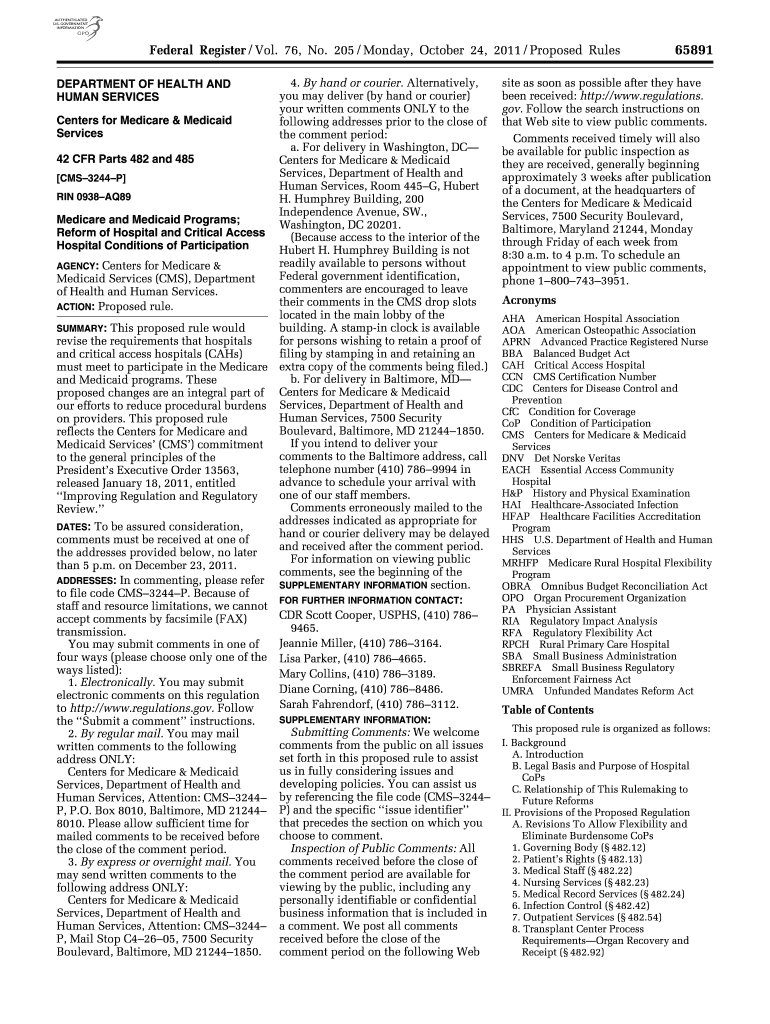







Definition and Significance of 42 CFR Parts 482 and 485
The Code of Federal Regulations (CFR) Title 42 Parts 482 and 485 pertains to the regulatory requirements for hospitals and critical access hospitals under the Medicare and Medicaid programs. Part 482 outlines the Conditions of Participation (CoPs) that hospitals must adhere to in order to qualify for reimbursement from these government programs. These conditions include governance structures, patient rights, medical staff organization, and other operational standards essential to ensure quality care and patient safety. Part 485 provides similar regulations for critical access hospitals, which are smaller facilities offering essential services in rural areas.
Usage Guidelines for 42 CFR Parts 482 and 485
Utilizing 42 CFR Parts 482 and 485 effectively requires a clear understanding of their provisions. Hospitals and healthcare providers must ensure compliance with the detailed standards outlined in these regulations. Regular audits and compliance checks should be conducted to verify adherence, focusing on areas such as infection control, medical staff credentialing, and patient rights. This helps healthcare institutions maintain high standards of care and legal compliance, crucial for their operation under federal healthcare programs.
Obtaining 42 CFR Parts 482 and 485 Documentation
Accessing the full text of 42 CFR Parts 482 and 485 is essential for healthcare administrators and compliance officers. These documents can be obtained through the U.S. Government Publishing Office (GPO) website, which provides official and updated versions of federal regulations. It is also advisable to consult legal advisors or compliance consultants who specialize in healthcare regulations to fully understand and implement these requirements within your organization.
Steps to Navigate 42 CFR Parts 482 and 485
- Familiarize with the Structure: Begin by reviewing the table of contents to understand the organization of the Parts.
- Identify Relevant Sections: Focus on sections most applicable to your facility, such as patient rights or governance.
- Understand Key Terms: Take note of definitions and terms that are frequently used within the regulations.
- Implementation Plan: Develop a strategy for implementing the necessary changes or maintaining compliance based on these regulations.
- Training and Communication: Conduct regular staff training sessions to ensure all employees understand and adhere to the regulatory requirements.
Importance of Compliance with 42 CFR Parts 482 and 485
Adhering to 42 CFR Parts 482 and 485 is crucial for hospitals to maintain their eligibility for Medicare and Medicaid reimbursements. Compliance not only ensures legal and operational standards are met but also enhances patient safety and care quality. The regulations promote best practices across various disciplines like medical staff organization, record management, and outpatient services, putting patients' welfare at the forefront of hospital operations.
Typical Users of 42 CFR Parts 482 and 485
The primary users of 42 CFR Parts 482 and 485 are healthcare administrators, compliance officers, and legal professionals within hospitals and healthcare systems. They utilize these regulations to guide institutional policies and ensure alignment with federal standards. Health IT providers and medical staff may also interact with these regulations to ensure that their practices and technologies comply with mandated healthcare standards.
Key Terms Related to 42 CFR Parts 482 and 485
- Conditions of Participation (CoPs): Criteria that hospitals and critical access hospitals must comply with to participate in Medicare and Medicaid.
- Critical Access Hospital (CAH): A rural hospital designation that provides essential care services and meets specific conditions under Part 485.
- Credentialing: The process of verifying the qualifications and professionalism of medical staff as required by these regulations.
Legal and Compliance Context for 42 CFR Parts 482 and 485
The legal enforceability of 42 CFR Parts 482 and 485 ensures that hospitals must adhere to these guidelines to avoid penalties and maintain their operational status. Non-compliance may result in fines, reduced reimbursements, or exclusion from Medicare and Medicaid programs. It is crucial for healthcare facilities to integrate these requirements into their operational policies and procedures to mitigate risks associated with non-compliance.
Examples and Applications of 42 CFR Parts 482 and 485
Consider a hospital looking to improve its infection control measures: By adhering to guidelines within Part 482, the hospital can implement protocols that reduce infection rates, adhere to federal standards, and improve patient outcomes. For a critical access hospital, Part 485's emphasis on staff credentials ensures the facility can provide specialized rural healthcare services while meeting federal participation conditions, which in turn supports the broader community's health needs.




