




01. Edit your gift card tracker online
Type text, add images, blackout confidential details, add comments, highlights and more.

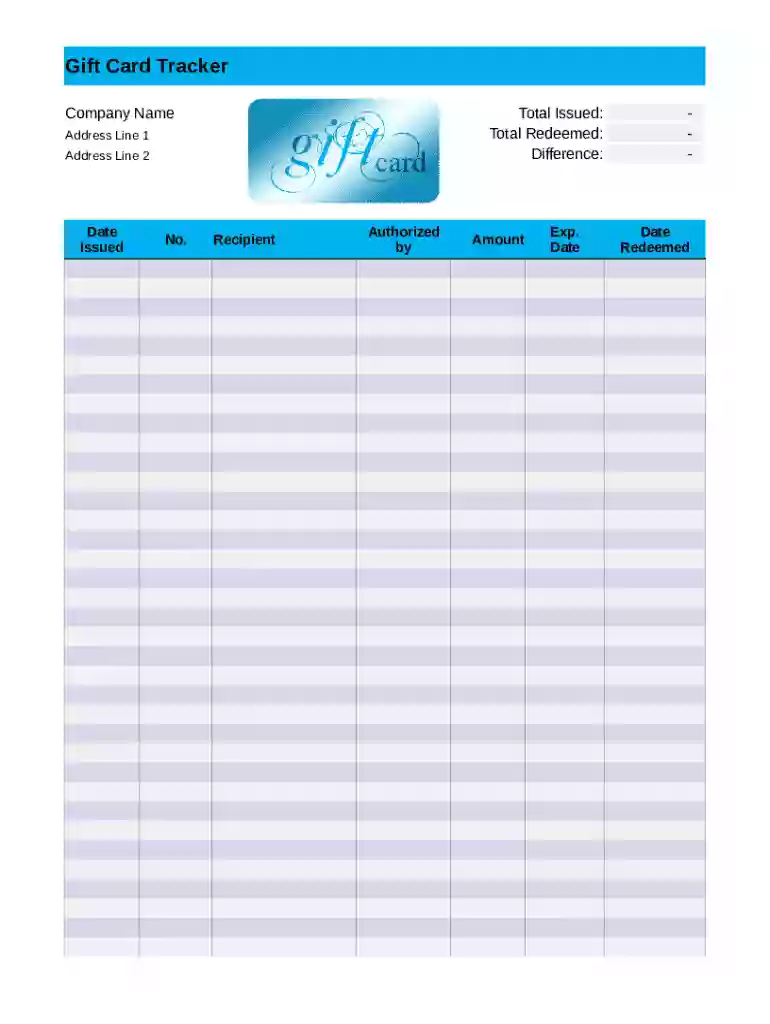
Type text, add images, blackout confidential details, add comments, highlights and more.

Draw your signature, type it, upload its image, or use your mobile device as a signature pad.

Send gift card get form via email, link, or fax. You can also download it, export it or print it out.
Gift card balance refers to the remaining amount of credit available on a gift card after purchases have been made. This balance determines how much more can be spent using the card. Gift cards act like prepaid debit cards, allowing for controlled spending across various retailers or service providers. Understanding this balance is crucial for maximizing the card's utility and ensuring it is fully utilized before expiration.
Gift cards can be either open-loop or closed-loop. Open-loop gift cards, often branded by credit card companies like Visa or MasterCard, can be redeemed at multiple locations. In contrast, closed-loop cards are restricted to specific stores or chains, making it essential to know the balance when planning any purchases within those retailers.
To employ the gift card balance effectively, consumers must be aware of the current balance before making any transactions. This ensures that they avoid any declined transactions due to insufficient funds. Balances can usually be checked via the retailer's website, a phone call, or at the point of sale.
Here are common scenarios for using the balance:
Checking the balance of a gift card is crucial for managing your spending and avoiding unexpected issues at checkout. This ensures that you are fully aware of what is available for spending. Most retailers provide several convenient methods for checking balances:
Ensure to keep track of the balance post-purchase by following any electronic or physical receipts provided after transactions.
Several elements are essential for effectively managing and maximizing the utility of a gift card balance:
Gift card balances and their management may vary by state due to differing consumer protection laws. Here's what you should know:
Understanding these specific rules helps prevent the loss of the card's value due to legal loopholes or issuer policies.
Gift card balances can serve various practical purposes, such as:
Proper usage examples illustrate how to extend the card's benefits for both personal consumption and altruistic purposes.
In today's digital age, software solutions can efficiently track your gift card balances:
Employing digital solutions increases accuracy in balance monitoring and helps eliminate guesswork about the remaining funds.
Understanding terminology associated with gift card balances is critical for informed usage:
Familiarity with these terms enables more effective management and utilization of your gift card balances, avoiding unexpected surprises at checkout.
At DocHub, your data security is our priority. We follow HIPAA, SOC2, GDPR, and other standards, so you can work on your documents with confidence.


