




01. Edit your dochub refund online
Type text, add images, blackout confidential details, add comments, highlights and more.

Type text, add images, blackout confidential details, add comments, highlights and more.

Draw your signature, type it, upload its image, or use your mobile device as a signature pad.

Send it via email, link, or fax. You can also download it, export it or print it out.
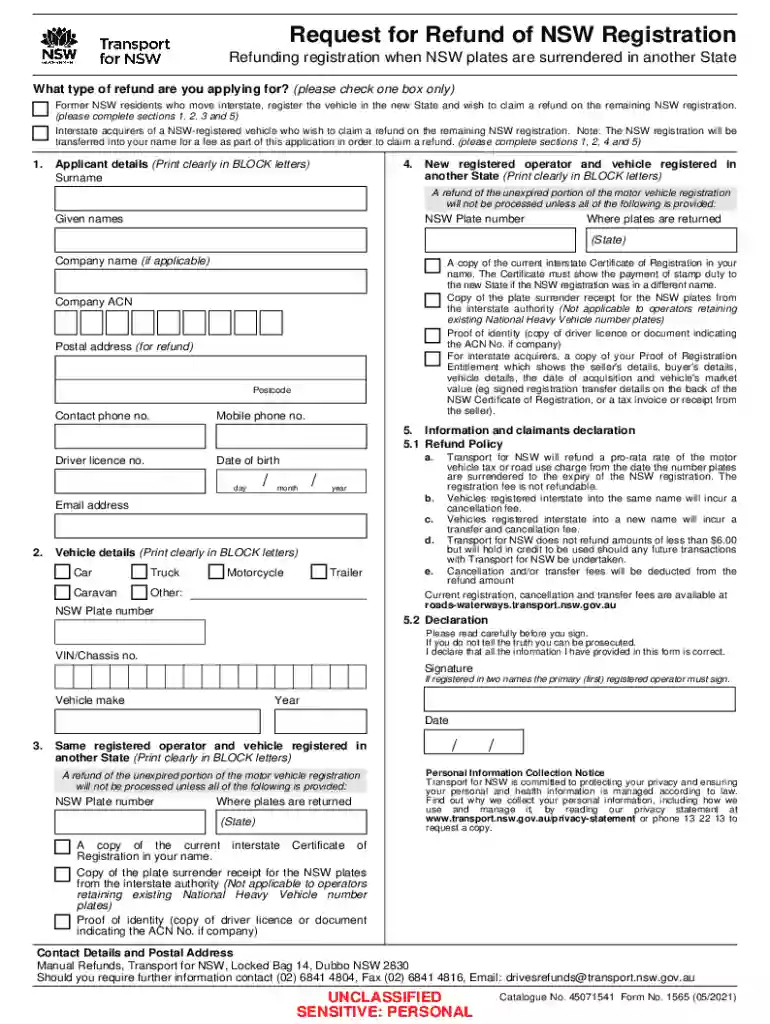
Refund claims serve as a mechanism for individuals and entities to recover overpaid or unused funds. These forms are particularly common in scenarios such as tax overpayments, product returns, or service cancellations. A refund claim is essentially a formal request to regain money that has been paid out, and it requires specific details to be accurate and complete. Understanding the intricacies of refund claims is essential for preventing delays and ensuring the successful retrieval of funds.
A refund claim typically includes a few critical elements. First, the claimant's personal or organizational details must be provided, which often involves name, address, and contact information. Second, the claim should detail the transaction or reason for the refund, including relevant dates and amounts. Third, supporting documentation is commonly required to validate the claim, such as receipts, invoices, or contracts. Fourth, a declaration of truthfulness or certification must be signed, confirming the honesty and accuracy of the information provided.
Filling out a refund claim form correctly is crucial to ensure your claim is processed without unnecessary delay. Here is a structured step-by-step process:
Gather Necessary Information:
Prepare Supporting Documentation:
Fill Out the Form:
Sign and Date:
Review and Submit:
To bolster your refund claim, specific documentation is usually required. This may differ depending on the nature of the refund:
Acquiring a refund claim form depends largely on the entity to which the claim will be submitted. Here's how you can generally obtain these forms:
Once completed, refund claims can typically be submitted through various channels:
Refund claims must adhere to specific legal standards to be processed successfully. For example, certain refund claims are subject to the ESIGN Act, ensuring electronic signatures are as legally binding as handwritten ones. Misrepresentation in a refund claim can lead to penalties, including fines or legal action, making it essential for claimants to provide truthful and accurate information.
Failure to comply with refund claim requirements can result in several consequences:
Understanding and following the correct procedure ensures your refund claim is both effective and timely, helping to quickly resolve issues related to overpayments or unused services.
We've got more versions of the dochub refund form. Select the right dochub refund version from the list and start editing it straight away!
At DocHub, your data security is our priority. We follow HIPAA, SOC2, GDPR, and other standards, so you can work on your documents with confidence.


