







Key Elements of the Instructions for Alaska Electric Cooperative Gross Revenue Tax
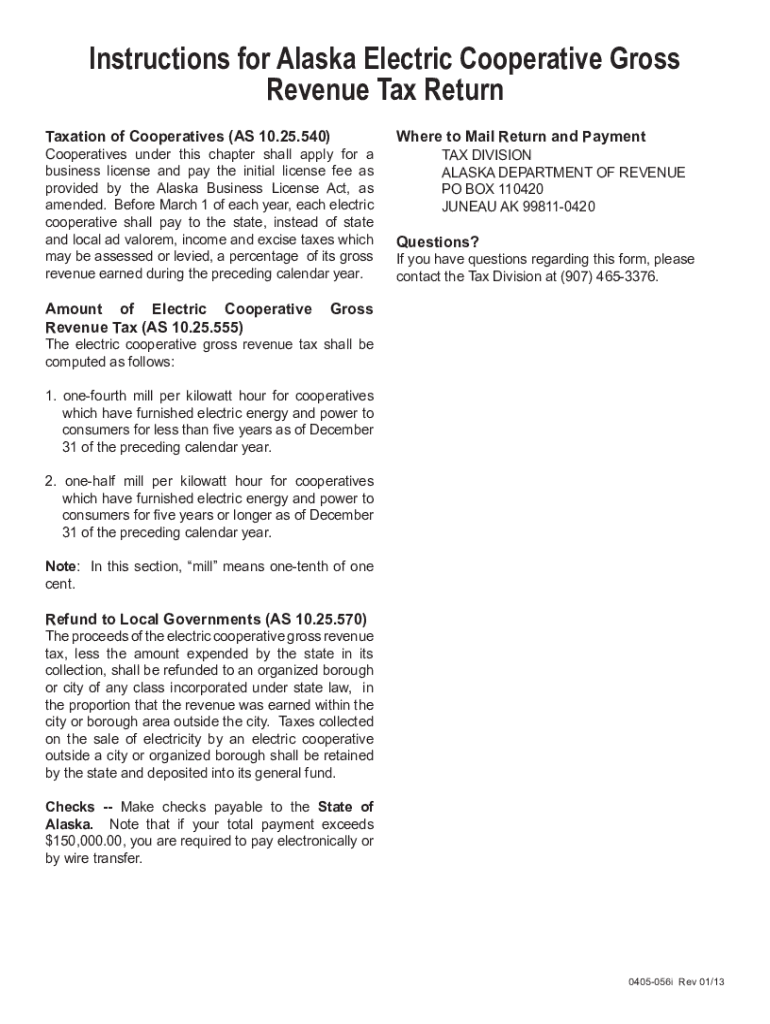
The Instructions for Alaska Electric Cooperative Gross Revenue Tax are intricately developed to guide businesses within the state on navigating the obligations related to gross revenue tax. These instructions encompass specific elements crucial to ensuring compliance and smooth processing of tax-related transactions for cooperatives.
-
Gross Revenue Tax Calculation: The document provides a detailed breakdown of tax rates, which are primarily based on the duration of service provided by the cooperative. Understanding the correct way to calculate gross revenue according to these standards is essential for accurate payment and avoiding penalties.
-
Business License Requirements: It outlines the procedure for applying for a business license, which is a prerequisite to engaging in service provision. This section specifies the documents needed and steps to secure a valid business license.
-
Refund Procedures: Certain scenarios may lead to overpayment or applicability for refunds to local governments. The instructions provide a step-by-step method for claiming refunds, specifying conditions under which refunds are permissible.
Steps to Complete the Instructions for Alaska Electric Cooperative Gross Revenue Tax
Completing the form involves several well-defined steps to be followed by Alaska Electric Cooperatives. Here is a comprehensive guide for ensuring that the form is completed accurately and submitted in a timely manner:
-
Gather Necessary Documents: Begin by collecting all required financial statements and records which will aid in the calculation of gross revenue.
-
Calculate Gross Revenue: Follow the outlined process to compute the gross revenue totals. Special attention must be paid to the defined tax rates which depend on service duration.
-
Apply for Business License: If not already completed, apply for a business license using the method described within the document. It is mandatory for legal operation within the state.
-
Complete the Tax Return Form: Fill out the necessary sections on the form, entering values calculated using the instructions provided.
-
Submission and Payment: Submit the tax return by the designated deadlines and ensure that the payment is remitted through approved channels outlined in the instructions.
Filing Deadlines and Important Dates
Adhering to specific filing deadlines is crucial for maintaining compliance with Alaska's state tax regulations. The instructions detail important dates that businesses need to observe:
-
Annual Tax Filing: The form must be filed annually by a specific deadline. Failure to adhere to the deadline can result in penalties and interest on late payments.
-
Business License Renewal Dates: Renewal of the business license is aligned with tax deadlines to ensure seamless continuation of services without legal interruptions.
-
Refund Claim Periods: There are designated periods within which a refund request must be submitted post-filing of the tax return.
State-Specific Rules for Alaska Electric Cooperative Gross Revenue Tax
Understanding Alaska’s state-specific regulations is vital. The instructions incorporate guidelines that distinguish Alaska's requirements from federal tax obligations and those of other states:
-
Tax Rates and Application: Alaska has its unique set of tax rates applicable to electric cooperatives based on service longevity. These are outlined in detail for correct application.
-
Regulatory Compliance: Cooperatives must adhere to state-enforced operational standards beyond the general business requirements mentioned in federal laws.
Who Typically Uses the Instructions for Alaska Electric Cooperative Gross Revenue Tax
The instructions are primarily targeted towards Alaska's electric cooperatives. Key users typically include:
-
Financial Officers: Responsible for overseeing compliance with state tax regulations and ensuring that calculations and submissions are accurate.
-
Legal Advisors: Offer guidance on interpreting the instructions within the context of broader legal obligations and implications of misinterpretation.
-
Business Administrators: Engage directly with the documentation and filing process, ensuring that all business-specific information is correctly reflected and submitted.


Legal Use of the Instructions for Alaska Electric Cooperative Gross Revenue Tax
The instructions are a formal document and carry legal weight as they dictate the compliance requirements set forth by the state:
-
Tax Compliance: Using the guide ensures that cooperatives remain within the legal parameters outlined for gross revenue tax payments.
-
Regulatory Adherence: They provide the foundation for cooperative compliance with state-specific business laws, thereby mitigating legal risks associated with non-adherence.
Penalties for Non-Compliance
Non-compliance with the instructions can have significant financial and operational consequences for cooperatives:
-
Financial Penalties: Fines and interest may be imposed for late payments or incorrect tax return filings.
-
Business License Revocation: Continuous non-compliance may lead to suspension or revocation of the business license, halting operations.
Required Documents
Preparation of the required documents as per the instructions is essential for form completion:
-
Financial Statements: Detailed records of revenue and expenses which provide the basis for gross revenue calculations.
-
Proof of Business Incorporation: Verification documents that demonstrate the cooperative's legitimacy and eligibility to operate within the state.
-
Previous Tax Filings: Historical tax return documents, if applicable, to ensure consistency and accuracy in reporting.
By meticulously following these structured components, Alaska Electric Cooperatives can assure adherence to all regulatory requirements, thus fostering smooth operational continuity and compliance with state laws.




