
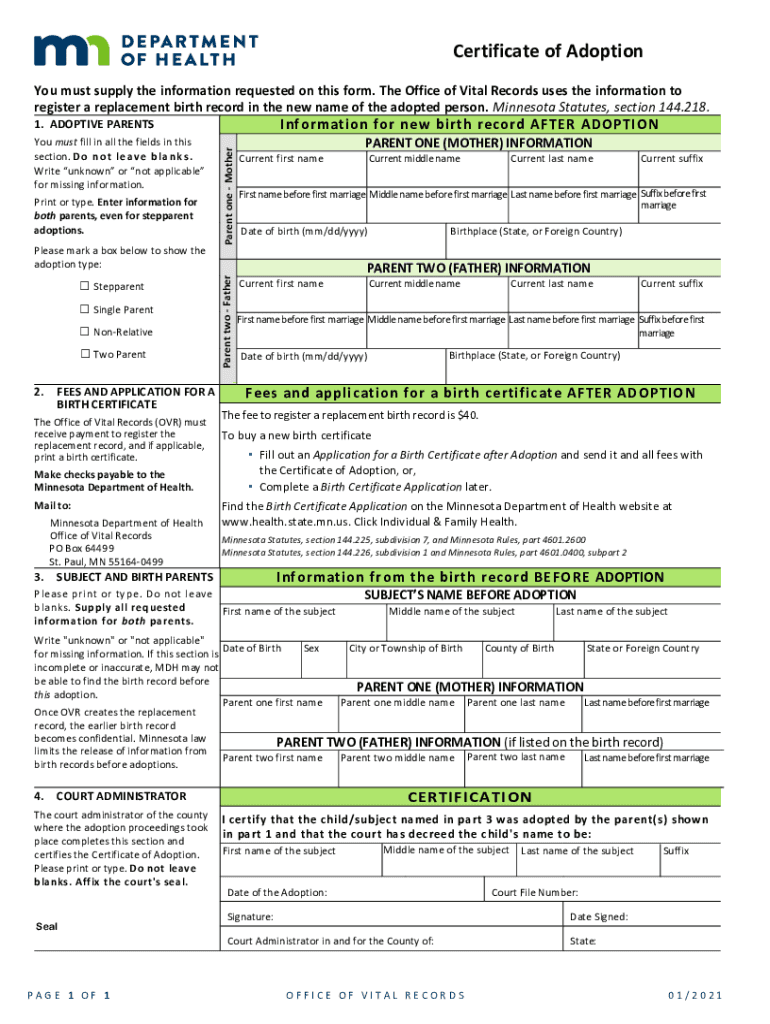







Definition and Importance of Birth Certificates
Birth certificates are official documents issued by the Minnesota Department of Health. They serve as vital records that provide proof of a person’s birth, essential for identifying individuals in legal, medical, and personal contexts. A birth certificate typically includes information such as the person’s full name, date and place of birth, and parental details. The authenticity of this document is crucial, as it establishes identity, citizenship, and age, facilitating access to services like education, healthcare, and social benefits.
Obtaining a Birth Certificate in Minnesota
To obtain a birth certificate from the Minnesota Department of Health, individuals must complete the necessary application form available on the department's website or request it through other official channels. Applicants should provide accurate details about the person whose birth certificate is being requested, as well as valid identification for the applicant. There is a processing fee associated with obtaining a birth certificate. Once all the documentation and fees are submitted, the department processes the request usually within a few business days. Applicants can receive their copies via mail or pick them up in person if arranged.
Steps to Complete the Certificate Form
- Download the Application: Access the form on the Minnesota Department of Health's website.
- Fill in Personal Details: Enter the full name, date of birth, and location of birth for the individual.
- Provide Parental Information: Include names and details of the individual’s parents as recorded at birth.
- Present Identification: Attach a copy of the applicant’s valid government-issued ID.
- Pay the Processing Fee: Use acceptable payment methods indicated by the department.
- Submit the Application: Send the completed form and accompanying documents through the specified channel - either online, via mail, or in person.
Importance of Birth Certificates
Birth certificates are crucial for various reasons beyond establishing identity:
- Legal Documents: Required for processing passports, driver's licenses, and other legal documents.
- Education Registration: Necessary for school enrollments to verify age and identity.
- Medical Records: Used in establishing healthcare services and maintaining medical records.
- Government Services: Proof of eligibility for social services and benefits.
Common Users of Birth Certificates
Birth certificates are commonly used by individuals and institutions alike:
- New Parents: To register newborns and obtain necessary documents for healthcare and childcare.
- Adoptees: To access adoption records and obtain new certificates reflecting parental changes.
- Legal and Government Agencies: For identity verification in processing legal or governmental services.


Key Elements of the Certificate Form
A comprehensive birth certificate form will typically include the following sections:
- Child’s Information: Full birth details, including name and birth order if part of a multiple birth.
- Parental Details: Mother’s and father’s full names, places of birth, and citizenship status.
- Certification Statements: Sections for official use, such as signatures from authorized personnel.
State-Specific Rules for Minnesota
Within Minnesota, specific legal considerations apply to the issuance and use of birth certificates:
- Eligibility Requirements: Only certain individuals, such as the person named on the certificate, parents, grandparents, or legal guardians, may request a birth certificate.
- Data Privacy: Information is protected under state privacy laws, ensuring that only authorized individuals have access.
- Amendments and Corrections: Procedures exist for correcting errors or updating information on birth certificates, often requiring supplemental legal documentation.
Examples and Practical Scenarios
Real-world scenarios demonstrating the necessity of a birth certificate include:
- International Travel: Securing a passport requires a copy of a birth certificate.
- Federal Benefits: Proving eligibility for Medicare or Social Security benefits.
- Parenting Plans in Divorce: Establishing parental rights during custody arrangements may require evidence of a child’s birth information.
Integrating these detailed aspects offers comprehensive guidance to anyone seeking to understand the application, usage, and significance of birth certificates as issued by the Minnesota Department of Health.




