Definition and Meaning
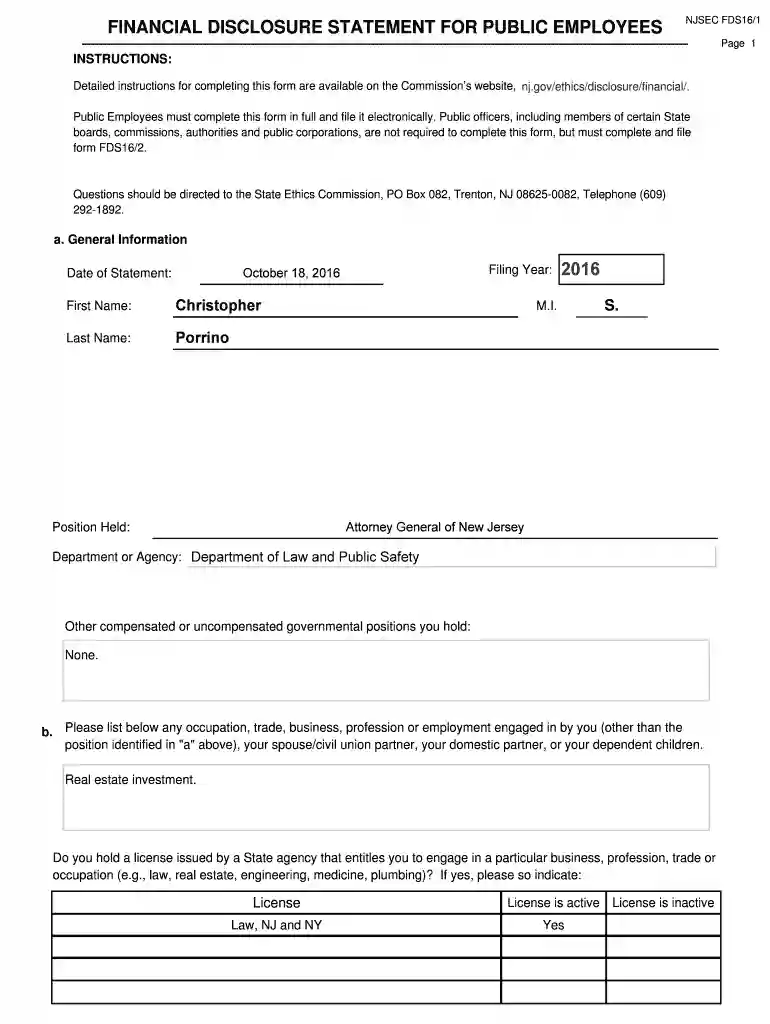
The 2016 NJ Form NJSEC FDS, or New Jersey Financial Disclosure Statement, is a vital document for public employees in New Jersey. It ensures transparency by mandating the disclosure of financial interests that could influence a public employee's decision-making. This form includes various sections that request detailed information about personal assets, income sources, liabilities, and potential conflicts of interest. Emphasizing adherence to state ethics regulations, it serves to uphold integrity and public trust within governmental operations.
Key Elements of the 2016 NJ Form NJSEC FDS
Understanding the fundamental components of this form is crucial for accurate completion. Key sections include:
- Personal Financial Information: Details about assets, bank accounts, real estate, and any other significant holdings.
- Income Sources: Information on salaries, business profits, dividends, and any other income streams.
- Liabilities: Documentation of debts, including loans and credit card balances.
- Ethics Training: Confirmation of completion of any required ethics training modules.
- Business Interests: Any involvement in business ventures or positions held in organizations that may present a conflict of interest.
Steps to Complete the 2016 NJ Form NJSEC FDS
Filling out this form accurately requires attention to detail. Here are the steps involved:
- Gather Required Documents: Collect all necessary financial documents, such as bank statements, investment records, and tax returns.
- Review Instructions: Thoroughly read any guidelines affiliated with the form to ensure compliance and accuracy.
- Complete Each Section: Carefully fill out each section, ensuring all provided information is current and truthful.
- Verify Data: Double-check all data for errors or omissions to prevent potential penalties or delays.
- Submit the Form: Follow the specified submission method, ensuring that the form reaches the appropriate agency before the deadline.
Why Use the 2016 NJ Form NJSEC FDS
Public employees are necessitated to use this form for several significant reasons:
- Legal Compliance: To meet the legal obligations set for public officials in New Jersey.
- Transparency: To provide a clear account of any personal interests that could affect decision-making within their official capacity.
- Conflict of Interest Management: Assist in identifying and managing potential conflicts between personal interests and public roles.
Important Terms Related to the 2016 NJ Form NJSEC FDS
To fully comprehend and complete the form, recognition of specific terms is essential:
- Assets: Resources owned by the individual that hold economic value.
- Liabilities: Financial debts or obligations.
- Conflict of Interest: A situation where personal interest could influence professional judgment.
- Public Employee: A person employed by the government sector.
Required Documents
Ensuring all necessary documentation is gathered beforehand facilitates a smooth completion process. Essential documents include:
- Bank Statements: For the past year, reflecting current balances and transactions.
- Investment Portfolios: Details of stocks, bonds, and other investment instruments.
- Tax Returns: Copies of recent tax filings that verify income disclosure.
- Loan Documents: Records of any current debts or loans.
State-Specific Rules for the 2016 NJ Form NJSEC FDS
In New Jersey, specific regulations govern the filing and submission of this form:
- Filing Deadlines: Typically, these forms must be filed annually with set deadlines.
- Ethics Training: Public employees may be required to complete periodic ethics training to ensure compliance with state guidelines.
- Confidentiality: There are rules in place regarding the confidentiality of the information disclosed in these forms.
Legal Use of the 2016 NJ Form NJSEC FDS
The usage of this form is underpinned by legal mandates that require:
- Confirmation of Accuracy: All declarations must be true and verifiable, with severe penalties for falsification.
- Proper Submission: Only authorized platforms or mailing addresses should be used for filing.
- Retention Period: Records of submitted forms need to be retained according to state records management policies.
Penalties for Non-Compliance
Failing to complete or submit the 2016 NJ Form NJSEC FDS can lead to:
- Fines: Monetary penalties may be imposed.
- Legal Consequences: Charges of legal infractions which could lead to further investigation or prosecution.
- Employment Sanctions: Disciplinary actions, including suspension or termination of employment, may be applicable.
The 2016 NJ Form NJSEC FDS serves a critical function in maintaining ethical practices among public officials in New Jersey. Proper understanding and compliance are essential for fulfilling legal obligations and promoting transparency.