Definition and Purpose of the Grievance Form
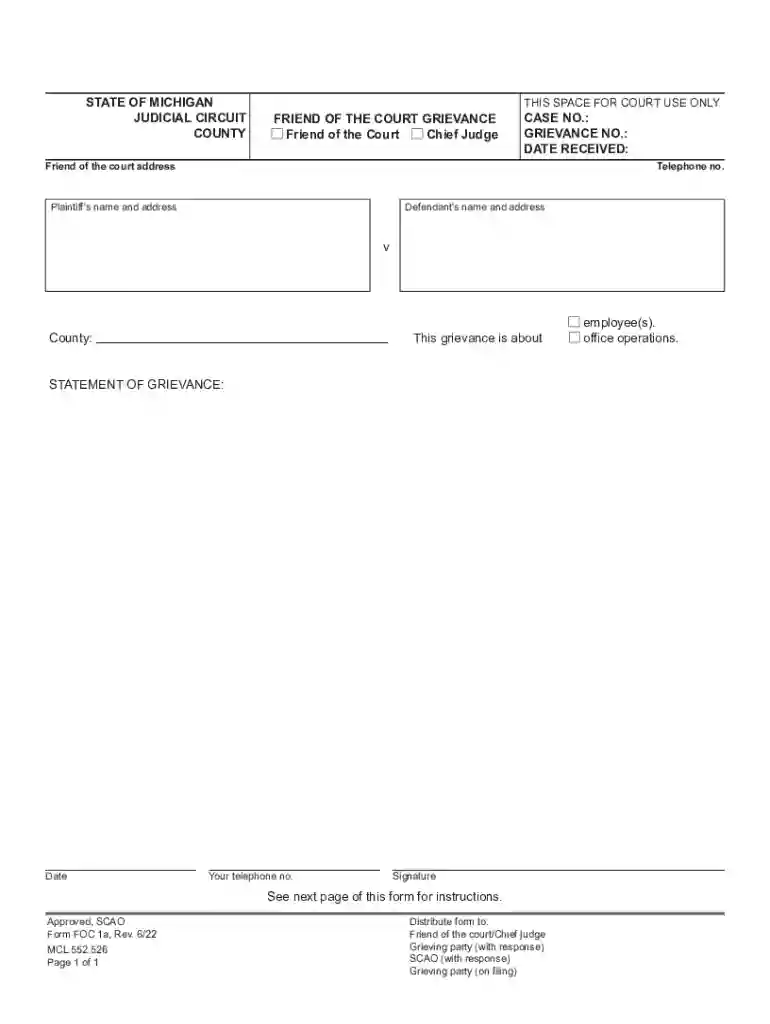
The "employee(s) County: This grievance is about office operations" form serves as a formal method for individuals to file complaints regarding employee actions or office operations within a specific county's administration. The form is typically used to address issues like inefficiencies, misconduct, or other operational grievances. Its primary purpose is to document the issue and initiate a formal review or resolution process.
Key Components of the Grievance Form
- Complainant Information: This section requires the individual's details, including name, contact information, and relationship to the office or employees in question.
- Description of Grievance: A detailed account of the issue, including relevant dates, personnel involved, and specific incidents.
- Desired Resolution: The complainant can specify what they would like to see as a resolution to the grievance, such as an investigation, policy change, or an apology.
- Submission Date: This is crucial for tracking the timeline of the complaint and ensuring timely processing.
Obtaining the Grievance Form
Sources for Accessing the Form
The form can generally be obtained through the following means:
- County's Official Website: Most counties offer downloadable versions of the form on their official websites under the grievances or complaints section.
- In-Person at County Offices: Physical copies are often available at county administrative offices or specific departments related to the complaint.
- Requesting by Mail or Email: Some counties may allow you to request the form via mail or email, especially for individuals without internet access.
Steps to Complete the Grievance Form
Preparatory Steps
- Gather Necessary Information: Before you begin, collect all relevant details, including dates of incidents, employee names, and any supporting documents or evidence.
- Read Instructions Carefully: Each section of the form may have specific requirements, so it is important to understand what information is needed before you fill it out.
Filling Out the Form
- Complete Personal Information: Ensure all personal details are accurate to avoid delays.
- Detailed Grievance Description: Clearly and concisely explain the grievance, providing context and specifics.
- Attach Supporting Documents: Include any evidence that supports your complaint, like emails, memos, or images.
- Review and Revise: Double-check all entries for accuracy and completeness.
Submission Process
- Choose Submission Method: Depending on county procedures, submit the form online, by mail, or in person.
- Track Submission: If possible, keep a copy of the submitted form or confirmation of submission for your records.
Legal Use and Implications
Understanding Legal Protections
Using the grievance form appropriately ensures that the complaint is handled within the legal framework established by the county. Complainants benefit from:
- Confidentiality: The process generally maintains the confidentiality of the complainant to protect them from repercussions.
- Documentation: Provides a formal record that may be used in further legal proceedings if necessary.
- Legal Recourse: If unsatisfied with the response, individuals may pursue further legal action, using the grievance documentation as evidence.
Potential Consequences
- Frivolous Complaints: Filing complaints without basis can lead to legal consequences, including potential penalties or dismissal of the complaint.
- Impact on Employment: In some cases, filing a grievance could affect employee relations, positively or negatively, depending on the outcome.
Common Use Cases for the Grievance Form
Situations Warranting a Grievance
- Policy Violations: Instances where office policies have been breached by employees or administration.
- Misconduct: Reporting inappropriate behavior or unethical actions by county staff.
- Service Delays: Challenges related to delays or inefficiencies in receiving services or responses from county offices.
Real-World Scenarios
- Employee Misconduct: An employee witnessed unfair treatment of clients by another staff member and chose to file a grievance to address the behavior.
- Operational Inefficiencies: A regular visitor to the county office filed a complaint about recurring delays in processing standard forms, affecting public service delivery.
State-Specific Rules and Variations
Differences Across States
- Procedural Variations: Different states may have unique protocols for grievance submissions, including what information is required and how cases are reviewed.
- Jurisdictional Authority: The entity responsible for addressing grievances may vary between counties, so it is crucial to follow state-specific guidelines.
Important Considerations
Before filing, it's advisable to:
- Research Local Regulations: Understand the specific rules and procedures in your jurisdiction.
- Consult with Legal Experts: When uncertain about legal implications, seek advice from professionals familiar with local grievance processes.
Key Elements to Include in a Grievance
Core Aspects of an Effective Grievance Form
A well-prepared grievance form should encompass the following elements for clarity and impact:
- Accuracy in Details: Ensure all narrative parts of the form are precise and fact-based.
- Objective Tone: Avoid emotional language; focus on factual descriptions of incidents.
- Contextual Information: Provide necessary background that might help your case, such as previous engagements or attempts at informal resolution.
Enhancing the Grievance's Effectiveness
To enhance effectiveness:
- Prioritize Clarity: Make your statements clear and coherent to aid in understanding your complaint.
- Logical Structure: Present information in a logical sequence that leads the reviewer through the events clearly.
- Concluding Statement: Sum up the grievance with a closing statement reiterating the desired outcome.