




01. Edit your form online
Type text, add images, blackout confidential details, add comments, highlights and more.

Type text, add images, blackout confidential details, add comments, highlights and more.

Draw your signature, type it, upload its image, or use your mobile device as a signature pad.

Send it via email, link, or fax. You can also download it, export it or print it out.
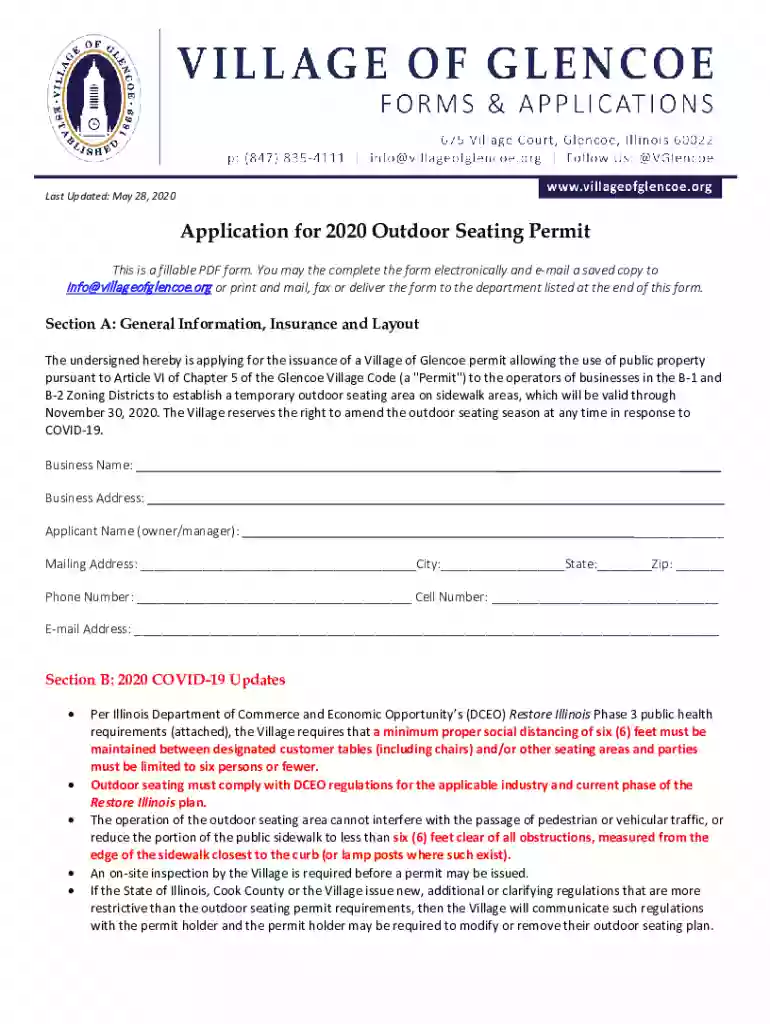
The "Fillable APPLICATION---TEMPORARY-OUTDOOR-SEATING-PERMIT" is a crucial document for businesses seeking to expand their seating capacity into outdoor areas temporarily. Primarily facilitated to support businesses amid regulatory guidelines like those during the COVID-19 pandemic, this permit allows establishments like restaurants and cafes to continue serving patrons safely by using outdoor spaces while adhering to health and safety standards.
The permit is essential for ensuring that temporary seating arrangements can legally exist without infringing upon public safety or neighboring properties. It provides a structured approach to obtaining necessary approvals from local authorities.
It is important to follow these steps carefully to ensure timely approval without the need for corrections or resubmissions.
Before applying, verify if your business is eligible for a temporary outdoor seating permit:


Anticipate potential back-and-forth interactions for any clarifications, which could extend the process.
During times of health restrictions, such permits are particularly beneficial for maintaining business continuity.
Ensuring legal compliance with local regulatory frameworks is a primary concern when operating under these permits.
These real-world examples show how diverse businesses can benefit from such permits.
These alternatives cater to different user preferences and technological capabilities.
It's essential to understand the specific requirements applicable to your state or region to ensure compliance and successful application approval.
We've got more versions of the Fillable APPLICATION---TEMPORARY-OUTDOOR-SEATING-PERMIT form. Select the right Fillable APPLICATION---TEMPORARY-OUTDOOR-SEATING-PERMIT version from the list and start editing it straight away!
At DocHub, your data security is our priority. We follow HIPAA, SOC2, GDPR, and other standards, so you can work on your documents with confidence.
To submit your completed application: Print, sign, then email as an attachment to: EconDev@montereypark.ca.gov Or fax to: (626) 280-4537.
Temporary Food Permit Application, Registered Campus Organizations must complete and display a temporary food permit if they are serving perishable food.Read more
In Italy the end-user should apply for a license at the national spectrum authorities in order to obtain authorization to use the device for setting upRead more


