




01. Edit your form online
Type text, add images, blackout confidential details, add comments, highlights and more.

Type text, add images, blackout confidential details, add comments, highlights and more.

Draw your signature, type it, upload its image, or use your mobile device as a signature pad.

Send it via email, link, or fax. You can also download it, export it or print it out.
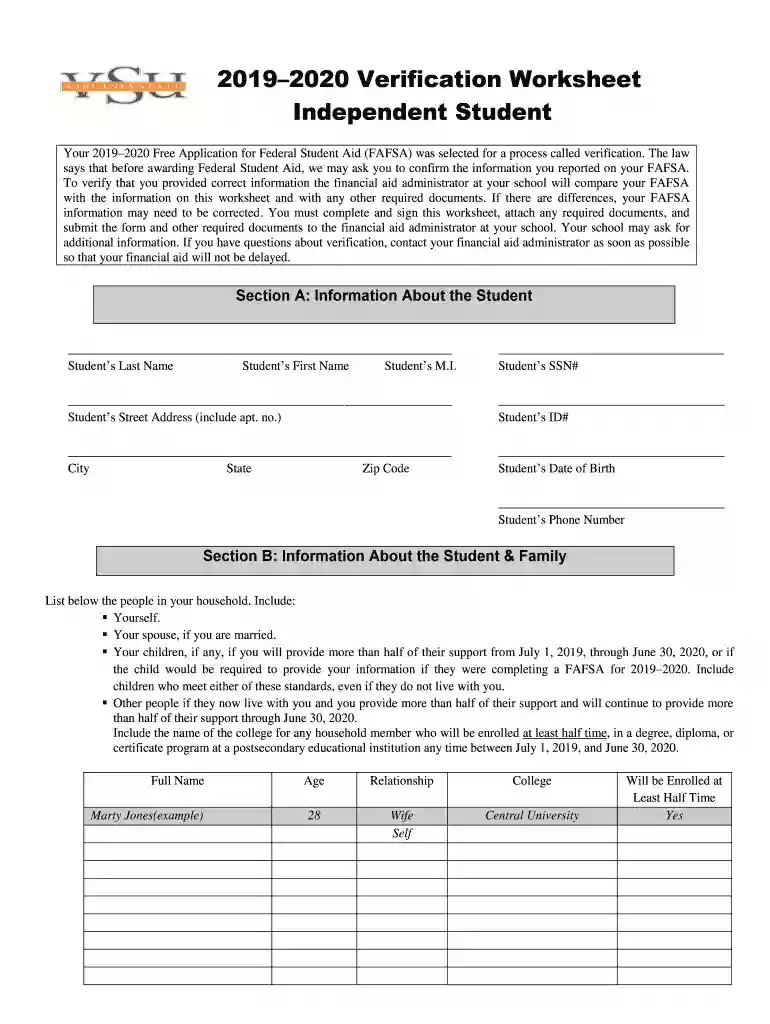
Financial aid verification is a process used to confirm the accuracy of information provided by students on their FAFSA forms. This step is crucial to ensure that students receive the correct amount of aid. The verification process involves a detailed review of the student's personal data, household details, tax information, and other relevant documentation. Completing the verification accurately prevents delays in the disbursement of financial aid.
Completing the verification worksheet is an essential part of the financial aid process. Follow these steps to ensure timely financial aid:
Providing the correct documents is vital during verification to avoid any delay in financial aid. Key documents typically include:
Submitting accurate information on the verification worksheet is essential to avoid delays in financial aid disbursement. Errors or inconsistencies may result in additional reviews, potentially delaying the processing of your aid package. It is critical to double-check each section for any errors or omissions before submission.
Typically, students who are selected for verification by their financial aid office need to complete the verification worksheet. This selection can be random or based on inconsistencies found in the FAFSA data. Failing to complete the verification process may result in the delay or cancellation of your financial aid.
Depending on your institution's requirements, you may submit the verification worksheet using various methods:
Failure to complete the verification process can lead to severe consequences, including:
Understanding specific terms used in the financial aid verification process can help ensure accuracy and compliance:
By thoroughly understanding these terms and processes, you can ensure that your financial aid will not be delayed, allowing you to focus on your educational goals without financial uncertainty.
We've got more versions of the so that your financial aid will not be delayed form. Select the right so that your financial aid will not be delayed version from the list and start editing it straight away!
At DocHub, your data security is our priority. We follow HIPAA, SOC2, GDPR, and other standards, so you can work on your documents with confidence.
The Capella Progress Reward scholarship may decrease the amount of funding that can be offered from other sources, such as federal financial aid.
Ten Ways to Avoid Financial Aid Delays: Apply early. Make sure that your admissions file is complete and that you have selected an appropriate academic majorRead more


